
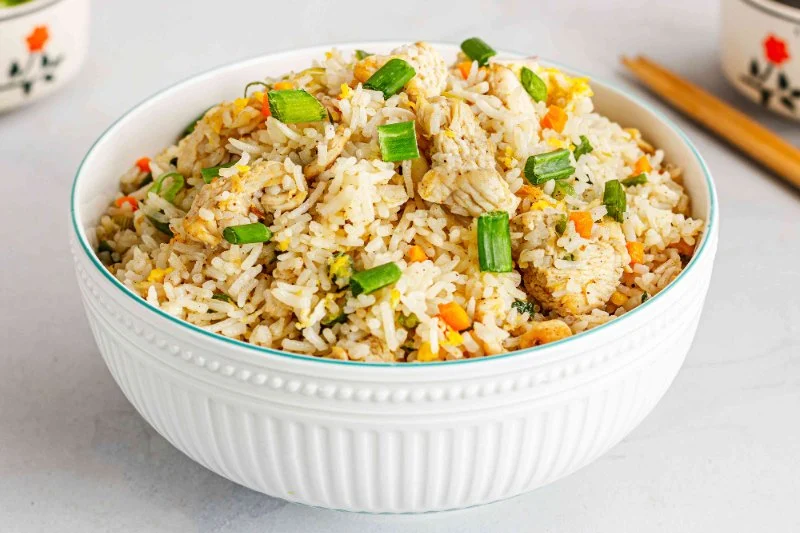
1. The Foundation: Authentic Ingredients in Japanese Fried Rice
To make Japanese restaurant fried rice, you must begin with the right ingredients. Authenticity starts with Japanese short-grain rice, known for its sticky texture and slightly sweet flavor. Unlike the long-grain rice used in Chinese fried rice, Japanese rice creates a more cohesive texture that holds flavor exceptionally well.
Essential ingredients include:
- Cold, day-old short-grain rice (fresh rice turns mushy when stir-fried)
- Eggs – usually beaten and scrambled separately or with the rice
- Vegetables like onion, carrot, peas, and sometimes cabbage
- Garlic and green onion for aroma and punch
- Butter or sesame oil (yes, many hibachi chefs use real butter)
- Soy sauce – preferably light or tamari for depth without overpowering saltiness
Optional ingredients include chopped shrimp, chicken, or even diced steak. At Japanese Restaurant, many chefs also add mirin or sake for depth.
2. Cooking Techniques: Getting That Restaurant Texture
2.1 Use high heat and the right pan
Most Japanese restaurants cook on a teppan, a large flat griddle. At home, the closest option is a cast iron skillet or carbon steel wok. High heat ensures that rice gets lightly toasted and separates nicely, avoiding clumps.
2.2 Cook in stages
Start by sautéing vegetables and protein. Remove and set aside. Then scramble the egg quickly on high heat. Finally, toss in the rice, stir well, then reintroduce all ingredients. Season with soy sauce and finish with a small pat of butter for that classic hibachi aroma.
2.3 Don’t skip seasoning
Salt, pepper, soy sauce, and a hint of sugar can balance your fried rice beautifully. A splash of sake or rice vinegar during the stir-fry adds an umami lift, as used by many seasoned chefs at top teppanyaki restaurants.
3. Restaurant-Style Additions and Flavor Hacks
3.1 Garlic chips and onion oil
Many high-end Japanese restaurants enhance flavor with garlic chips (thinly sliced fried garlic) or onion-infused oil. These add a rich, fragrant depth.
3.2 Add crunchy textures
Try mixing in finely chopped pickled daikon or crispy tempura flakes. It adds textural variety—an unexpected but delightful twist inspired by Tokyo street-side izakayas.
3.3 Teppanyaki flair
At live cooking venues, chefs often toss in theatrics—flipping eggs, flaming sauces. While you might skip the flames at home, try plating it stylishly in a hot bowl and topping with fresh scallions, sesame seeds, or a drizzle of Japanese mayo.
Looking for the same tools and seasonings the chefs use? You can find many authentic ingredients at Japanese Restaurant, carefully curated for home cooking enthusiasts.
4. Common Pitfalls to Avoid
Even experienced home cooks fall into these traps:
- Using warm or fresh rice: It becomes sticky and heavy. Always use cold, day-old rice.
- Overcrowding the pan: You’ll steam rather than fry. Cook in batches for better results.
- Skipping the butter: Many assume it's not authentic—but butter is a hidden key ingredient at many hibachi restaurants.
- Not tasting as you go: Soy sauce isn’t one-size-fits-all. Always taste before you add more.
5. A Personal Take: How I Discovered True Japanese Fried Rice
The first time I had real Japanese fried rice was at a modest teppanyaki place in Osaka. The chef was quiet, methodical, yet incredibly precise. Watching him layer in the rice, splash the soy, and flip the egg with a flick of the spatula was like witnessing a ceremony.
Recreating that at home took trial and error—burnt rice, soggy batches, overseasoning—but I eventually found the balance. The secret? Patience. Using the right rice, letting the pan heat fully, and respecting each ingredient's role.
Today, Japanese fried rice is a staple in my weekend cooking routine, especially when I want something satisfying yet soulful. It’s fast, flavorful, and brings the umami of Japanese cuisine into any kitchen.
If you’re eager to bring authentic Japanese flavors to your table, browse our selection at Japanese Restaurant—from teppanyaki tools to seasoned sauces, we’ve got everything to elevate your fried rice game.
 Blufish Sushi & Grill4.0 (270 reviews)
 Shogun Hibachi & Sushi4.0 (1344 reviews)
 Kyoto Teriyaki4.0 (219 reviews)
 OMAKAI sushi5.0 (436 reviews)
 Fontana Sushi (6th Ave)4.0 (469 reviews)
 DJ Sushi3.0 (147 reviews)
 The History and Flavor Behind Mt. Fuji Japanese Restaurant
 Discover the Best Don Mills Japanese Restaurant for Authentic Dining
 An Insider’s Review of Japanese Restaurant Chicago: Top Spots for Authentic Japanese Cuisine
 What Makes Japanese Curry Restaurants Stand Out Among Japanese Dining
 Where's the Nearest Japanese Restaurant? Find the Best Options Around You
 Why Best Japanese Restaurants Near Me is a Must-Try Spot for Japanese Food Lovers