
Donburi Explained: Build a Better Japanese Rice Bowl Order
On this page
Quick answer
Donburi is both a deep Japanese bowl and the family of one-bowl meals built from rice plus a savory topping. Choose gyudon for simmered beef, oyakodon for chicken and softly cooked egg, tendon for tempura, katsudon for pork cutlet and egg, unadon for glazed eel, or kaisendon for seafood. Names and preparations vary, so read the description and ask.
This guide is for diners exploring Japanese restaurants in the United States. It explains common patterns, not a fixed national menu. Recipes, portion sizes, doneness, side dishes, and spellings differ by region, restaurant, and chef.
What donburi means
The word donburi can refer to the bowl itself or to rice served in that bowl with food on top. Menu names often shorten the ending to -don. The first part usually identifies the main topping: gyu for beef, oyako for chicken and egg, ten for tempura, and kaisen for seafood.
The practical idea is integration. Sauce, cooking juices, or seasoning move into the rice, so the topping and rice are designed to be eaten together. Donburi is therefore different from a plate where the diner keeps the main dish and rice fully separate.
Some bowls are quick everyday food, while others feature premium seafood or eel. A restaurant may specialize in one type, offer a small donburi at lunch, or add creative toppings that are not traditional. “Donburi” describes the format more than one recipe.
Classic bowls and how they differ
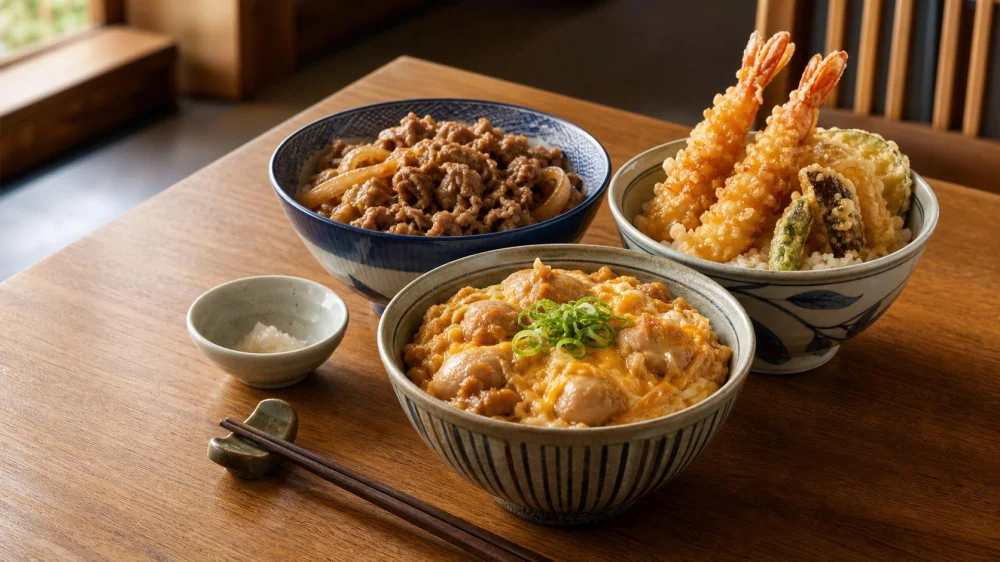
- Gyudon: Thin beef and onions, commonly simmered in a savory-sweet seasoning, served over rice. Best for diners who want a soft texture and a rich but straightforward beef bowl.
- Oyakodon: Chicken and egg cooked together with seasoned dashi and placed over rice. The egg may be softly set, so ask about doneness if that matters to you.
- Katsudon: A breaded pork cutlet combined with egg, onion, and seasoning over rice. It is heartier and softer than a cutlet served separately because sauce reaches the breading.
- Tendon: Tempura over rice, usually finished with a sweet-savory sauce. Choose it for crisp fried batter, though the sauce naturally softens some of the coating.
- Unadon: Grilled eel with a glossy, sweet-savory glaze over rice. Check for bones and ask the restaurant about preparation if you are unfamiliar with eel.
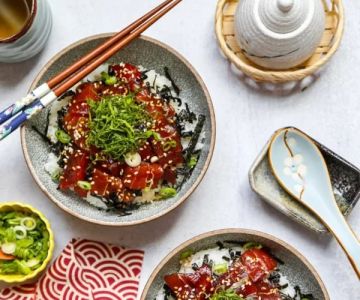
- Kaisendon: Assorted seafood over rice. It may include raw items and can vary greatly with availability.
- Butadon: Pork over rice. The pork may be grilled or simmered depending on the regional or restaurant style.
- Tamagodon: Egg and onion over rice, often using a seasoned stock. It may appear meatless but can still contain fish-based dashi.
Names are useful clues, not complete ingredient lists. A bowl may include pickled ginger, scallions, seaweed, sesame, soft egg, spicy mayonnaise, or another garnish that changes the flavor and allergen profile.
Choose by flavor, texture, and appetite
Use three decisions instead of picking by photo alone:
- Choose the cooking style. Simmered beef or chicken-and-egg is soft and saucy; tempura and cutlet add fried texture; grilled eel is glazed; seafood may be raw or cooked.
- Choose the intensity. Ask whether the seasoning is sweet, salty, spicy, smoky, or delicate. Extra sauce can overwhelm rice, while too little may make a bowl feel dry.
- Choose the portion. A single bowl may be a full meal or part of a set with soup, pickles, salad, or noodles. Confirm the size before adding sides.
Best for a first donburi: Choose a familiar protein with a preparation you already enjoy, such as gyudon for simmered beef or tendon for tempura.
Not ideal when you want crispness to last: A sauce-heavy katsudon or tendon will soften as it sits. Ask whether sauce can be served lightly or on the side if the restaurant offers that option.
When to avoid guessing: Kaisendon and chef-selected bowls can change daily. Ask which seafood is included and whether each item is raw, seared, cured, or cooked.
How to read a U.S. restaurant menu
Restaurants in the United States may write names as one word, two words, or with a hyphen: gyudon, gyu don, and gyu-don can describe the same broad dish. English labels such as “beef bowl,” “tempura rice bowl,” or “chirashi bowl” may appear alongside Japanese names.
Before ordering, check:
- Whether rice is white, brown, seasoned, or sushi rice.
- Whether the listed protein is raw, cooked, or available either way.
- Whether egg is fully cooked, softly set, raw, or optional.
- Which vegetables, sauces, garnishes, and side dishes are included.
- Whether the price is for a bowl alone or a meal set.
- Whether substitutions or sauce adjustments are possible.
A photo may show a serving suggestion rather than the exact portion. The written menu and staff explanation are more reliable for a specific order.
Dietary and allergen questions
Donburi can contain major allergens in places that are not obvious. Soy sauce commonly contains wheat; tempura batter may include wheat and egg; dashi may contain fish; sauces may use sesame; and kitchens may share fryers or preparation surfaces.
If you have a food allergy, do not rely on removing a visible topping after the bowl arrives. Tell the restaurant about the allergy before ordering and ask:
- What is in the sauce, stock, marinade, batter, and garnish?
- Is the rice seasoned with ingredients that matter to the allergy?
- Is the item prepared on shared equipment or in a shared fryer?
- Can the kitchen prevent cross-contact for this order?
Vegetarian diners should ask about dashi, sauces, and garnishes rather than judging by the main topping alone. Diners avoiding raw or undercooked foods should confirm seafood and egg preparation. If staff cannot verify ingredients or cross-contact controls, choose a simpler item the restaurant can explain or dine elsewhere.
How to eat and enjoy donburi
Use chopsticks for the topping and rice, or a spoon when the bowl is especially saucy. There is no need to separate every component. Take bites that combine rice with the topping so you can judge the intended balance.
Try the bowl before adding extra soy sauce or chili. The topping may already be strongly seasoned, and sauce often concentrates near the bottom. Pickles, ginger, scallions, or a small amount of spice can reset the palate, but they are optional.
If the bowl includes soup or pickles, alternate them with the donburi rather than pouring them into the rice unless the restaurant specifically presents the dish that way. Restaurant customs are usually relaxed; considerate handling and genuine curiosity matter more than performing a perfect ritual.
Culture notes and limitations
Japan’s Ministry of Agriculture, Forestry and Fisheries describes donburi in The Washoku Way as a hearty single-dish meal of rice in a deep bowl topped with items such as tempura or seasoned seafood. The Japan National Tourism Organization’s donburi overview illustrates common names and regional variety.
These sources explain broad culinary patterns. Individual Japanese and Japanese American restaurants may use different recipes, translations, and adaptations, so the restaurant’s own description controls the order in front of you.
Frequently asked questions
Is donburi the same as poke?
No. Both can place toppings over rice, but they come from different culinary histories and use different naming, seasoning, and preparation traditions. A restaurant may create hybrid bowls, which should be described as such.
Is chirashi sushi a donburi?
It is a bowl or box of sushi rice with scattered toppings, often seafood. It overlaps visually with kaisendon, but the rice and sushi context can differ. Restaurants may use the terms in different ways, so read the description.
Does every donburi include meat or fish?
No. Egg, tofu, vegetable tempura, or other plant-focused bowls may be available. However, stock and sauce can still contain fish or animal ingredients, so vegetarian and vegan diners should ask.
Can I order the sauce on the side?
Some restaurants can adjust sauce and others prepare the topping in it. Ask before ordering. A simmered dish such as oyakodon cannot be separated as easily as a drizzled tempura bowl.
Why is the rice at the bottom so flavorful?
The topping’s cooking juices or sauce soak into the warm rice. That shared flavor is central to the format, which is why topping-to-rice balance matters.
Next steps
Pick one donburi by cooking style: simmered, fried, grilled, or seafood-based. Read the complete description, confirm raw ingredients and allergens, and check whether the bowl is a full set. Then taste it as served before adding condiments. Once you understand the basic pattern, unfamiliar -don names become much easier to decode.

 Junn All You Can Eat Sushi4.0 (2020 reviews)
 Sushiko4.0 (221 reviews)
 Kyuramen x TBaar - Oklahoma City4.0 (540 reviews)
 Asi-Fusion Asian Kitchen & Sushi Bar5.0 (32 reviews)
 Aya Sushi4.0 (203 reviews)
 I Love Sushi4.0 (927 reviews)
 Best Dishes You Should Order at Wasabi Japanese Restaurant
 What Fast Food Restaurant Do Japanese Attend on Christmas?
 What Makes Domo Japanese Restaurant Stand Out Among Japanese Restaurants
 Top Dishes You Should Order at Suteishi Japanese Restaurant
 What Makes Yōki Japanese Restaurant & Bar Ramen & Sushi Place Stand Out Among Japanese Restaurants
 Exploring the Menu at Domo Japanese Country Food Restaurant