
Japanese Nabe Guide: Broths, Ingredients, and Etiquette
On this page
Quick answer
Nabe is a broad Japanese hot-pot format in which broth, vegetables, tofu, meat, or seafood cook together in a shared vessel. To order well, compare the broth and featured protein, check whether the portion is individual or shared, identify raw ingredients that require cooking, and ask who controls the heat. Use separate utensils for raw food, wait until ingredients are fully cooked, and confirm allergens across broth, sauces, and finishing noodles.
This guide is for diners exploring nabe at Japanese restaurants in the United States. Menus, portion conventions, tableside equipment, and cooking responsibility vary. Follow the restaurant’s directions whenever they differ from general dining practice.
What nabe means
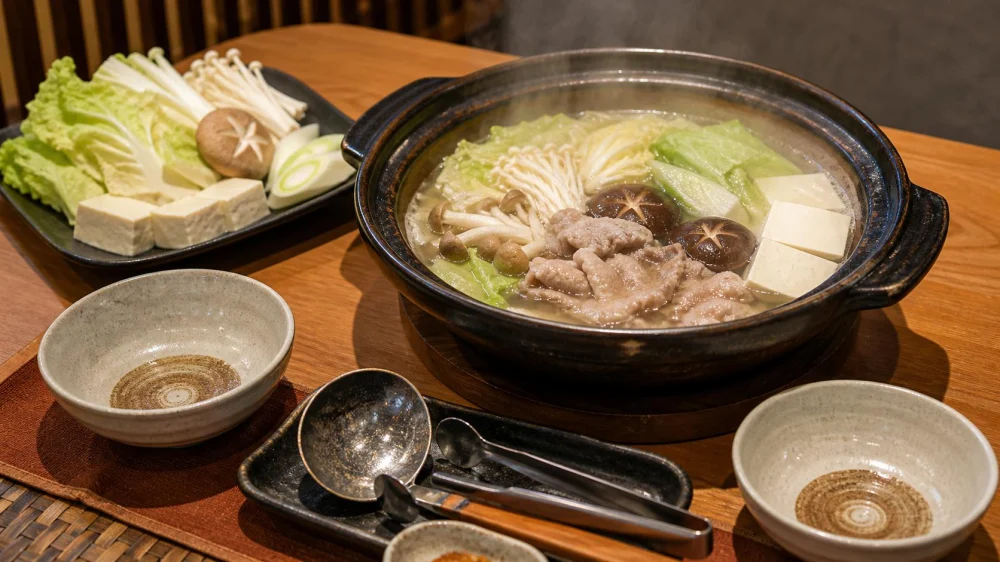
Nabe means “pot” and also refers to a family of dishes cooked and served from a pot. Some arrive ready to eat from the kitchen. Others simmer on a tabletop burner while staff or diners add ingredients in stages.
Nabe is a format rather than a single recipe. Regional versions may use fish, shellfish, chicken, beef, pork, tofu, mushrooms, leafy vegetables, roots, or local seasonings. Japanese government regional-cuisine records describe hot pots based on miso, soy sauce, kelp stock, and fermented fish sauce, showing how much the broth and ingredients can vary.
Menus may place shabu-shabu, sukiyaki, chanko nabe, motsunabe, seafood nabe, and regional specialties in the same general hot-pot category. Do not assume they use the same broth, dipping sauce, cooking rhythm, or ingredients.
Compare broth styles
The broth determines whether the pot tastes light, rich, sweet, salty, spicy, or strongly savory. Ask how the restaurant describes it instead of choosing by color alone.
- Light dashi or kombu-based broth: lets vegetables, tofu, seafood, and dipping sauces stand out.
- Miso broth: usually fuller and more opaque, with fermented soybean flavor and varying sweetness or saltiness.
- Soy-seasoned broth: can range from delicate to dark and savory-sweet depending on the recipe.
- Spicy broth: may use chili, sesame, miso, or other seasonings; ask for the restaurant’s heat scale.
- Seafood or regional broth: may derive character from fish, shellfish, kelp, dried fish, or fermented fish sauce.
A clear broth is not automatically vegetarian. Dashi can contain bonito or other fish, and a miso or vegetable-looking broth can contain meat or seafood stock. Diners with dietary restrictions should ask about the base before selecting proteins and sides.
Check what the order includes
Hot-pot menus can price a complete set, a base for a stated number of people, or individual ingredients separately. Before ordering, confirm:
- Is the listed portion for one person or for sharing?
- Which broth, protein, vegetables, tofu, mushrooms, and dipping sauces are included?
- Do diners choose one broth or a divided pot with two options?
- Are extra ingredients priced by plate, portion, weight, or person?
- Are rice, noodles, or a finishing course included?
- Does the restaurant cook the pot, or do diners cook raw items at the table?
Order variety with a purpose. Leafy vegetables soften quickly, mushrooms and roots may need more time, tofu absorbs broth, and thinly sliced proteins cook faster than thick or bone-in pieces. If the restaurant provides a recommended set, it may simplify timing for first-time diners.
When a pot is shared, agree on allergies, dietary restrictions, broth heat, and major ingredients before ordering. Once an allergen or unwanted ingredient enters the shared broth, it generally cannot be removed reliably for another diner.
Manage tabletop cooking
Start by asking staff to explain the burner, pot, utensils, ingredient order, cooking cues, and how to request help. Do not adjust unfamiliar equipment or move a hot vessel unless staff says it is safe.
A practical tableside sequence is:
- Keep raw proteins separate from ready-to-eat foods and personal bowls.
- Use the provided raw-food tongs, chopsticks, or serving utensils only for uncooked ingredients.
- Add ingredients in the order the restaurant recommends rather than crowding the pot at once.
- Allow the broth to return to the directed cooking state after adding cold ingredients.
- Use a clean serving utensil to transfer cooked food to individual bowls.
- Ask staff when you are uncertain whether meat, poultry, seafood, eggs, or dumplings are fully cooked.
Appearance alone may not reliably show doneness. U.S. food-safety guidance advises cooking raw animal foods to safe minimum internal temperatures, but diners should not improvise cooking rules for an unfamiliar tableside setup. Use a restaurant-managed process or request staff assistance.
Steam, splashing broth, handles, lids, and portable burners can burn. Keep sleeves, napkins, phones, children, and personal items away from the heat source. Do not lean over the pot when removing a lid.
Share the pot considerately
Use common utensils for the pot and personal utensils for eating unless the restaurant provides a different system. Do not return food from an individual bowl to the shared broth. Ask before adding a strong condiment, extra chili, or an ingredient another diner may avoid.
Add manageable amounts so ingredients cook evenly and everyone can reach them. Let diners take a fair portion of limited items such as scallops, meat slices, dumplings, or specialty mushrooms. If a plate is intended for several cooking rounds, do not empty it into the pot automatically.
Skim foam only if the restaurant provides a skimmer or recommends doing so. A cloudy pot is not necessarily a problem, and aggressive stirring can break tofu, fish, or dumplings.
Finish with rice or noodles
Many nabe meals offer a finishing starch after the main ingredients are eaten. The seasoned broth may be used for noodles or for rice cooked into a porridge-like finish. This course may be called shime, meaning the closing part of the meal.
Ask staff when to order or add the finish. The pot may need excess broth adjusted, bones or shells removed, or a fresh cooking step. Noodles and rice absorb liquid, so adding them too early can thicken the pot before the vegetables and proteins are done.
A finishing course is optional. It is best for diners who still have room and enjoy the concentrated broth. It may not be ideal if the broth has become too salty for your taste or if dietary restrictions make the shared liquid unsuitable.
Allergies and safety notes
- Ask about broth, dashi, sauces, marinades, dumpling fillings, fish cake, noodles, and shared preparation—not only visible ingredients.
- Common concerns can include soy, wheat, sesame, fish, shellfish, egg, milk, and ingredients handled on shared equipment.
- A divided pot may reduce flavor mixing but does not guarantee protection from cross-contact.
- Raw food utensils should remain separate from utensils used for cooked food and eating.
- People at higher risk of foodborne illness should follow current medical and public-health guidance about raw or undercooked animal foods.
- Never leave a tabletop burner or hot pot unattended, and ask staff to manage unsafe heat, spills, or equipment.
If the restaurant cannot verify ingredients or prevent cross-contact at the level you need, choose another dish or venue. A general menu guide cannot determine whether a particular preparation is safe for an individual allergy or medical condition.
Sources and evidence notes
Japan’s Ministry of Agriculture, Forestry and Fisheries documents many regional nabe traditions with different broths and local ingredients, supporting the description of nabe as a varied category rather than one fixed recipe. U.S. food-safety guidance supports separating raw foods and cooking animal products to safe minimum internal temperatures.
The restaurant’s current menu and staff instructions remain the source for its broth, allergens, portions, and tableside cooking method.
Frequently asked questions
Is nabe always shared?
No. Some restaurants serve one pot per table, while others offer individual pots. Confirm the intended number of diners before ordering.
Is nabe the same as shabu-shabu?
Shabu-shabu is a specific hot-pot style in which diners typically swish thin slices and other ingredients through heated broth. Nabe is a broader category that includes many simmered and regional dishes.
Can I drink the broth?
Often you can taste it, but broths vary in concentration and purpose. Some are designed mainly for cooking and dipping. Ask staff, especially before finishing rice or noodles are added.
What cooks first?
It depends on thickness, density, and the restaurant’s recipe. Roots, firm vegetables, and some proteins may need longer than leafy greens or thin slices. Follow the provided order.
Can vegetarians order nabe?
Possibly, but verify the broth, sauces, dumplings, fish cake, and shared cooking process. A vegetable-filled pot may still use fish or meat stock.
Next steps
Choose the broth and featured ingredients, confirm portion size and included extras, and tell staff about allergies before the pot arrives. Ask for a quick cooking demonstration, keep raw and cooked utensils separate, share additions thoughtfully, and decide near the end whether rice or noodles would make a useful finish.


 Rai Rai Ramen - Mt. Laurel -4.0 (939 reviews)
 Newport Fusion Sushi4.0 (107 reviews)
 Sushi Palace4.0 (377 reviews)
 King of Ramen Pasadena4.0 (264 reviews)
 Deep Blue Sushi3.0 (643 reviews)
 Leezakaya4.0 (348 reviews)
 Insider’s Review of Japanese Restaurants in Chicago: Best Spots to Try
 A Foodie’s Experience at Tekka Japanese Restaurant
 Signature Sushi and Ramen at Aji Ten Japanese Restaurant Canton MI
 Signature Sushi and Ramen at Shimogamo Japanese Restaurant
 What Is Furikake? Japanese Rice Seasoning Guide
 Top Dishes You Should Order at Yellowtail Japanese Restaurant & Lounge Menu