
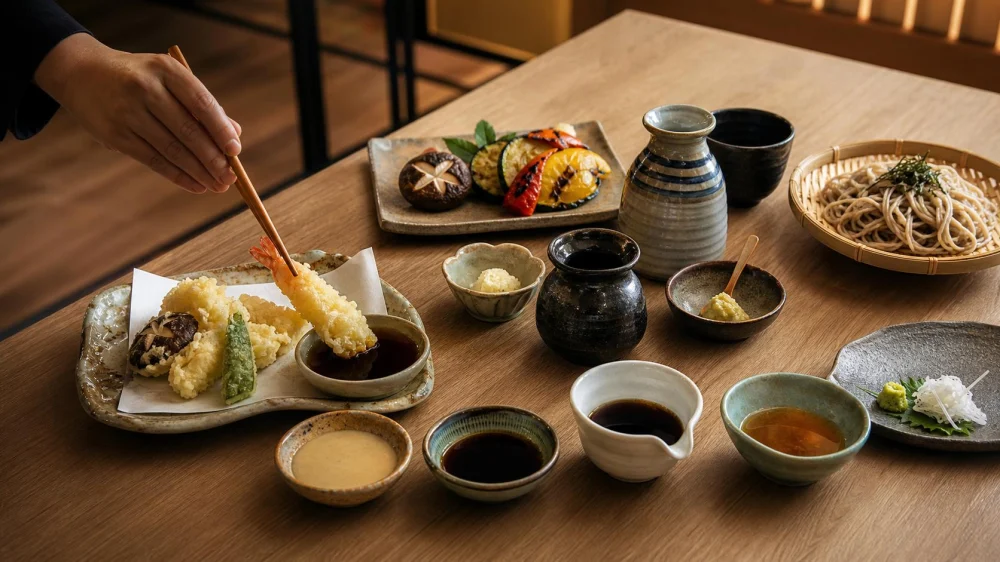
Japanese Restaurant Sauces: When to Dip, Drizzle, or Skip
On this page
Quick answer
At a Japanese restaurant, taste the dish before adding sauce. Dip foods lightly when a separate sauce is provided, drizzle only when the restaurant presents a pourable condiment for that purpose, and skip extra sauce when the food is already glazed, seasoned, or served in broth. If you are unsure, ask what the small dish contains and how the kitchen recommends using it.
This guide helps diners in the United States recognize common Japanese restaurant sauces and use them without overwhelming the food. Names, recipes, and service styles vary by region, restaurant, and dish. There is no need to perform perfect etiquette; the practical goal is to understand the intended balance.
Start with the dish as served
Japanese cooking often builds seasoning into the food through broth, marinade, glaze, salt, fermented ingredients, or a finishing sauce. A side dish may also be part of the planned flavor rather than a universal condiment.
Before reaching for anything:
- Notice whether the food already shines with a glaze or sits in seasoned liquid.
- Identify any small pitcher, divided dish, grated condiment, or citrus wedge served with it.
- Taste a plain bite when it is safe and comfortable to do so.
- Add a small amount to the next bite, not the entire plate.
- Ask the server when two similar-looking dark sauces appear.
This sequence is best for discovering flavor and controlling salt. It is not ideal to flood rice, tempura, grilled food, or sushi automatically, because the added liquid can change texture as well as taste.
Soy sauce and ponzu
Shoyu, or Japanese soy sauce, provides saltiness, aroma, and fermented savoriness. Restaurants may use different styles in the kitchen and at the table. A table bottle does not mean every dish needs more.
- Sushi and sashimi: use a small amount when desired. Some pieces arrive brushed or seasoned by the chef and need no additional soy sauce.
- Plain tofu or chilled dishes: a light pour may be appropriate when served with an unseasoned base and toppings.
- Rice: in many restaurant contexts, soy sauce is intended for the accompanying food rather than for soaking plain rice.
- Already-seasoned dishes: teriyaki, simmered foods, fried rice, and glazed grilled items commonly need no extra soy sauce.
Ponzu is a tart, savory citrus-based sauce, often combined with soy sauce. It may accompany hot pot, grilled meat, dumplings, sashimi-style preparations, or grated daikon. Dip lightly or spoon a little over an individual bite as the restaurant presents it. Because recipes differ, ask about ingredients if you avoid soy, wheat, fish, or citrus.
Tare and thicker sauces
Tare broadly refers to a seasoning sauce and can be sweet, salty, savory, or concentrated. Yakitori, grilled eel, rice bowls, ramen, and other dishes may use different tare; it is not one standard bottle.
When skewers, eel, or grilled meat arrive glossy, the kitchen has usually applied the sauce already. Taste before adding anything. A second dip is appropriate only when a separate sauce is clearly provided for guests and food-safety rules allow it.
Thicker sauces have dish-specific roles:
- Tonkatsu-style sauce: a fruity, savory brown sauce for breaded cutlets and some fried foods. Use a stripe or small pool rather than covering every crisp surface.
- Okonomiyaki sauce: typically applied to the savory pancake with mayonnaise and toppings as part of the finished dish.
- Japanese-style mayonnaise: richer and tangier than some US versions; it may be a planned topping rather than a general table condiment.
- Sesame dressing or goma sauce: often paired with salads, vegetables, noodles, or hot-pot ingredients. Stir or dip as directed by the dish.
Noodle dipping sauces and broth
Cold soba, udon, and some specialty noodles may arrive with a concentrated dipping sauce called tsuyu or a related preparation. Pick up a manageable portion of noodles and dip part of it before eating. Completely submerging every bite can make the flavor stronger than intended.
Condiments such as sliced scallion, grated daikon, ginger, wasabi, or sesame may be added gradually to the sauce or directly to a bite, depending on the dish. Start with less; you can add more but cannot remove it.
Ramen, udon soup, and other noodle broths are already seasoned. Table condiments can adjust the bowl, but first taste the broth and noodles. Add one change at a time so you know whether pepper, chili oil, vinegar, garlic, or sesame improves the balance for you.
Condiments that change the sauce
- Wasabi: sharp and aromatic. Use a small amount with the food or as the restaurant suggests; premixing a large amount into soy sauce can overpower delicate pieces.
- Karashi: hot Japanese mustard often served with pork cutlet, dumplings, natto, or simmered items. Touch a small amount to one bite.
- Shichimi togarashi: a seven-flavor chili seasoning commonly used on noodles, soups, or grilled food. Shake carefully because heat levels vary.
- Yuzu kosho: a concentrated mixture of citrus peel, chili, and salt. A tiny amount can season grilled foods, hot pot, or broth.
- Grated daikon or ginger: these fresh condiments add moisture, aroma, and contrast. They may be mixed into a dipping sauce or eaten with the food.
These additions can contain allergens or substantial sodium, and house recipes vary. Ask rather than inferring ingredients from color or name.
A simple sauce decision guide
- Dip: choose this when a separate individual sauce accompanies sushi, sashimi, tempura, dumplings, cold noodles, hot pot, or another clearly paired item.
- Drizzle: choose this when a pitcher or table condiment is intended for a plain base such as tofu, grated daikon, or an undressed component.
- Brush or dab: best for concentrated condiments such as wasabi, karashi, or yuzu kosho.
- Mix gradually: useful for noodle dipping sauce or a broth with optional seasonings.
- Skip: best when the dish is already glazed, dressed, simmered, or fully seasoned, or when the chef says sauce has been applied.
When sharing, transfer sauce to your own dish when possible. Do not return food you have bitten into a communal sauce. Follow the restaurant’s setup and ask for an extra dipping dish if needed.
Important notes for diners
Soy sauce, ponzu, tare, tsuyu, miso-based sauces, and dressings may contain soy, wheat, fish, shellfish, sesame, alcohol-derived ingredients, or other allergens. “Gluten-free,” vegan, or low-sodium cannot be determined from appearance. Tell the restaurant about medically important restrictions and ask about cross-contact, while recognizing that not every kitchen can guarantee an allergen-free preparation.
People following a sodium, kidney, heart, or other medically directed diet should use their clinician’s individualized advice. Dipping lightly may reduce the amount consumed compared with pouring, but this article cannot calculate the sodium or ingredients in a restaurant’s recipe.
Sources and evidence notes
This guide reflects broad Japanese dining practice and common restaurant usage of shoyu, ponzu, tare, tsuyu, and table condiments. Regional traditions, chef choices, and US restaurant adaptations create valid differences, so the dish’s presentation and staff guidance are the strongest evidence at the table.
For ingredient and allergy decisions, rely on current restaurant information, packaging when available, and direct staff communication. A familiar sauce name does not guarantee a standard recipe.
Frequently asked questions
Should I pour soy sauce over sushi?
A light dip is usually easier to control. Some sushi is already brushed or seasoned, so taste or ask before adding soy sauce.
Is ponzu just citrus soy sauce?
Many ponzu sauces combine citrus and soy-based seasoning, but recipes vary and may include other ingredients. Ask if an allergy or dietary restriction matters.
Do I add all the condiments to cold noodle sauce?
No. Add small amounts according to taste. Trying the sauce first preserves your ability to compare each condiment.
What is the thick brown sauce on fried cutlets?
It is often a tonkatsu-style sauce, but other house sauces can look similar. Use the menu or ask the server for the exact name and ingredients.
Is it rude to ask for sauce on the side?
A polite request is reasonable, although a restaurant may not be able to alter a premarinated, simmered, or preglazed dish. Ask before ordering when the change is important.
Next steps
At your next Japanese restaurant meal, identify how the dish is already seasoned, taste one bite, and add only one sauce or condiment at a time. Use a personal dipping dish, protect crisp textures, and ask about unfamiliar containers.
The most useful rule is simple: dip when a pairing is clearly provided, drizzle when a plain component needs it, and skip extra sauce when the kitchen has already finished the seasoning. Curiosity and a brief question are more valuable than memorizing rigid etiquette.


 Kumo Asian Restaurant3.0 (640 reviews)
 Yokohama4.0 (138 reviews)
 Tomo Sushi Japanese Restaurant4.0 (478 reviews)
 Hokkaido Ramen and Sushi Bar4.0 (259 reviews)
 Togyushi5.0 (27 reviews)
 sushi ohayo4.0 (251 reviews)
 Exploring the Menu at Suteishi Japanese Restaurant: A Culinary Adventure
 A Foodie’s Experience at Sasa Japanese Restaurant: A Culinary Adventure
 A Foodie’s Experience at Sarku Japanese Restaurant: A Culinary Journey
 An Insider’s Review of Ebisu Japanese Restaurant
 Why Fujiyama Japanese Restaurant Is a Must-Try Spot for Japanese Food Lovers
 Signature Sushi and Ramen at Ebisu Japanese Restaurant: A Culinary Journey