
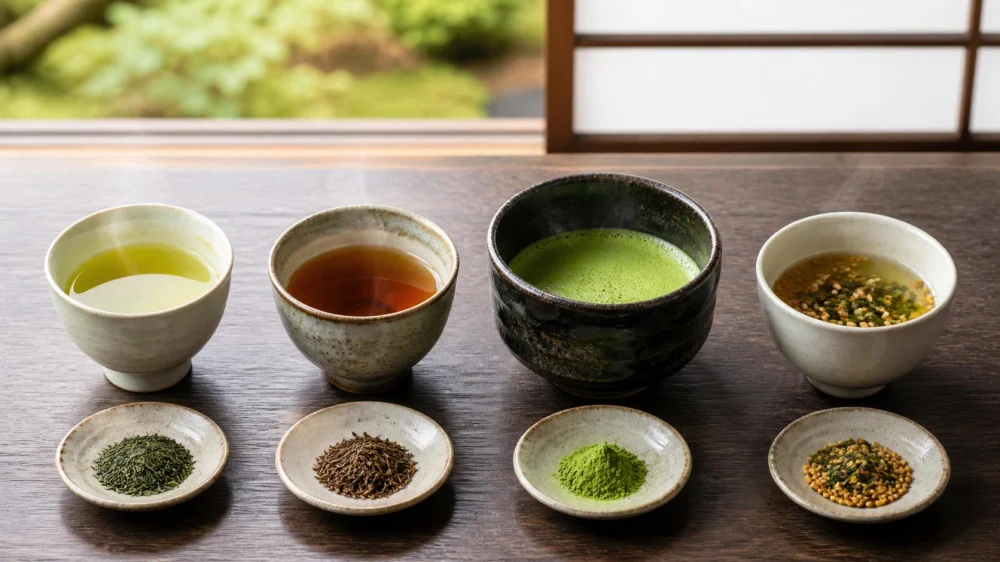
Japanese Tea at Restaurants: Sencha, Hojicha, Matcha
On this page
Quick answer
At a Japanese restaurant, choose sencha for a fresh steamed-leaf profile, hojicha for a roasted aroma and gentler bitterness, or matcha for a concentrated powdered-tea experience. Genmaicha adds roasted-rice character. Ask whether the tea is hot or cold, brewed or whisked, sweetened, refillable, and prepared to order. Flavor and caffeine vary with leaf type, amount, water, and brewing time.
Distinguish leaf tea, roasted tea, and powdered tea
Japanese tea names often describe both the leaf material and the way it is grown or processed. Sencha is commonly steamed, rolled, and dried, producing a fresh, vegetal, sometimes savory cup. Hojicha is roasted and is known for warm toasted aromas. Matcha is finely milled tencha and is whisked into water rather than strained out. Genmaicha combines tea with roasted rice. A restaurant may serve these traditionally, casually, iced, sweetened, or as part of a dessert, so read the format as well as the name.
This guide is for diners in the United States who want to choose a Japanese tea with a meal or dessert without treating unfamiliar names as a quality ranking. It may not apply to a formal tea ceremony, specialty tasting, or medical caffeine decision. Restaurant sourcing, brewing, cup size, and presentation vary widely.
Practical checklist
- Choose a flavor family: fresh and vegetal, roasted and nutty, rice-toasted, or concentrated and creamy in texture.
- Check the format: loose-leaf pot, tea bag, whisked bowl, bottled tea, iced tea, latte, or dessert drink.
- Ask whether sugar, milk, syrup, or flavoring is added by default, especially when ordering matcha beverages.
- Confirm serving size and refill policy rather than assuming all hot tea is unlimited.
- Ask about caffeine when sensitivity matters; preparation and portion can change the amount in the cup.
- Pair by contrast rather than a rigid rule: refreshing tea can reset the palate, while roasted tea can echo grilled or toasted flavors.
- Let very hot tea cool before drinking, and handle lidded pots or cups carefully.
- For allergies or dietary restrictions, verify milk, sweeteners, flavor powders, shared equipment, and dessert garnishes.
Step-by-step plan
- Decide whether tea will accompany the meal, refresh you afterward, or function as dessert. That timing narrows the useful choices more than prestige labels do.
- Read the exact service description. A plain bowl of whisked matcha is different from a sweet matcha latte, while hot brewed sencha differs from a bottled iced product.
- Use flavor cues: sencha often leans fresh and vegetal; hojicha roasted and aromatic; genmaicha toasted and grain-like; matcha concentrated, savory, and slightly bitter depending on preparation.
- Ask one practical question if the menu is vague: Is it brewed to order, sweetened, served hot or cold, and sized for one person or a table?
- Taste the first sip without additions. Notice aroma, body, bitterness, astringency, sweetness, and finish before deciding whether it works better with food or alone.
- During the meal, alternate small sips with food rather than using tea to wash down every bite. Notice whether it cleanses the palate or competes with delicate dishes.
- If ordering another pot or a refill, ask whether the same leaves are re-steeped or a fresh serving is prepared; the next cup may taste intentionally different.
A useful tea note names the style, temperature, service format, aroma, body, bitterness or astringency, added sweetness, food pairing, and how the flavor changed as it cooled. Record what was actually served instead of assuming that every tea carrying the same name will taste identical.
Limits and important notes
Color alone does not prove tea type, quality, freshness, or strength. Matcha drinks can contain substantial sweetener or milk, and green-looking desserts may use a blend or flavoring. Caffeine varies by tea, leaf quantity, water temperature, steep time, and serving size; labels such as roasted or green do not provide a precise dose. People who must limit caffeine should seek product-specific guidance from the restaurant and a healthcare professional.
Ask staff to verify ingredients if a drink contains dairy alternatives, syrups, powdered mixes, or toppings. For a serious allergy, cross-contact concern, pregnancy-related caffeine limit, medication interaction, or another medical restriction, do not use a general flavor guide as clearance. Follow individualized professional advice and choose a simpler beverage when details cannot be confirmed.
Frequently asked questions
Is matcha the same as brewed green tea?
No. Matcha is powder made from processed tencha and is suspended in the drink, while brewed leaf teas are infused and the leaves are removed. Restaurant matcha may also appear in sweetened lattes or desserts.
What does hojicha taste like?
Roasting usually gives hojicha warm, toasted, woody, or nutty aromas with less of the fresh vegetal character associated with sencha. Exact intensity depends on the leaves, roast, and brew.
What is genmaicha?
Genmaicha combines tea with roasted rice, creating a recognizable toasted-grain aroma. The tea base and ratio vary, so one restaurant's cup may be greener, lighter, or more roasted than another's.
Which Japanese tea is best with a meal?
There is no universal best. Sencha can feel refreshing, hojicha can complement roasted foods, and genmaicha can suit savory dishes, but preparation and personal taste matter more than a fixed rule. Ask what the restaurant recommends with its menu.
Sources and evidence
This guide reflects Japanese tea descriptions from Japan's Ministry of Agriculture, Forestry and Fisheries reviewed in September 2026. MAFF materials distinguish sencha, hojicha, genmaicha, tencha, and matcha by cultivation and processing, including steaming and rolling for sencha, roasting for hojicha, roasted rice in genmaicha, and milling tencha for matcha. Flavor impressions and restaurant service details are practical guidance, not universal specifications or health claims.
Conclusion and next steps
Choose the experience you want before choosing the name: refreshing leaf tea with food, roasted aroma after a savory meal, or a concentrated whisked cup. Confirm the service format and sweetness, taste it plain, and note how it changes with the meal. On a later visit, vary one factor—tea style, temperature, or pairing—so the comparison stays useful.

 RA Sushi Bar Restaurant4.0 (5289 reviews)
 Oishii Ramen4.0 (73 reviews)
 Ohjah Japanese Steakhouse Sushi & Hibachi4.0 (1293 reviews)
 Sake Sushi4.0 (287 reviews)
 Taku Sushi Bar4.0 (338 reviews)
 The Saucy Hibachi4.0 (6 reviews)
 Why Locals Recommend the Best Japanese Restaurants in Los Angeles
 The Complete Guide to Dining at Suteishi Japanese Restaurant
 The History and Flavor Behind Gyotaku Japanese Restaurant
 Signature Sushi and Ramen at Asahi Japanese Restaurant: A Must-Try Experience
 What is a Japanese Restaurant? Discover Popular Dishes and History
 Does Ninja Japanese Restaurant Do Carry Out? Everything You Need to Know