
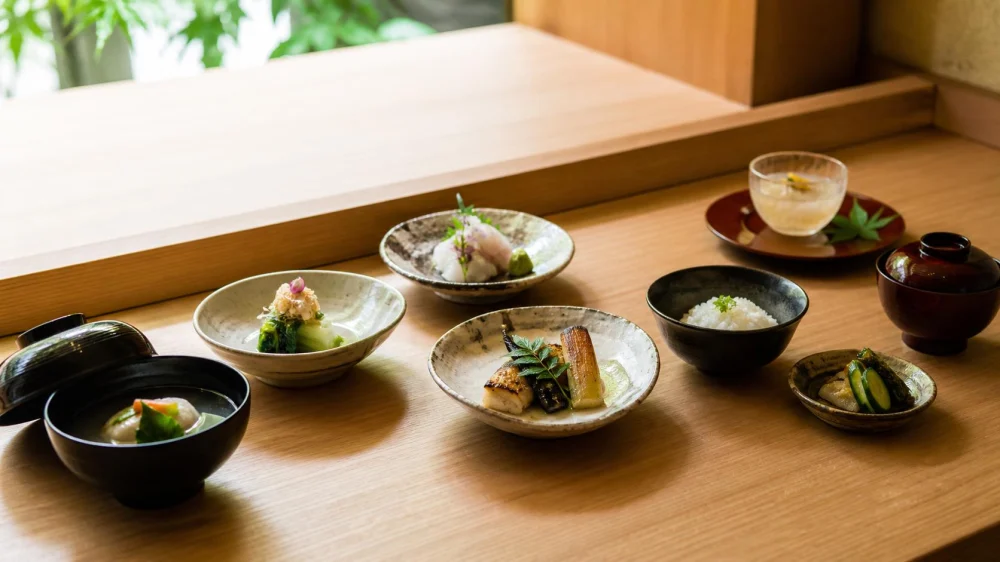
Kaiseki Dining: Understand the Course Flow and Seasonality
On this page
Quick answer
Kaiseki is a multi-course Japanese dining tradition built around seasonality, balance, technique, and presentation. A meal often moves from lighter preparations toward grilled or simmered dishes, then rice and soup, followed by a modest sweet. The exact names and order vary by chef, region, season, and restaurant, so treat the menu as a composed experience rather than a fixed checklist.
This overview is for diners in the United States considering a kaiseki restaurant or tasting menu. It explains common patterns without claiming that every restaurant follows the same tradition. The restaurant remains the best source for its menu, pace, ingredient policy, and accommodation options.
What kaiseki means
In modern restaurant use, kaiseki commonly describes a carefully sequenced meal in which ingredients, cooking methods, serving vessels, temperature, color, and negative space support a seasonal theme. It is not simply a large set of small dishes. Each course has a role, and contrast across the meal matters as much as any one plate.
The word can refer to traditions with different histories and written characters, including cuisine associated with formal tea gatherings and banquet-style seasonal dining. A U.S. restaurant may use “kaiseki,” “kaiseki-inspired,” or “Japanese tasting menu” according to its own approach. Read the description rather than assuming a single formal definition.
Kaiseki is best for diners who enjoy a chef-led pace, subtle flavors, seasonal ingredients, and dishes selected as a whole. It may not be ideal when a diner needs complete control over every item, has little time, or requires an accommodation the kitchen cannot safely provide.
How the course flow works
Course names and order vary, but a diner may encounter a progression like this:
- Opening bite or appetizer: A small preparation establishes the season and tone.
- Soup: A clear or delicately seasoned soup highlights aroma, broth, and one or two central ingredients.
- Sashimi or another raw preparation: When included, it emphasizes clean flavor, knife work, and texture.
- Seasonal composed course: Several small elements may show different colors, shapes, and techniques.
- Grilled dish: Fish, vegetables, or another ingredient adds browning, smoke, and firmer texture.
- Simmered or steamed dish: A gentler preparation may return the meal to softer textures and integrated broth flavors.
- Rice, soup, and pickles: This combination often provides a grounded savory finish.
- Fruit or sweet: Dessert is commonly restrained and may continue the seasonal theme.
A restaurant may omit, combine, rename, or reorder these elements. Modern chefs may incorporate local U.S. produce or contemporary techniques while preserving the idea of progression. The useful question is not “Is every traditional course present?” but “How do temperature, texture, and intensity change from one course to the next?”
How seasonality appears
Seasonality can appear through ingredients at their best, but it can also shape colors, garnishes, plate materials, motifs, cutting styles, and the feeling of the presentation. A cool glass bowl may support a summer course; earthy vessels and warm preparations may reinforce autumn. These are expressive choices, not a code every diner must decode.
Chefs may celebrate the beginning of a season, its peak, or the anticipation of what comes next. Availability in the United States, sustainability choices, local sourcing, and import constraints can affect the menu. “Seasonal” therefore does not always mean imported from Japan or locally grown; ask the restaurant if origin matters to you.
Photography can be tempting, but enjoy the temperature and aroma first. Ask whether photos are welcome, keep equipment unobtrusive, avoid flash, and do not delay the table or adjacent diners.
What to confirm before booking
- Menu format: Confirm whether the meal is fixed, partially selectable, or chef's choice.
- Duration: Ask how long to allow and whether all guests must begin together.
- Price structure: Verify what is included, service charges, taxes, beverage pairings, and cancellation terms.
- Allergies and dietary needs: Contact the restaurant before booking. Dashi, sauces, marinades, garnishes, and shared preparation can contain ingredients not visible on the plate.
- Raw and undercooked foods: Ask which courses may include them and whether alternatives are possible.
- Seating: Counter, table, and traditional floor-style seating offer different experiences and accessibility.
- Dress and fragrance: Follow the restaurant's policy and avoid strong fragrance that could interfere with aroma.
Do not assume a complex dietary restriction can be accommodated at arrival. A menu designed as one sequence may rely on shared stocks, soy, wheat, seafood, sesame, egg, or other common allergens throughout.
Practical dining etiquette
Arrive on time because preparation may be synchronized across the counter or room. Listen to the server's brief explanation, but do not worry about memorizing every Japanese term. Eat hot dishes while hot and chilled dishes while chilled. Use the provided utensils and follow any simple instruction about sauce or sequence.
Handle delicate bowls and lacquerware carefully. When lifting a small bowl is practical, support it securely rather than stretching across the table. Rest chopsticks on their holder; do not stick them upright in rice, pass food chopstick-to-chopstick, or use them to point.
Questions are welcome when the pace allows. Ask about an unfamiliar ingredient, cooking technique, or vessel with curiosity rather than testing whether the meal is “authentic.” Japanese cuisine changes across regions, households, chefs, and time.
Important notes and variations
Restaurant terminology is not regulated uniformly. A meal labeled kaiseki in the United States may be traditional, modern, abbreviated, or broadly inspired by the format. Price, number of courses, imported ingredients, and chef background do not by themselves prove quality or authenticity.
People who are pregnant, immunocompromised, managing food allergies, or advised to avoid raw or undercooked foods should discuss the menu with the restaurant and follow qualified medical guidance. The restaurant can describe preparation, but it cannot guarantee suitability unless it explicitly confirms an accommodation.
Frequently asked questions
Is kaiseki the same as omakase?
No. Omakase means entrusting selection to the chef and can apply to sushi or other formats. Kaiseki refers more specifically to a seasonal multi-course composition, though a kaiseki menu may also be chef-selected.
How many courses are in a kaiseki meal?
There is no universal number. Restaurants may offer a concise seasonal menu or a longer progression. Confirm the current format and expected duration when booking.
Do I need to know Japanese dining etiquette?
Basic courtesy is enough: arrive on time, follow staff guidance, handle tableware carefully, and avoid disrupting other diners. A thoughtful restaurant will explain anything essential.
Can kaiseki be vegetarian?
Some restaurants offer plant-based menus, but many broths and seasonings use fish or other animal ingredients. Ask well in advance and request a clear statement of what can and cannot be changed.
Should I order a beverage pairing?
Only if it suits your preferences, budget, and health needs. Tea and nonalcoholic pairings may be available. Verify the number and size of pours and never drive after drinking alcohol.
Sources and evidence notes
This article summarizes widely recognized features of kaiseki dining: a seasonal theme, multiple techniques, progression across courses, and attention to vessels and presentation. Course names and sequences differ among culinary traditions and individual restaurants. Current menu details and ingredient information should come directly from the restaurant.
Next steps
Compare restaurants by the clarity of their menu description, allergy communication, seating format, pacing, and cancellation policy. Book only after confirming any essential accommodation. At the meal, notice how the chef moves through temperature, texture, color, and season—and let the sequence unfold without treating it as a test of expertise.


 Sushi House4.0 (298 reviews)
 Mickey’s Place4.0 (43 reviews)
 Sushi Ya Japanese Restaurant4.0 (310 reviews)
 Lee's Sushi H-Mart Food Court4.0 (47 reviews)
 Sushi & Roll4.0 (99 reviews)
 Sapporo Soul Ramen & Sushi4.0 (29 reviews)
 An Insider’s Review of Best Japanese Restaurants Near Me | Top Picks for Sushi and More
 The Complete Guide to Dining at Inaba Japanese Restaurant
 Exploring the Menu at a Japanese Restaurant in SF: Must-Try Dishes
 An Insider’s Review of Japanese Restaurants
 Signature Sushi and Ramen at Yamato Japanese Restaurant | A True Japanese Dining Experience
 Why Locals Recommend Douzo Modern Japanese Restaurant in Boston