
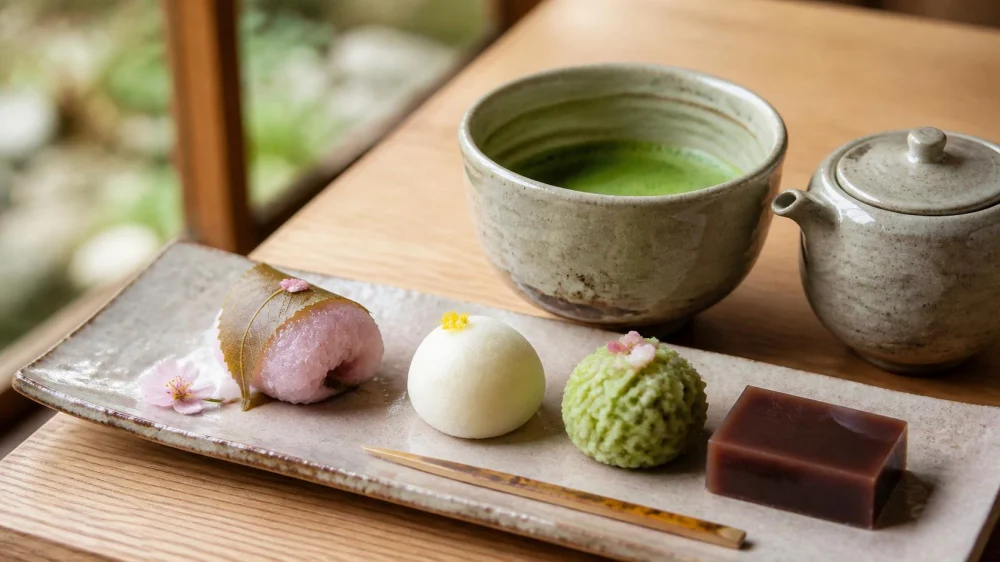
Wagashi Guide: Japanese Sweets by Season and Texture
On this page
- Quick answer
- What wagashi means
- Common types and textures
- How season shapes wagashi
- Pairing wagashi with tea
- How to choose and order
- Ingredients, allergies, and dietary checks
- A simple tasting checklist
- Limitations and important notes
- Frequently asked questions
- Sources and evidence notes
- Conclusion and next steps
Quick answer
Wagashi are Japanese sweets traditionally shaped by seasonal themes and often served with tea. Choose by texture as well as appearance: mochi-based sweets are chewy, yokan is smooth and sliceable, manju is soft and filled, and delicate namagashi may be moist and finely crafted. Ask about ingredients, freshness, and the recommended tea before ordering.
This guide is for diners exploring wagashi at Japanese restaurants, tea shops, and specialty stores in the United States. Menus, recipes, availability, and serving customs vary by maker.
What wagashi means
Wagashi are Japanese-style confections that commonly use ingredients such as rice flour, sweetened bean paste, agar, sugar, chestnut, or soybean flour. The category is broad: it includes everyday snacks, travel souvenirs, festival sweets, and highly refined pieces prepared for tea settings.
Many wagashi emphasize restrained sweetness, texture, shape, and a sense of season. That does not mean every item is ancient, handmade, or part of a formal tea ceremony. Contemporary makers may use new flavors, colors, and production methods while retaining recognizable forms.
Common types and textures
- Mochi and daifuku: soft, elastic rice-based dough; daifuku usually encloses a filling such as smooth or chunky sweet bean paste.
- Manju: a filled sweet with a steamed or baked outer layer, often softer and more cake-like than mochi.
- Yokan: a firm, smooth confection commonly set with agar and cut into slices; versions range from dense to lighter and more watery.
- Nerikiri and other namagashi: moist, delicate sweets shaped to express flowers, leaves, weather, or seasonal scenes, often paired with matcha.
- Dorayaki: sweet filling between two small, tender pancake-like cakes.
- Monaka: crisp wafers filled with sweet bean paste; texture is best when the wafer has not absorbed too much moisture.
- Dango: small chewy rice dumplings served on a skewer or in a bowl, sometimes with sweet soy glaze, bean paste, or soybean flour.
For a first tasting, compare two contrasting textures rather than ordering several similar bean-filled sweets. A delicate namagashi and a crisp monaka, for example, reveal different approaches.
How season shapes wagashi
Season may influence shape, color, name, flavor, and presentation. Spring pieces might suggest blossoms; summer sweets may look cool or translucent; autumn designs can echo leaves or harvest ingredients; winter sweets may use snow imagery or richer textures.
Seasonal references are often symbolic rather than literal. A sweet shaped like a flower may use bean paste rather than that flower’s flavor. Ask whether the description refers to appearance, aroma, filling, or all three.
In the United States, a restaurant or shop may offer a limited imported or locally made selection. Availability can reflect shipping schedules and the maker’s production calendar as much as the traditional Japanese season.
Pairing wagashi with tea
Wagashi are frequently paired with unsweetened Japanese tea so sweetness and bitterness balance each other. Matcha can complement a rich, smooth sweet, while sencha may feel lighter with a simpler piece. Roasted hojicha can work well with nutty, toasted, or caramel-like notes.
A practical sequence is to take a small bite of the sweet, notice the texture and filling, then sip the tea. There is no need to rush or soak the confection. If tea is part of a formal service, follow the host’s guidance rather than copying rules from a different setting.
How to choose and order
- Start with texture. Say whether you prefer chewy, soft, crisp, jelly-like, or cake-like sweets.
- Ask about the filling. Smooth red bean paste, chunky bean paste, white bean paste, chestnut, sesame, and fruit all create different experiences.
- Check freshness and storage. Some fresh sweets are intended for prompt consumption; packaged items may last longer.
- Choose a portion appropriate to the tea. Refined wagashi can be satisfying in small servings.
- Confirm serving temperature. Follow the maker’s directions, especially for refrigerated or frozen products.
- Ask for a recommendation. Staff may know which item is at its best that day or which tea pairing suits it.
Ingredients, allergies, and dietary checks
Do not assume that every wagashi is vegan, gluten-free, nut-free, or safe for a particular allergy. Recipes may include wheat, egg, dairy, soy, sesame, nuts, gelatin, or ingredients processed on shared equipment. Soybeans appear in common ingredients such as kinako, and wheat may appear in cakes, wafers, or sauces.
Ask staff to check the specific product label or recipe and cross-contact practices. Use clear ingredient names and describe the severity of the allergy. If the shop cannot verify ingredients or handling, choose an alternative you can confirm rather than relying on appearance.
A simple tasting checklist
- Look at the shape and ask what season or image it represents.
- Notice whether the outer texture is chewy, tender, crisp, or smooth.
- Identify the filling and whether it is smooth or textured.
- Compare sweetness before and after a sip of tea.
- Check how aroma and temperature affect the flavor.
- Record the name or photograph the package only where permitted, so you can find the style again.
Best for exploration: one or two pieces with distinct textures. Not ideal: ordering a large assortment solely by color when you have not checked fillings, allergens, or freshness.
Limitations and important notes
Names and recipes overlap, and English menu translations may simplify regional or maker-specific distinctions. A label such as “mochi” can describe different products in different shops. Ask how that particular item is made and served.
Highly perishable sweets require attention to storage time and temperature. Follow the business’s instructions. People with swallowing difficulties should use caution with sticky, chewy rice cakes and seek advice appropriate to their needs.
Frequently asked questions
Is mochi the same as wagashi?
Mochi can be used in wagashi, but wagashi is the broader category. Many wagashi do not use a mochi exterior, and mochi also appears in savory foods.
Is all wagashi filled with red bean paste?
No. Sweet bean paste is common, but fillings and bases can include white bean paste, chestnut, sesame, fruit, sweet potato, jelly-like agar, and other ingredients.
Which wagashi is easiest for a beginner?
Dorayaki or manju can feel familiar to diners who enjoy soft cakes, while daifuku suits people who like a chewy texture. For a tea-focused experience, ask for the day’s recommended namagashi.
Should wagashi be eaten with chopsticks?
It depends on the item and setting. A shop may provide a small pick, fork, wrapper, or plate. Follow the serving utensils and staff guidance.
Sources and evidence notes
This guide reflects broad Japanese confectionery practice and common restaurant guidance: wagashi vary by moisture, preparation, texture, season, and tea context. Specific ingredients, traditional names, and service customs depend on the maker and region. Ingredient safety must be verified with the business serving the item.
Conclusion and next steps
Choose wagashi by texture, filling, freshness, and tea pairing—not appearance alone. Start with two contrasting pieces, ask what seasonal idea they express, and confirm ingredients before tasting. A thoughtful small order makes it easier to notice how the sweet’s form, texture, and restrained flavor work with the tea.

 Rai Rai Ramen - Mt. Laurel -4.0 (939 reviews)
 Newport Fusion Sushi4.0 (107 reviews)
 Sushi Palace4.0 (377 reviews)
 King of Ramen Pasadena4.0 (264 reviews)
 Deep Blue Sushi3.0 (643 reviews)
 Leezakaya4.0 (348 reviews)
 Insider’s Review of Japanese Restaurants in Chicago: Best Spots to Try
 A Foodie’s Experience at Tekka Japanese Restaurant
 Signature Sushi and Ramen at Aji Ten Japanese Restaurant Canton MI
 Signature Sushi and Ramen at Shimogamo Japanese Restaurant
 What Is Furikake? Japanese Rice Seasoning Guide
 Top Dishes You Should Order at Yellowtail Japanese Restaurant & Lounge Menu