
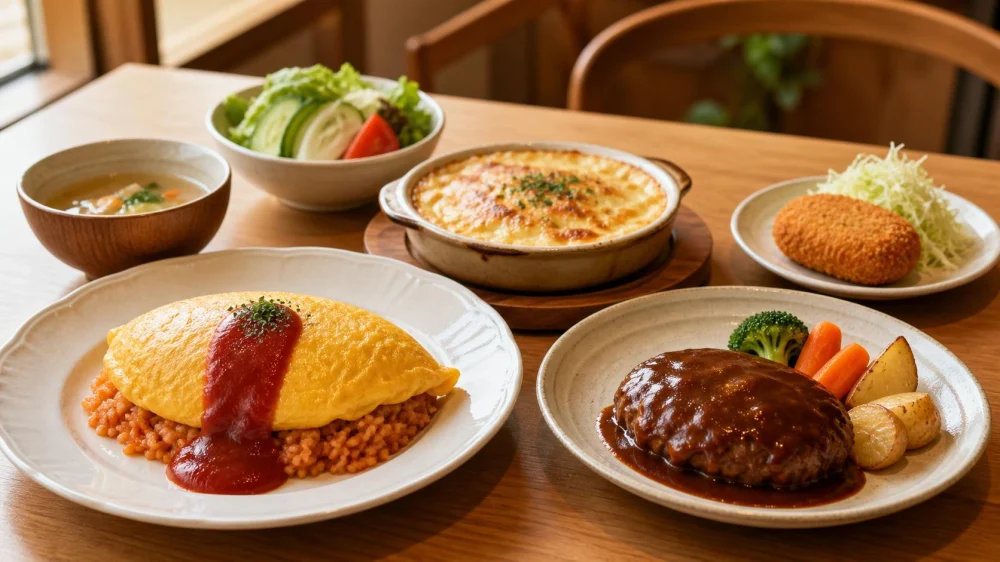
Yoshoku Guide: Japanese Takes on Western Comfort Food
On this page
Quick answer
Yoshoku is Japanese cuisine shaped by Western dishes and ingredients, then adapted into its own familiar restaurant style. First-time diners can choose by texture: omurice for soft egg and rice, hambagu for a savory patty, doria for a baked creamy dish, or naporitan for sweet-savory pan-fried spaghetti. Add soup, salad, or vegetables, and ask about sauces and hidden allergens.
Yoshoku, often translated as “Western food,” refers to Western-influenced dishes developed in Japan and adjusted to Japanese tastes, kitchens, and meal formats. It is not simply imported European or American food. The category has its own history, sauces, presentation, and comfort-food identity.
What yoshoku means
Yoshoku developed as cooks in Japan interpreted foreign dishes with available ingredients and local preferences. Many dishes use rice, demi-glace-style sauces, breadcrumbs, eggs, ketchup-based seasoning, or creamy baked preparations. Restaurants may specialize in yoshoku or place a few favorites on a broader Japanese menu.
Best for diners who want recognizable comfort-food forms with distinctly Japanese seasoning and presentation. Not ideal for someone expecting either traditional washoku or an exact European recipe.
Classic dishes to recognize
- Omurice: seasoned fried rice wrapped or topped with a soft omelet, often served with ketchup or a richer sauce.
- Hambagu: a tender ground-meat patty, commonly plated with sauce, rice, and vegetables rather than served as a sandwich.
- Doria: rice baked with creamy sauce and cheese, similar in structure to a gratin.
- Naporitan: pan-fried spaghetti with a ketchup-forward sauce and ingredients such as onion, pepper, mushroom, or sausage.
- Korokke: breaded croquettes, often filled with potato or a creamy mixture.
- Hayashi rice: rice served with a deeply savory beef-and-onion sauce.
- Japanese-style fried cutlets: breaded meat or seafood accompanied by shredded cabbage and a thick savory sauce.
Names and recipes vary. A restaurant may offer modern versions, regional touches, or a house specialty that combines categories.
Choose a dish by flavor and texture
- Soft and mild: omurice with a simple sauce or a creamy doria.
- Savory and hearty: hambagu or hayashi rice.
- Crisp outside: korokke or a breaded cutlet.
- Sweet-savory and nostalgic: naporitan.
- Sauce-focused: choose a dish with demi-glace-style, tomato, curry, or cream sauce after asking how rich it is.
When deciding between similar dishes, ask whether the sauce is creamy, tomato-based, sweet, tangy, or deeply savory; whether the egg is fully set; and whether the portion includes rice, soup, or salad.
Build a balanced order
- Choose one main dish based on the texture and richness you want.
- Check what sides already come with it before adding more starch.
- Add vegetables, salad, or broth when the main is fried, creamy, or sauce-heavy.
- Share a croquette or small side if you want to sample another style without ordering two mains.
- Ask for sauce on the side only if the restaurant can do so without changing the intended dish.
For a first visit, omurice or hambagu often provides a clear introduction. Choose doria when you want a rich baked meal, and naporitan when you are curious about a distinctly Japanese interpretation of spaghetti.
Dietary and allergy questions
Yoshoku can combine several common allergens in one dish. Breadcrumbs and pasta may contain wheat; omelets and coatings contain egg; creamy sauces and cheese contain dairy; patties may include mixed meats; and sauces can contain soy, fish-based stock, alcohol-based seasoning, or other ingredients.
- What meat, stock, and seasonings are used in the sauce?
- Does the patty or croquette contain egg, milk, or wheat?
- Is the fried item cooked in shared oil?
- Can the egg be cooked more firmly if needed?
- Does a vegetarian-looking dish contain meat or fish stock?
For a serious allergy, explain the severity and ask whether the kitchen can prevent cross-contact. Choose a simpler item or another restaurant if staff cannot confirm a safe process.
Finding yoshoku in the United States
Search menus for individual dish names as well as “yoshoku,” because many Japanese restaurants serve omurice, hambagu, or doria without using the category label. Review current menus, hours, reservation options, accessibility, and recent dish-specific feedback. Call ahead for a specialty item because availability may be limited.
A specialist café or yoshoku restaurant is best when you want several classic choices and detailed sauce options. A broader Japanese restaurant may be better for a group that also wants sushi, noodles, or other categories.
Limitations and important notes
This guide provides general culinary and dining information. Recipes, terminology, portion sizes, and service styles vary by restaurant and region. The restaurant’s current menu and staff are the best sources for its ingredients and preparation.
Raw or lightly cooked eggs and undercooked ground meat can carry food-safety risk. People who are pregnant, very young, older, or immunocompromised may need individualized professional guidance and fully cooked options.
Sources and evidence notes
The descriptions reflect widely recognized yoshoku categories and common restaurant practice, but they do not prescribe one authentic formula. Restaurant recipes evolve. Menu descriptions, direct staff answers, and visible preparation details are the primary evidence for a specific meal.
Frequently asked questions
Is Japanese curry considered yoshoku?
It is commonly associated with Western-influenced Japanese cuisine, although restaurants and writers may group it in different ways. It has developed into a distinct Japanese style.
Is omurice always made with ketchup?
No. The rice and topping may use ketchup, demi-glace-style sauce, cream sauce, or another house preparation.
Is yoshoku the same as fusion food?
Not exactly. Yoshoku is an established Japanese category with dishes that have become familiar classics, rather than any new combination of cuisines.
Are yoshoku dishes vegetarian?
Some can be, but sauces and stocks may contain meat or fish. Ask about the full recipe and shared cooking equipment.
What is a good first yoshoku dish?
Choose omurice for egg and rice, hambagu for a hearty savory plate, or doria for a creamy baked dish. Your preferred texture is the best guide.
Conclusion and next steps
Review the menu for omurice, hambagu, doria, naporitan, korokke, or hayashi rice. Pick one main by texture, balance it with a lighter side, and ask specific sauce and allergen questions. Approach yoshoku as its own Japanese comfort-food tradition, not as a test of how closely it copies a Western original.

 Sushi Zo4.0 (121 reviews)
 So.Ramen4.0 (67 reviews)
 Ubu4.0 (258 reviews)
 Sushi Blossom4.0 (133 reviews)
 Poke Bowl 1014.0 (52 reviews)
 Daichi Sushi and Grill4.0 (155 reviews)
 Why Locals Recommend Sake Japanese Restaurant
 Exploring the Menu at Yuki Japanese Restaurant
 What Do They Yell at Japanese Restaurants? Sounds, Meaning, Atmosphere
 Why Tanto Japanese Restaurant Is a Must-Try Spot for Japanese Food Lovers
 Why Locals Recommend Japanese Sushi Restaurant for Authentic Dining
 Top Dishes You Should Order at Domo Japanese Country Food Restaurant