
Dashi Explained: The Foundation of Japanese Savory Flavor
On this page
Quick answer
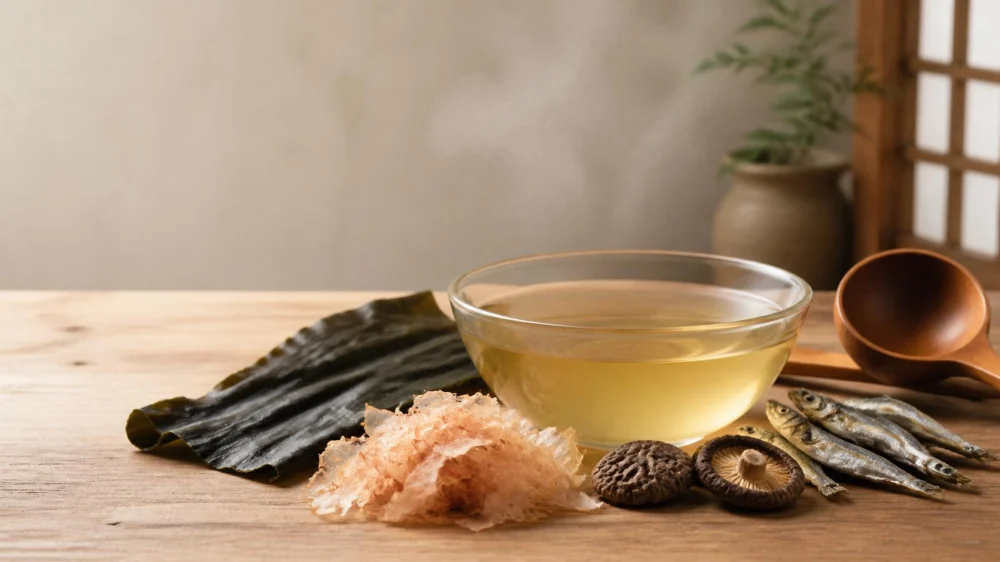
Dashi is a family of Japanese soup stocks used to build clean, savory depth in soups, sauces, simmered dishes, steamed foods, and noodle broths. Common versions draw flavor from kombu seaweed, dried bonito, dried sardines, or dried shiitake mushrooms. The exact ingredients matter: a pale, delicate broth may still contain fish, soy, or other allergens, so ask the restaurant when needed.
This guide is for diners in the United States who want to understand Japanese menu flavors. Recipes vary by region, chef, restaurant, and packaged product. “Dashi” describes a role in cooking, not one fixed recipe.
What dashi is
Dashi is a lightly extracted stock that gives many Japanese dishes their underlying savory structure. Unlike a heavily reduced stock, it is often valued for clarity and a focused aroma. It can make other ingredients taste more complete without turning the finished dish into a thick or strongly seasoned broth.
Dashi is closely associated with umami, the savory taste found naturally in ingredients such as kombu, dried fish, and mushrooms. Cooks often combine ingredients with complementary savory compounds. That combination can create depth while preserving the identity of tofu, vegetables, noodles, seafood, or eggs.
The stock may be prepared in the restaurant, made from concentrated liquid or powder, or built from a blend. A menu does not always state the method. Neither a light color nor a vegetable-forward dish proves that the broth is vegetarian.
Common types of dashi
Kombu dashi
Kombu dashi is made from dried kelp. It can have a clean marine aroma and gentle savory character. It is often used when cooks want a subtle base that supports vegetables or delicate ingredients.
Kombu itself is plant-based, but a dish made with kombu dashi may contain other animal-derived ingredients. Diners following a vegan or vegetarian diet should verify the complete preparation.
Katsuobushi dashi
Katsuobushi is dried, smoked, and fermented skipjack tuna, commonly called bonito flakes in English-language menus and stores. Stock made with it can add a recognizable smoky, fish-based aroma and a quick savory finish.
Katsuobushi dashi is not vegetarian and is relevant to fish allergies. It may be present even when no visible fish appears in the bowl.
Awase dashi
Awase means combined. A widely used version brings kombu and katsuobushi together for a balanced stock. The kombu supplies one kind of savory depth while the dried fish adds aroma and another layer of umami.
Because “awase” describes a combination, confirm the ingredients rather than assuming every restaurant uses the same pair.
Niboshi dashi
Niboshi dashi uses small dried fish, often sardines or anchovy-like fish depending on labeling and supply. It can taste more assertively marine than a delicate kombu stock and is used in some noodle broths, soups, and regional preparations.
The strength varies with the fish, preparation, extraction, and other ingredients. It is fish-based and should be treated accordingly for dietary needs.
Shiitake dashi
Dried shiitake mushrooms can produce an earthy, aromatic stock. Shiitake dashi may be used alone or with kombu, including in plant-based cooking. Fresh mushrooms do not create exactly the same concentrated character as dried shiitake.
A mushroom flavor does not guarantee the entire dish is vegan. Sauces, garnishes, and blended stocks still need to be checked.
Where dashi appears on a menu
Dashi may be part of miso soup, clear soup, noodle broth, dipping sauce, simmered vegetables, rolled omelet, savory egg custard, hot pot, or the liquid served with fried foods. It can also season rice dishes and sauces where diners do not see a separate bowl of stock.
Some menus name the stock directly. Others list only the finished dish. Words such as kombu, bonito, katsuobushi, niboshi, shiitake, fish stock, or soup base can offer clues, but translated menus may simplify descriptions.
Miso and dashi are not the same ingredient. Miso is a fermented paste; dashi is the stock that often forms the liquid base of miso soup. Soy sauce can season dashi-based preparations, but it is not a substitute for the stock.
How to notice dashi
- Smell before seasoning. Notice whether the aroma is marine, smoky, earthy, or kelp-like.
- Taste the broth alone. Look for a clean savory impression rather than only saltiness or sweetness.
- Notice the finish. Dashi often supports a lingering savory quality without heavy fat or thickness.
- Compare dishes. A clear soup and a dipping sauce may reveal different strengths of the same stock style.
- Respect the intended balance. Taste before adding soy sauce, chili, or other condiments that can cover delicate aromas.
- Ask a focused question. If ingredients matter, ask which stock is used in the specific dish rather than whether the restaurant “uses dashi” generally.
There is no single ideal intensity. A subtle stock may be best for tofu or steamed egg, while a stronger dried-fish stock may suit robust noodles. The appropriate choice depends on the dish, not a universal ranking.
Dietary and allergy notes
Dashi can contain fish, shellfish-related ingredients in some blends, soy-containing seasonings, wheat-containing soy sauce, or other components not obvious from appearance. Packaged soup bases can contain additional flavorings and allergens. Recipes and cross-contact procedures differ between restaurants.
For an allergy, do not rely only on a menu label such as “vegetable,” “mushroom,” or “clear broth.” Tell staff the specific allergen, ask them to check the stock, sauce, garnish, and preparation area, and decide based on the restaurant’s ability to answer and manage cross-contact. If staff cannot verify ingredients, choose an option whose preparation can be confirmed or do not order the dish.
For vegetarian or vegan dining, ask whether the stock contains bonito, niboshi, other fish, or animal-derived concentrates. A dish can contain tofu and vegetables while still using fish-based dashi. Dietary preference and medical allergy require different levels of precaution; communicate which applies.
Sources and evidence notes
This article reflects broad Japanese culinary practice and common English-language restaurant terminology. Ingredient combinations, names, and strength vary across regions and kitchens. It does not identify the recipe or allergen controls of any specific restaurant. For a particular meal, the restaurant’s current ingredient records and staff confirmation are more relevant than a general description.
Frequently asked questions
Is all dashi made from fish?
No. Kombu and dried shiitake can form plant-based stocks. However, many common blends include dried fish, so verify the exact recipe when dietary restrictions apply.
Is dashi the same as broth?
Dashi is commonly translated as stock or broth, but the term refers to Japanese flavor bases with particular ingredients and extraction methods. The translation does not describe the exact recipe.
Does clear broth mean it is mild or vegetarian?
No. A clear stock can have strong fish flavor and may contain animal ingredients. Color and clarity are not dependable dietary indicators.
Why does dashi taste savory without seeming heavy?
Ingredients such as kombu, dried fish, and dried mushrooms contain naturally occurring savory compounds. Careful extraction can emphasize aroma and umami without the fat, roasting, or long reduction associated with some other stocks.
Can I ask for a dish without dashi?
You can ask, but the stock may be prepared in advance or form the base of the dish. Staff can explain whether a substitution is possible and which alternatives avoid the ingredient.
Next steps
At your next Japanese restaurant meal, identify one soup, noodle broth, or simmered dish and ask which dashi style supports it. Taste it before adding condiments, then notice whether the main impression is kelp-like, smoky, fish-forward, or earthy. If you have an allergy or dietary restriction, confirm every component of the specific dish before ordering.


 Hibachiman4.0 (214 reviews)
 Kazu Sushi and Sushi Burito4.0 (274 reviews)
 Midorie Miami4.0 (122 reviews)
 Blue Ocean Sushi & Grill4.0 (106 reviews)
 Isshin ramen & more4.0 (146 reviews)
 Sushi Kanpai Santa Monica4.0 (191 reviews)
 A Foodie’s Experience at Hatsuhana Japanese Restaurant
 Essential Japanese Pantry Staples Every Home Cook Needs: Soy Sauce, Mirin, Miso and More
 Signature Sushi and Ramen at Akira Japanese Restaurant: A Culinary Experience
 Why Miyako's Japanese Restaurant Is a Must-Try Spot for Japanese Food Lovers
 How to Market a Japanese Restaurant Effectively in a Digital Age
 The Complete Guide to Dining at Kazu Japanese Restaurant | Sushi, Tempura & More