
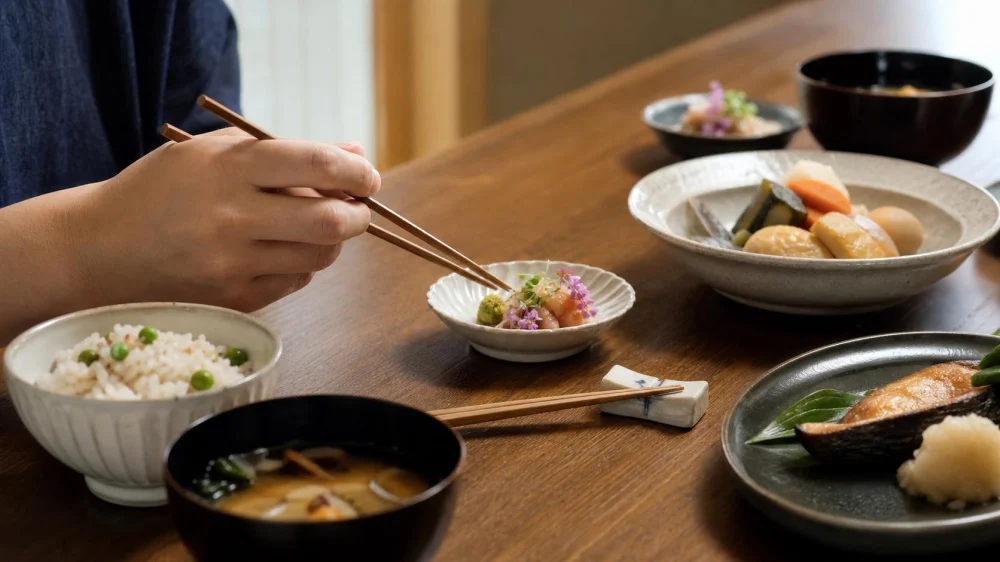
Japanese Chopstick Etiquette: Simple Rules for Dining Out
On this page
Quick answer
At a Japanese restaurant, use chopsticks to lift food gently, and place them together on the provided chopstick rest when pausing. Do not stand them upright in rice, pass food directly from your chopsticks to another person’s, point with them, or move dishes with them. For shared plates, use serving utensils when provided or ask the restaurant what it prefers.
The basic way to use and rest chopsticks
Japanese chopstick etiquette is the set of table manners for handling, using, and resting chopsticks without creating mess, danger, or culturally uncomfortable gestures. Most diners do not expect visitors in the United States to perform every detail perfectly. Calm, considerate handling is the best foundation.
Hold one chopstick relatively steady near the base of the thumb, supported by the ring finger. Move the upper chopstick with the thumb, index finger, and middle finger. The tips should meet with light pressure. Exact grip varies, and a secure, comfortable hold is more important than forcing a painful position.
If a hashioki, or chopstick rest, is provided, place the tips on it whenever you pause. Keep the pair together rather than spreading them across different dishes. If there is no rest, follow the table setting or ask; a folded paper sleeve may sometimes be used, but do not balance chopsticks on a bowl where they can roll.
Chopstick actions to avoid
- Do not stand chopsticks upright in rice. This resembles a funerary offering and is one of the clearest actions to avoid.
- Do not pass food chopstick-to-chopstick. This can recall a ritual associated with handling cremated remains. Place food on a plate instead.
- Do not point or gesture with chopsticks. Rest them before speaking with your hands.
- Do not spear food as a default. Pick it up with the tips. Ask for a fork or spoon if an item is difficult.
- Do not wave or hover over several dishes while deciding. Choose first, then reach.
- Do not drag bowls or plates with chopsticks. Move a dish carefully with your hands when appropriate.
- Do not lick or suck the ends. Take an appropriate bite and return the chopsticks to a neutral position.
- Do not play with them. Chopsticks are utensils, not drumsticks, toys, hair accessories, or pointers.
These rules are about respectful signals and practical table behavior, not judging a diner’s identity. If you make a small mistake, correct it quietly and continue.
How to handle shared food
Use dedicated serving chopsticks, tongs, or a spoon when they are provided. Transfer a modest portion to your own plate or bowl before eating it. Avoid searching through the shared dish for a preferred piece.
If no serving utensil appears, do not assume that reversing your personal chopsticks is always expected. The handle ends may have been touched, and practices differ among households and restaurants. Ask the server or your host what they prefer.
When offering food to another diner, place it on that person’s plate if invited. Never hold it out for them to receive directly with their chopsticks. Respect allergies and dietary choices by avoiding cross-contact between dishes; when an allergy is involved, speak with restaurant staff because informal utensil separation may not prevent exposure.
Common restaurant situations
Disposable wooden chopsticks: Separate them carefully over your place setting. Rubbing them together conspicuously can imply poor quality and may create splinters. If they are rough or damaged, ask for a replacement.
Noodles: Lift a manageable amount and guide it toward the mouth. Slurping practices vary by dish and setting, but splashing nearby diners is never helpful. A soup spoon may support noodles or broth when provided.
Sushi: Both chopsticks and clean fingers may be acceptable for many pieces, depending on the restaurant and item. Sashimi is generally eaten with chopsticks. Follow the presentation and avoid dismantling carefully assembled food without a practical reason.
Rice: Lift the rice bowl closer when the service style permits rather than dropping grains over a long distance. Do not use chopsticks as a shovel or leave them planted in the bowl.
Large or slippery pieces: Take a smaller bite only if the food can be divided neatly. It is better to request another utensil than to squeeze, launch, or repeatedly stab the item.
A practical dining checklist
- Observe the chopstick rest and serving utensils before starting.
- Pick up one manageable piece without hovering over the table.
- Move shared food to your plate before eating it.
- Rest both chopsticks together when drinking or speaking with your hands.
- Keep the tips away from people, table surfaces, and dishes you are not using.
- At the end, return the pair neatly to the rest, tray, or sleeve as the setting suggests.
If unsure, watch how the restaurant presents the utensils or ask a simple question. Staff would generally rather provide a suitable utensil than clean a spill or see a guest struggle.
Comfort, children, and accessibility
Using a fork, spoon, adaptive chopsticks, or another aid is not disrespectful. Hand pain, tremor, limited movement, vision, coordination, age, or unfamiliarity can make standard chopsticks impractical. Request what lets you eat safely and comfortably.
Children can practice with easy-to-grip food and short sessions. Avoid turning etiquette into a public test. Safety comes first: do not let a child run, gesture, or play while holding pointed utensils.
People with swallowing or motor concerns should follow their own professional guidance about food size, texture, and assistive devices. Dining etiquette does not override health needs.
Cultural and evidence notes
The strongest widely recognized cautions are avoiding upright chopsticks in rice and avoiding direct chopstick-to-chopstick transfer because of their funerary associations. Other details can vary by family, region, restaurant formality, and contemporary practice.
This guide offers a respectful default for Japanese restaurants in the United States. It does not claim that one grip or every table custom is universal, and it should not be used to police Japanese diners or people with disabilities.
Frequently asked questions
Is it rude to ask for a fork?
No. Ask politely. A restaurant may not have every utensil, but comfort and safe eating matter more than struggling to perform.
Can I leave chopsticks across the top of my bowl?
Use the provided rest when possible. Across a bowl can be unstable and may signal that you are finished in some contexts. Follow the setting rather than inventing a position.
Should I eat sushi with chopsticks or my hands?
Either may be appropriate for many pieces of nigiri or rolls. Sashimi is normally handled with chopsticks. Choose the method that is neat and fits the restaurant.
Why should I not pass food between chopsticks?
The motion can resemble a Japanese funerary ritual. Place the food on a plate for the other person instead.
What if I drop a chopstick?
Do not continue using one that touched the floor. Ask staff for a clean replacement and move the fallen utensil out of the walking path if it is safe to do so.
Conclusion and next steps
Remember four habits: use the rest, keep gestures small, move shared food to a plate, and avoid the two funerary associations. Those rules cover most situations. If your grip is uncomfortable or a dish is difficult, ask for help or another utensil and continue enjoying the meal without embarrassment.
 Osaka Asian Fusion4.0 (262 reviews)
 Musashi Japanese Steakhouse4.0 (461 reviews)
 Kanamizu Japanese Restaurant4.0 (80 reviews)
 Flying Ninja4.0 (640 reviews)
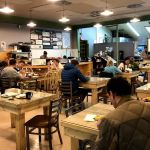 Sachi Sushi4.0 (182 reviews)
 Jingdu Japanese Buffet4.0 (2430 reviews)
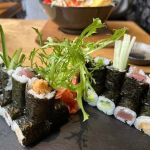 Signature Sushi and Ramen at Suteishi Japanese Restaurant
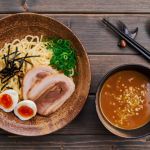 What Is Tsukemen? Dipping Ramen Explained vs Traditional Japanese Noodle Soup
 Top Dishes You Should Order at Midori Japanese Restaurant
 Why Locals Recommend Hiro Japanese Restaurant – Authentic Japanese Dining Experience
 Why Hanaoka Japanese Restaurant Is a Must-Try Spot for Japanese Food Lovers
 A Foodie’s Experience at Hayashi Japanese Restaurant