
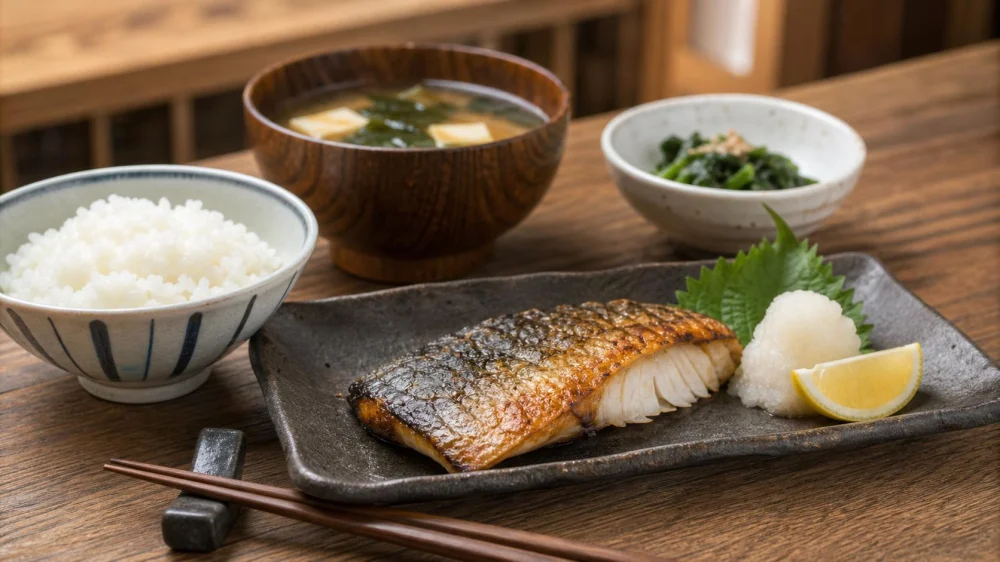
Japanese Grilled Fish: Ordering, Bones, and Condiments
On this page
Quick answer
Order Japanese grilled fish by choosing mild or rich flavor, salt-grilled or sauce-marinated preparation, and a fillet or whole fish. A fillet is easier for beginners, but it may still contain pin bones. Use chopsticks to separate small flakes, check each bite, and add grated daikon, citrus, or soy sauce lightly after tasting the fish.
This guide is for diners at Japanese restaurants in the United States. Species, cuts, names, sauces, and serving customs vary. Ask staff what fish is available and how it is prepared rather than relying only on a translated menu name.
What to expect from grilled fish
Japanese grilled fish is often called yakizakana, a broad description rather than one recipe. The fish may be salted and grilled, brushed with sauce, marinated, or cooked over a particular fuel. It can arrive as a fillet, collar, split fish, or whole small fish.
The appeal usually comes from contrast: crisp or blistered skin, moist flesh, savory seasoning, and simple condiments. A set meal may include rice, miso soup, pickles, and a small vegetable side. The restrained presentation lets the fish remain the main flavor.
Grilled does not necessarily mean boneless, low-sodium, or free of sauce. Ask specific questions when any of those qualities matter.
Choose by flavor and richness
Menus change with region, season, and supply, but fish can be grouped by the experience a diner wants.
- Mild, lean fish: Often has delicate white flesh and a clean flavor. It is best for diners who want subtle seasoning and a lighter meal.
- Moderately rich fish: Offers more pronounced savory flavor while remaining balanced with rice and grated daikon.
- Oily fish: Has fuller flavor, moist texture, and skin that can become especially crisp. It may taste stronger and feel more substantial.
- Fish collar: A cut from near the head and collarbone with rich, moist meat around bones. It rewards careful eating but is not ideal for someone who wants a simple boneless portion.
Ask the server to compare the day's options using plain criteria: mild or strong, lean or rich, firm or flaky, and lightly salted or assertively seasoned. This is more useful than asking for the “best” fish, which depends on taste.
Choose a fillet or whole fish
A fillet or steak is best for a first-time diner who wants easier access to the flesh. It can still contain pin bones, rib bones, or pieces near the spine. “Fillet” describes the cut; it is not a guarantee of zero bones.
A whole or split fish provides more variation in texture and lets diners eat around the skeleton. It may include head, tail, fins, skin, and small bones. Choose it when you are comfortable working slowly and identifying edible flesh.
A collar contains bones and crevices but often has succulent meat. It is best for diners who enjoy a hands-on dish and are willing to explore carefully. It is not ideal for young children, anyone with swallowing difficulty, or a rushed meal.
Understand seasoning and condiments
Shioyaki generally means salt-grilled. It highlights the fish, crisp skin, and natural fat, but the salt level can be noticeable. Taste before adding soy sauce.
Teriyaki-style or tare-glazed fish uses a sweet-savory sauce. The exact formula varies and may contain soy, wheat, alcohol-derived seasonings, or other ingredients. It is best for diners who want a more pronounced glaze.
Miso-marinated fish develops savory, sweet, and fermented flavors. Miso and marinade recipes vary, and the surface may darken during grilling without being burnt.
Common accompaniments have distinct jobs:
- Grated daikon: Adds cool moisture and a mild, fresh contrast to rich fish.
- Citrus: Brightens flavor; squeeze a little onto one area rather than covering the entire portion.
- Soy sauce: Adds salt and savoriness. Use sparingly, especially when the fish is already salted or glazed.
- Pickles: Refresh the palate between bites of fish and rice.
How to eat grilled fish with bones
Begin on the accessible side. Use chopsticks to lift the skin if you do not want it, or break through crisp skin to reach the flesh. Separate a small flake along the natural lines of the meat and inspect it before eating.
- Work from one end toward the center rather than breaking the fish into many pieces.
- Set visible bones in the designated empty area of the plate.
- For a whole fish, eat the top fillet first and expose the central skeleton.
- Lift the skeleton carefully when practical rather than flipping and crushing the fish.
- Continue with the lower fillet, checking for fine bones in every bite.
Do not put an entire piece in your mouth if you cannot tell whether it contains bones. If a small bone enters your mouth, remove it discreetly with your chopsticks or fingers and place it at the edge of the plate. Never give a supposedly deboned portion to a child without checking it yourself.
A practical ordering checklist
- Ask which grilled fish are available today.
- Choose mild versus strong and lean versus rich.
- Confirm fillet, collar, split, or whole presentation.
- Ask whether bones remain.
- Choose salt-grilled, glazed, or marinated flavor.
- Confirm whether rice, soup, pickles, or vegetables are included.
- Mention allergies and dietary restrictions before ordering.
If sharing, ask whether the portion is designed for one person and request extra small plates. A collar or whole fish may be easier to share when one diner separates the meat rather than several people reaching across the plate.
Allergies and safety notes
Fish dishes may contain soy, wheat, sesame, shellfish-derived ingredients, miso, alcohol-derived seasoning, or other allergens in marinades and sauces. Grills, utensils, fryers, and preparation surfaces may be shared. Explain a severe allergy clearly and ask whether the kitchen can accommodate it safely.
Fish bones are a choking and injury hazard. People with swallowing difficulties and young children need added caution and an appropriate preparation. If a bone feels lodged, causes pain, bleeding, trouble swallowing, or breathing difficulty, stop eating and seek prompt professional care; breathing difficulty is an emergency.
Pregnant people, immunocompromised diners, and others with individual food-safety concerns should seek current medical advice. Grilling changes the preparation, but only the restaurant can explain how a specific dish is handled and cooked.
Frequently asked questions
Is the skin meant to be eaten?
Often, especially when it is crisp, but it is optional. Skin flavor and texture vary with the fish and preparation. Taste a small piece and leave it if you do not enjoy it.
What is the easiest grilled fish for a beginner?
Ask for a mild fillet with simple seasoning and confirm that bones may remain. A fillet is generally easier to navigate than a whole fish or collar, but it still requires attention.
Why is grated daikon served with fish?
It provides a cool, moist, mildly sharp contrast to salty or rich grilled fish. Try a small amount with one bite before mixing in soy sauce or citrus.
Is grilled fish always part of a set meal?
No. Some restaurants offer it with rice, soup, pickles, and sides, while others list it à la carte or as a shared dish. Check what is included before ordering extras.
Can I ask the kitchen to remove all bones?
You can ask, but a restaurant may not be able to guarantee a bone-free portion. Choose another dish if any bone presents an unacceptable risk.
Next steps
At your next Japanese restaurant, ask for the day's grilled fish and compare two options by flavor, richness, cut, and seasoning. Start with a fillet if you want easier eating, taste before adding condiments, and check each bite for bones.
Sources and evidence note: This article describes common Japanese grilled-fish preparations and dining practices. Fish names, cuts, seasoning, sides, and service vary by restaurant; staff are the best source for the specific dish.

 Unagi Hibachi Grill5.0 (2 reviews)
 KOJIMA5.0 (9 reviews)
 Gorilla Sushi Bar On Clark4.0 (398 reviews)
 Mizu 21 Restaurant4.0 (201 reviews)
 Sushi Sake Sunset4.0 (904 reviews)
 Sushi Yama (Yama Japanese Restaurant)4.0 (455 reviews)
 A Foodie’s Experience at Yama Japanese Restaurant: A Culinary Journey
 How to Reheat Tempura Without Making It Soggy Using Oven, Air Fryer, Toaster Oven
 A Foodie’s Experience at Aki Japanese Restaurant – A Culinary Delight
 The Complete Guide to Dining at Wako Japanese Restaurant
 Why Oishi Japanese Restaurant Is a Must-Try Spot for Japanese Food Lovers
 Top Dishes You Should Order at Miyako Japanese Restaurant | Japanese Restaurant