
Japanese Hot Pot Guide: How to Order and Share Nabe
On this page
Quick answer
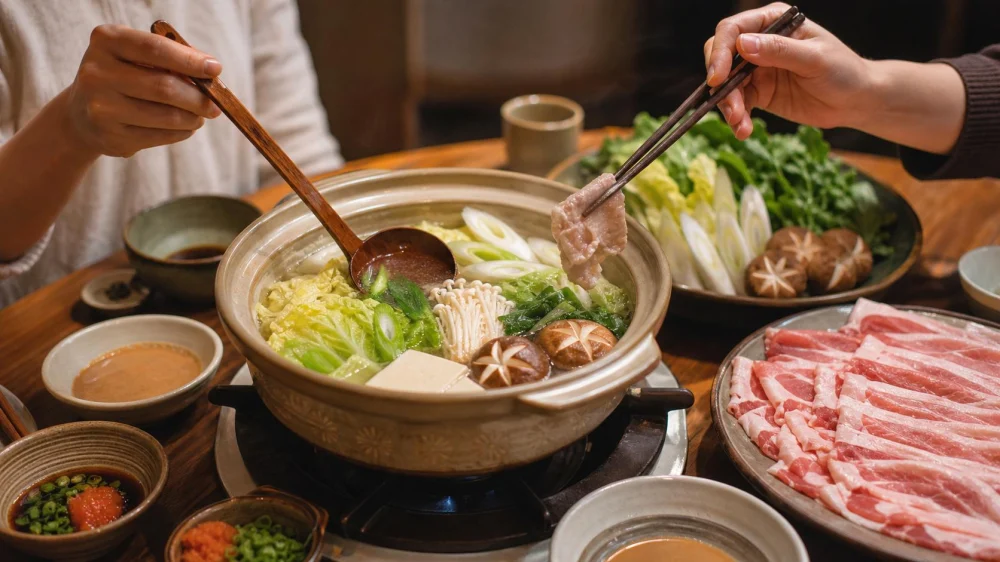
Japanese hot pot, broadly called nabe, is a shared meal of broth, vegetables, tofu, noodles, seafood, or meat cooked at the table or served ready to eat. Choose a style by broth and main ingredient, confirm portion size, and keep raw-food utensils separate. Add ingredients in batches and save room for rice or noodles cooked in the remaining broth.
What nabe means
Nabe means “pot” in Japanese and commonly refers to hot pot dishes cooked or served in a communal vessel. It is also used as a broad category covering many regional and restaurant-specific preparations. There is no single standard nabe broth or ingredient list.
Some U.S. Japanese restaurants bring a burner and raw ingredients to the table. Others cook the dish in the kitchen or offer individual pots. Before ordering, ask whether guests cook the ingredients, whether the pot is shared, and how many people one order serves.
This guide is for U.S. diners trying Japanese hot pot at a restaurant. House procedures take priority, especially for burner use, raw meat, seafood, and allergy questions.
Common Japanese hot pot styles
Menu names can describe the broth, cooking method, region, or central ingredient. Common styles include:
- Shabu-shabu: thin slices of meat and vegetables briefly cooked in a relatively light broth, then dipped in sauces such as ponzu or sesame sauce.
- Sukiyaki: a sweet-savory preparation often featuring thin beef, tofu, mushrooms, and vegetables. A raw egg dip is traditional in some settings but should never be assumed or required.
- Yose nabe: a mixed hot pot that can combine seafood, meat, tofu, and vegetables in a seasoned broth.
- Chanko nabe: a hearty, protein-rich style associated with sumo wrestlers; restaurant recipes vary widely.
- Motsunabe: a Fukuoka-associated hot pot commonly made with beef or pork offal, cabbage, chives, garlic, and a seasoned broth.
- Regional or seasonal nabe: options centered on oysters, salmon, chicken, mushrooms, miso, soy milk, or local ingredients.
These names do not guarantee an exact recipe. Read the ingredient list and ask which broth, protein, dipping sauces, and finishing starch come with the order.
How to choose the right option
Start with broth intensity. Choose shabu-shabu when you want clean flavors and separate dipping sauces. Choose sukiyaki when you prefer a sweeter, richer seasoning. A mixed or miso-based nabe can suit diners who want the broth itself to carry more flavor.
Then compare the main ingredient and cooking responsibility. Thin meat cooks quickly but requires attention to raw-food handling. Seafood timing varies by item. Vegetable- and tofu-focused pots may still use fish or meat broth, so confirm rather than assuming they are vegetarian.
Ask these questions when the menu is unclear:
- How many people does one order serve?
- Does the set include vegetables, tofu, rice, noodles, or dipping sauces?
- Is the food cooked at the table or in the kitchen?
- Can the broth or protein be changed?
- Are refills included, priced separately, or unavailable?
- What finishing dish works best with this broth?
How to order for the table
- Count diners and appetites. Tell the server how many people will share and whether hot pot is the full meal or one dish among several.
- Choose one compatible base. Shared divided pots are not available everywhere, and different broths may require separate orders.
- Confirm the included set. Avoid ordering duplicate vegetables or noodles before seeing what arrives.
- Add selectively. Extra mushrooms, leafy greens, tofu, meat, or seafood can be useful, but order in stages if refills are easy.
- Choose a finish. Reserve rice, udon, ramen-style noodles, or another option for the seasoned broth at the end.
For a mixed group, put essential dietary needs ahead of variety. A shared broth cannot usually be made safe for one diner after an allergen or restricted ingredient has entered the pot.
Cook and share safely
Follow staff instructions for burner controls and cooking order. In many hot pots, firm vegetables and ingredients that take longer go in before thin meat or delicate greens. Do not overcrowd the pot or let it boil over.
Use separate utensils for raw meat or seafood and cooked food. Never touch cooked ingredients with a utensil that just handled raw food unless the restaurant specifically provides a safe process. Keep raw trays away from personal plates and shared dipping sauces.
Cook animal proteins thoroughly according to the restaurant’s guidance. Color alone may not show whether food is safe. If you are uncertain, ask staff rather than tasting an undercooked item. Children should be supervised around hot broth, steam, cords, and tabletop burners.
Take a modest portion into your own bowl and allow it to cool. Shared chopsticks or ladles should not touch a diner’s mouth. Add ingredients gradually so everyone can track what is cooking.
Finish the broth
The final starch is often called shime, meaning a finishing course. After the main ingredients are eaten, the remaining broth has collected flavor. Staff may add rice and egg for a porridge-like finish, or provide udon or other noodles.
Do not add the finish until the restaurant says the broth is ready. Staff may remove excess fat, adjust the liquid, or cook the final dish for you. If raw ingredients remain or the broth has been heavily reduced, ask whether it is suitable to use.
Saving room for shime is optional. It can make the meal feel complete, but there is no need to order it when the group is full or when dietary restrictions make it unsuitable.
Dietary needs and important notes
Broth, sauces, fish cakes, dumplings, and processed ingredients may contain fish, shellfish, soy, wheat, sesame, egg, dairy, or alcohol. Cross-contact is especially difficult to control in a communal pot. State an allergy before ordering and ask about every base, sauce, add-on, and shared preparation surface.
Sukiyaki may be offered with raw or lightly cooked egg. People at higher risk of foodborne illness—including pregnant people, young children, older adults, and people with weakened immune systems—should seek current professional guidance and choose safer preparation.
Tabletop burners and pots can cause burns. Keep sleeves, paper, bags, and children away from the heat source. Do not move the pot or adjust equipment unless the restaurant says it is safe.
Sources and cultural notes
This guide reflects broad Japanese hot-pot practice: share a pot, cook ingredients in stages, use appropriate dipping sauces, and finish with rice or noodles. Recipes and service styles vary by region, household, and restaurant, particularly in the United States.
Food safety instructions, ingredients, allergens, cooking times, and burner operation must come from the specific restaurant and current public-health guidance. This article cannot certify a dish for a medical diet or allergy.
Frequently asked questions
Is nabe the same as shabu-shabu?
Shabu-shabu is one type of Japanese hot pot. Nabe is the broader term and includes many broths, ingredients, and cooking methods.
Can one person order Japanese hot pot?
Some restaurants offer individual sets; others require a minimum of two diners. Check portion and minimum-order rules before visiting.
Do all Japanese hot pots contain meat?
No, but a vegetable-based pot may still contain fish or meat broth. Ask about the broth, sauces, and cross-contact if you avoid animal products.
What goes into the pot first?
It depends on the style and ingredient size. Follow staff instructions; firmer vegetables often take longer, while thin meat and leafy greens may cook quickly.
Can I drink the broth?
Practices vary. Some broth is intended for enjoying directly or as a finishing dish, while other liquid may be strong or used mainly for cooking. Ask the server.
Conclusion and next steps
Check whether the restaurant serves shared or individual pots and whether guests cook at the table. Choose a broth and main ingredient everyone can share, confirm what the set includes, and state allergies before ordering. At the table, separate raw and cooked utensils, follow burner guidance, add ingredients in stages, and consider a rice or noodle finish if you still have room.


 Osaka Asian Fusion4.0 (262 reviews)
 Musashi Japanese Steakhouse4.0 (461 reviews)
 Kanamizu Japanese Restaurant4.0 (80 reviews)
 Flying Ninja4.0 (640 reviews)
 Sachi Sushi4.0 (182 reviews)
 Jingdu Japanese Buffet4.0 (2430 reviews)
 Signature Sushi and Ramen at Suteishi Japanese Restaurant
 What Is Tsukemen? Dipping Ramen Explained vs Traditional Japanese Noodle Soup
 Top Dishes You Should Order at Midori Japanese Restaurant
 Why Locals Recommend Hiro Japanese Restaurant – Authentic Japanese Dining Experience
 Why Hanaoka Japanese Restaurant Is a Must-Try Spot for Japanese Food Lovers
 A Foodie’s Experience at Hayashi Japanese Restaurant