
Japanese Pickles Guide: Flavour, Texture, and Pairing
On this page
Quick answer
Japanese pickles, broadly called tsukemono, are vegetables preserved or seasoned through salt, vinegar, rice bran, miso, sake lees, or other methods. They can be crisp, soft, sour, salty, sweet, pungent, or gently fermented. Order a small assortment to compare, eat modest bites between richer foods, and ask about ingredients when allergies or alcohol-derived seasonings matter.
How Japanese pickles vary
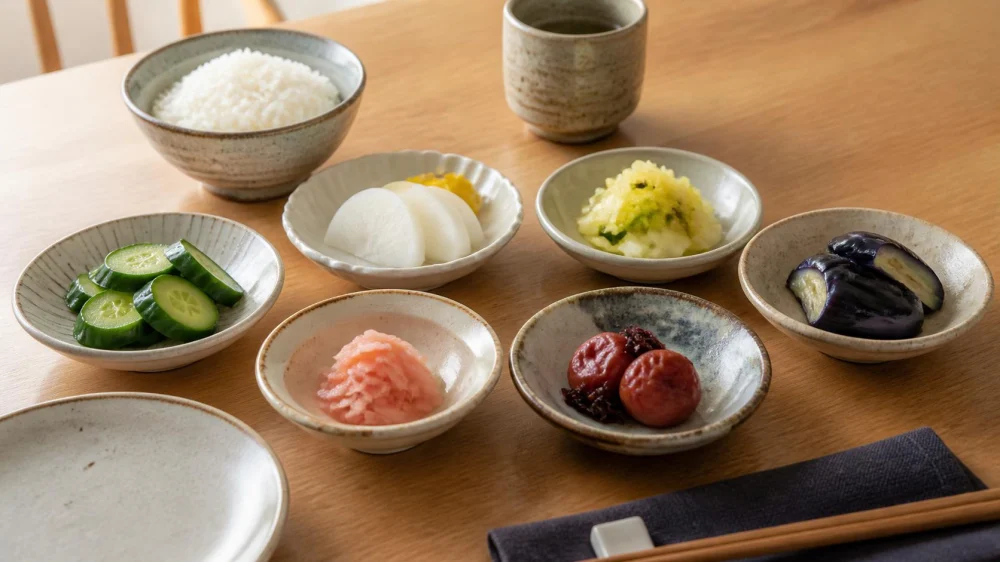
Tsukemono is a broad category rather than one recipe. Common menus may use names such as oshinko for assorted pickles or identify the vegetable and method. Daikon, cucumber, eggplant, cabbage, ginger, and plum preparations can have very different intensity. Colour may come from the ingredient or seasoning, so it does not reliably indicate flavour.
This guide is for US diners who see pickles on a Japanese restaurant menu or alongside a set meal. Recipes and terminology vary by region, restaurant, and producer. People managing sodium, allergies, alcohol avoidance, or another dietary restriction should ask about the actual preparation instead of relying on the category name.
Practical checklist
- Ask whether the order is one vegetable or an assortment and how many people it serves.
- Look for the named vegetable and preservation method when the menu provides them.
- Compare crisp, fresh-tasting styles with deeper fermented or paste-marinated choices.
- Ask about soy, wheat, sesame, fish ingredients, miso, rice bran, or sake lees when relevant.
- Use pickles as a small accent rather than assuming they are a full vegetable portion.
- Pair sharper pickles with rice or rich dishes and milder ones with delicate foods.
- Keep serving utensils separate when the table has allergy or dietary needs.
Step-by-step plan
- Identify the meal role: palate refresher, rice accompaniment, snack, or part of a set meal.
- Choose contrast. One crisp light pickle and one deeper savoury style create a useful comparison.
- Confirm intensity and portion with staff, especially for strongly salted, sour, or fermented items.
- Take a small bite alone, then try it with rice or the dish it accompanies.
- Rotate bites instead of eating the entire pickle portion first.
- Note the vegetable and method you liked so you can recognize related menu terms later.
A useful tasting note names the vegetable, texture, dominant flavour, and pairing: for example, crisp cucumber with bright acidity beside grilled food. This is more portable than assuming every restaurant’s item with the same name will taste identical.
Limits and important notes
Fermentation, pickling, and marinating are not interchangeable, and a restaurant label may be simplified for readability. Diners cannot determine exact sodium, allergens, alcohol content, or preparation from colour and taste alone. Nutrition and ingredient questions require current information from the restaurant or producer.
For a serious food allergy, discuss ingredients and cross-contact before ordering; choose another item if the restaurant cannot answer safely. Seek urgent medical help for signs of a severe allergic reaction. If a pickle has an unexpected odour, damaged packaging, or service-temperature concern, stop eating and alert staff.
Frequently asked questions
What does tsukemono mean?
It is a broad Japanese term for pickled or preserved foods, most often vegetables, made through several different methods.
Is oshinko one specific pickle?
Menus often use oshinko for pickles or an assortment, but usage varies. Ask what is included today.
Are Japanese pickles always fermented?
No. Some are fermented, while others are salted, vinegared, pressed, or marinated for a shorter time.
Why are pickles served with rice?
Their concentrated flavour and texture can contrast with plain rice and richer dishes.
Are they vegetarian?
Many are, but recipes may include fish-derived seasoning or shared preparation. Confirm with the restaurant.
Sources and evidence
Use the restaurant’s current menu and staff for ingredients, methods, allergens, portion, and dietary suitability. Producer labels can clarify packaged products. General culinary references explain categories, but the actual recipe in front of you is the controlling source for a dining decision.
Conclusion and next steps
Order a modest assortment, ask for the vegetables and methods, and compare texture before intensity. Pair small bites with rice or the intended dish. Keep ingredient and health needs explicit, and treat restaurant terminology as a helpful starting point rather than a guarantee of one fixed recipe.


 Kobé Japanese Steakhouse - New Tampa4.0 (5644 reviews)
 Blue Ribbon Sushi Bar & Grill4.0 (585 reviews)
 Yakiniku Shodai4.0 (115 reviews)
 Flying Roll4.0 (403 reviews)
 My Sushi4.0 (182 reviews)
 Teriyaki R Us4.0 (70 reviews)
 A Foodie’s Experience at Akasaka Sushi Korean Japanese Restaurant: A Culinary Journey
 Is Benihana a Japanese Restaurant? Exploring Its Identity and Influence
 Exploring the Menu at Taki Japanese Restaurant Dunwoody
 Why Locals Recommend Mt. Fuji Japanese Restaurant for Authentic Dining
 Exploring the Menu at Aki Japanese Restaurant - A Culinary Journey
 What Makes Hanaoka Japanese Restaurant Stand Out Among Japanese Restaurants