
Japanese Restaurant Tea Guide: Sencha, Genmaicha, Hojicha
On this page
Quick answer
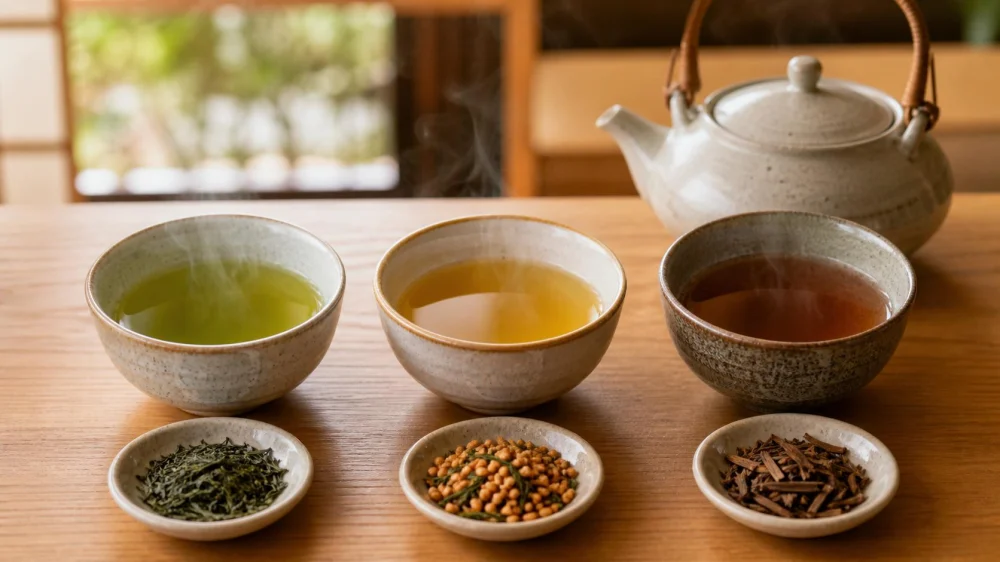
Choose sencha for a bright, grassy green-tea flavor; genmaicha for a toasted, nutty cup softened by roasted rice; and hojicha for a warm roasted aroma with less vegetal character. Ask whether tea is hot or iced, served by cup or pot, sweetened, refillable, and caffeinated. Drink it as served first, then pair by flavor rather than assuming one universal rule.
This guide is for U.S. diners reading Japanese restaurant tea menus. Tea names describe broad styles, but leaf grade, roast, blend, water, brew time, serving size, sweetness, and caffeine vary by restaurant and producer.
How tea appears on a Japanese restaurant menu
At one restaurant, “green tea” may be a complimentary hot cup; at another, it may be a carefully brewed pot with several named choices. Some restaurants serve bagged tea, some use loose leaf, and some offer bottled or sweetened drinks. The menu price may cover one cup, a shared pot, or refills.
The word ocha simply means tea and often implies green tea in context. It does not identify a specific style. If the menu does not say which tea is served, ask. A restaurant may use bancha, sencha, genmaicha, hojicha, or a house blend.
Tea can reset the palate between bites, echo toasted flavors, or offer a calm finish to a meal. It does not need a complicated ritual. The most useful choice is the flavor and temperature you will enjoy with the food.
Sencha: fresh and vegetal
Sencha is a steamed Japanese green tea. Its profile can include fresh grass, leafy greens, sea breeze, gentle sweetness, umami, and a clean astringent finish. Cooler or shorter brewing tends to emphasize sweetness and umami; hotter or longer brewing can bring more briskness and bitterness.
Choose sencha when you want a clear green-tea character. It can work with sushi, simple seafood, vegetables, tofu, rice dishes, and lightly seasoned meals because its freshness can contrast with oil and salt. A deeply steamed style may look cloudier and taste fuller than a lightly steamed one.
Sencha is not automatically mild. If you dislike bitterness, ask whether the restaurant’s version is delicate or strong. Let a very hot cup cool slightly before deciding; temperature changes what you perceive.
Genmaicha: toasted rice and green tea
Genmaicha combines green tea with roasted rice. The cup typically balances green, vegetal notes with warm toast, cereal, popcorn-like aroma, and mild sweetness. The proportion and type of tea vary, so one blend can be light and roasty while another is greener and more brisk.
Choose genmaicha if straight green tea feels sharp or if you want a savory, comforting profile. The toasted character pairs naturally with grilled foods, rice dishes, tempura, noodles, and casual set meals. It can also bridge delicate and richer dishes across one meal.
The rice does not make the drink caffeine-free. Caffeine comes from the tea leaves, and the amount depends on the blend and brew. People avoiding gluten should ask about the specific blend and preparation rather than assuming a rice tea is suitable; flavored products and shared equipment may add uncertainty.
Hojicha: roasted and mellow
Hojicha is Japanese green tea that has been roasted, producing a copper-brown infusion and aromas that may suggest toasted wood, caramel, cocoa husk, or roasted nuts. It usually tastes less grassy and less astringent than sencha.
Choose hojicha for a warm roasted finish, with grilled dishes, fried foods, desserts, or after a meal. Its flavor can feel gentle even when the brew is aromatic. Hot hojicha emphasizes toast; iced hojicha can be crisp and refreshing.
Hojicha is often described as lower in caffeine than some green teas, but the exact amount is not predictable from the name alone. Leaf material, quantity, water temperature, steeping, serving size, and repeat infusions all matter. Anyone who must strictly limit caffeine should ask the restaurant or choose a verified caffeine-free drink.
How to choose and order
- Choose the flavor family. Pick fresh and vegetal (sencha), green plus toasted grain (genmaicha), or deeply roasted and mellow (hojicha).
- Check the format. Ask whether it is hot, iced, sweetened, bottled, made as a latte, served by cup, or served by pot. A hojicha latte is different from plain brewed hojicha.
- Check quantity and refills. Do not assume refills are complimentary. A pot may be intended for one person or sharing depending on its size.
- Consider the meal. Sencha suits clean, light flavors; genmaicha supports casual savory food; hojicha complements roasted, grilled, fried, or sweet flavors. These are suggestions, not rules.
- Ask about strength. If caffeine, bitterness, or a sensitive stomach matters, ask what the restaurant can reliably tell you. Choose a smaller serving when uncertain.
- Taste before changing it. Plain Japanese tea is commonly served without milk or sugar. Try a sip first, then use only accompaniments the restaurant offers.
For a table comparison, order one small pot of two styles if sharing is permitted. Taste each without food, then after a bite of the same dish. This makes the contrast clearer than choosing teas with completely different meals.
Serving etiquette and important notes
If a shared pot is provided, pour for others before topping up your own cup when that feels natural for the table. Hold the lid if it is loose, keep the spout away from people, and place the pot securely. There is no need to imitate a formal tea ceremony in an ordinary restaurant.
Allow hot tea to cool enough to drink safely. Cups may not have handles, and ceramic can remain hot. Keep hot pots and cups away from children and the table edge.
Tea naturally contains caffeine unless it is specifically caffeine-free. Sensitivity varies. People who are pregnant, have a medical condition, take interacting medication, or have been advised to limit caffeine should follow clinician guidance rather than relying on a tea-style label.
Flavored tea, lattes, syrups, desserts, and bottled beverages may contain milk, soy, nuts, sesame, sweeteners, or other allergens. Cross-contact can occur in drink preparation. Ask the restaurant to check ingredients if you have an allergy.
Tea is a beverage, not a treatment. Avoid claims that a restaurant tea will detoxify the body, cure disease, cause weight loss, or replace medical care. Choose it for flavor, warmth, refreshment, and the dining experience.
Frequently asked questions
Is Japanese green tea always sencha?
No. “Green tea” can refer to several styles, including sencha, bancha, genmaicha, or a house blend. Ask the restaurant for the specific tea.
Is genmaicha made only from rice?
No. It is a blend of green tea and roasted rice, so it still contains tea leaves and generally contains caffeine.
Why is hojicha brown if it is green tea?
Roasting changes the leaf color, aroma, and brewed color. It remains a tea derived from green tea material but tastes distinctly roasted.
Which tea has the least caffeine?
Hojicha is often lower than many green teas, but no menu name guarantees an amount. Ask for product information or choose a verified caffeine-free option when the limit is important.
Can I add milk to Japanese tea?
You can drink tea to your preference. Plain sencha and genmaicha are usually served without milk; hojicha and matcha are also offered as lattes on some menus. Check whether the drink is already sweetened.
Is matcha the same as sencha?
No. Matcha is powdered shade-grown tea whisked or mixed into a drink, while sencha is leaf tea brewed and strained. Their flavor, texture, preparation, and caffeine can differ.
Sources and evidence notes
This guide reflects widely established Japanese tea definitions and common restaurant service. Exact flavor and caffeine cannot be inferred from a name alone because cultivar, harvest, processing, blend, dose, water, time, and serving size differ.
Pairing suggestions are sensory guidance, not scientific rules. Health and allergy notes follow broad safety principles: confirm ingredients with the restaurant, treat tea as caffeinated unless verified otherwise, and do not use tea as a substitute for medical advice or treatment.
Conclusion and next steps
Use three cues: sencha is fresh and vegetal, genmaicha adds toasted rice, and hojicha is deeply roasted and mellow. Ask about serving format, sweetness, refills, and caffeine before ordering. Taste the tea plain, notice how it changes with food, and let your own preference—not a rigid pairing rule—guide the next cup.
 Sushi Sake Hollywood4.0 (517 reviews)
 Jin Noodle Sushi4.0 (146 reviews)
 Noren Izakaya4.0 (195 reviews)
 Noodle Blvd4.0 (1960 reviews)
 KAWA TERIYAKI RAMEN4.0 (37 reviews)
 Somenya Boston4.0 (214 reviews)
 What is in the Ginger Dressing at Japanese Restaurants? A Flavorful Exploration
 What Does the Greeting in Japanese Restaurants Mean?
 Is There Still a Japanese Restaurant? Exploring the Cultural Revival Across the U.S.
 Wasabi Japanese Restaurant: What Sets It Apart from Others | Best Japanese Food
 A Foodie’s Experience at Ami Japanese Restaurant: A Taste of Authentic Japanese Cuisine
 The History and Flavor Behind Akasaka Sushi Korean Japanese Restaurant | Japanese Restaurant