
Kaiseki Dining: How a Seasonal Japanese Meal Unfolds
On this page
Quick answer
Kaiseki is a carefully sequenced Japanese multi-course meal that expresses season, ingredient quality, cooking technique, and hospitality. The exact dishes and order vary by restaurant, but portions are usually modest and the complete progression creates the experience. Before booking, confirm the menu format, duration, price, beverage policy, dress expectations, and whether the kitchen can safely accommodate dietary needs.
In contemporary restaurant use, kaiseki commonly refers to a formal meal built from several distinct preparations. It is not simply a large tasting menu or a fixed list of famous dishes. Chefs may adapt the progression to ingredients, region, occasion, and house style, especially at Japanese restaurants in the United States.
What kaiseki means
The word can refer to related dining traditions with different histories and contexts. One lineage developed alongside tea practice, while restaurant kaiseki evolved as elaborate cuisine for hospitality and special occasions. English-language menus may use “kaiseki” broadly, so it is useful to read how the restaurant describes its own meal rather than assuming one strict format.
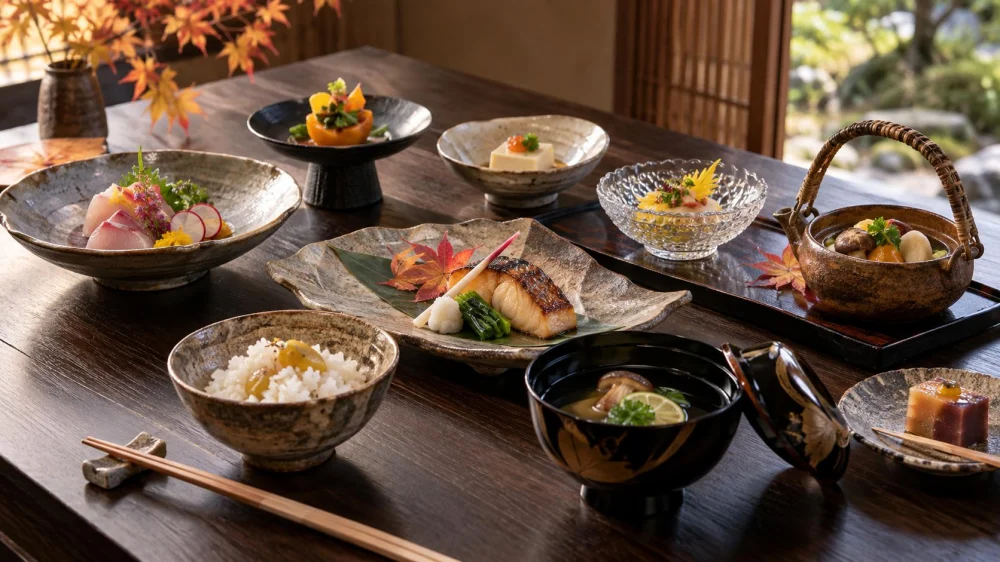
Across styles, balance matters: warm and cool dishes, raw and cooked ingredients, delicate and savory flavors, contrasting textures, and visual references to the season. Each serving should contribute to the whole. The meal often rewards attention to transitions rather than comparison of portion size.
How the meal may progress
A restaurant may begin with a small introductory dish, then move through soup, sashimi or another seasonal preparation, a grilled item, a simmered course, and a rice-centered finish. Dessert may be fruit, a light sweet, or another restrained closing. This is an example, not a required sequence.
Common course ideas you may encounter include:
- Opening bite: a compact introduction to the chef’s seasonal theme.
- Soup or clear broth: an aromatic course where temperature, stock, and garnish are important.
- Seasonal arrangement: several small foods composed around a month, festival, landscape, or ingredient.
- Raw preparation: fish or vegetables selected and cut for texture and flavor.
- Grilled or simmered dish: a change in aroma, temperature, and cooking method.
- Rice course: rice with soup and pickles, or a seasoned rice dish, often signals the savory conclusion.
- Sweet or fruit: a simple final course rather than a heavy dessert.
Restaurants may omit, combine, rename, or reorder these ideas. A shorter lunch and an extended dinner can both be kaiseki when the kitchen designs them as a coherent seasonal progression.
Season, tableware, and presentation
Seasonality can appear in the ingredient, cooking method, garnish, color, vessel, or shape of a dish. A plate may suggest a leaf, flower, snow, running water, or harvest without literally reproducing it. Ceramics, lacquerware, glass, bamboo, and textiles can help set the temperature and mood.
Notice how the serving vessel frames the food and how empty space, height, color, and texture guide the eye. Decorative leaves or branches may be visual elements rather than food. If you are unsure whether something is edible, ask the server.
“Seasonal” does not guarantee that every ingredient is local, wild, rare, or available for only a few days. Restaurants source differently. Ask specific questions if origin or production method matters to you.
What to confirm before booking
Kaiseki often requires planning because the kitchen prepares a set progression for a limited number of guests. Use this booking checklist:
- Confirm whether the menu is fixed, partially selectable, or offered at several price levels.
- Ask for the expected meal duration and whether all guests must begin together.
- State allergies, medical restrictions, religious needs, and strong dislikes before reserving—not after courses are prepared.
- Ask whether substitutions are possible and whether cross-contact can be managed to your needs.
- Confirm cancellation, deposit, service charge, tax, and beverage policies.
- Ask about seating, accessibility, footwear customs, and dress expectations.
- Tell the restaurant if the meal marks a celebration, but do not assume complimentary additions.
A restaurant may be unable to remove ingredients that form the basis of stocks, sauces, or fermented seasonings. If it cannot accommodate a restriction safely, choosing a different format or restaurant may be the better option.
How to approach the meal
Arrive on time so the kitchen can serve temperature-sensitive courses as intended. Follow the staff’s guidance about chopsticks, spoons, lids, and shared items. It is fine to ask what a dish contains or how it is meant to be eaten.
Eat at a comfortable pace while keeping the coordinated service in mind. Avoid adding soy sauce, wasabi, or other condiments automatically; the chef may already have seasoned the dish. Ask before photographing, especially in a quiet room or where other guests could appear.
Sake, tea, wine, or nonalcoholic drinks may be paired with the meal, but a pairing is optional unless the menu states otherwise. Ask for smaller pours or nonalcoholic choices if preferred. Never feel obliged to drink alcohol to participate fully.
Limitations and important notes
Kaiseki terminology and etiquette are not identical across Japan or U.S. restaurants. A local establishment may adapt ingredients, pacing, service language, and dietary practices. The restaurant’s explanation of its own menu is the most useful guide.
Raw or undercooked seafood, eggs, or meat can carry food-safety risk, especially for pregnant people, young children, older adults, and people with weakened immune systems. Ask the restaurant and a healthcare professional about suitable choices for your circumstances. Allergy safety requires direct communication; visual inspection is not enough.
Sources and evidence notes
This guide reflects widely recognized features of kaiseki dining: seasonal expression, varied cooking methods, deliberate course progression, hospitality, and close attention to vessels and presentation. It avoids presenting one course list as universal because terminology and sequencing differ by tradition and restaurant.
Frequently asked questions
Is kaiseki the same as omakase?
No. Omakase means entrusting selection to the chef and can describe many formats, especially chef-selected sushi. Kaiseki refers to a structured multi-course cuisine centered on season, technique, and progression, though a restaurant may offer it as a chef-selected menu.
Will I leave a kaiseki meal hungry?
Individual portions are small, but the complete series may be substantial. Course count and size vary, so ask the restaurant what its menu includes rather than judging from one photographed dish.
Do I need formal clothing?
Dress expectations depend on the restaurant. Neat attire may be appropriate at many places, while some dining rooms are more formal. Check the reservation information or ask.
Can kaiseki be vegetarian?
Some kitchens offer a plant-based progression, but many traditional stocks and seasonings may contain fish or other animal products. Request details in advance and confirm what the kitchen can prepare safely.
Should I eat every garnish?
No. Some leaves, branches, shells, or decorative elements are not edible. Ask the server when the purpose is unclear.
Conclusion and next steps
Approach kaiseki as a sequence rather than a checklist of famous dishes. Read the restaurant’s menu description, disclose dietary needs early, confirm timing and cost, and arrive ready to notice season, technique, tableware, and transitions. Thoughtful questions make the experience more accessible without requiring expert knowledge.

 Sarku Japan3.0 (141 reviews)
 Ichiban Sushi Asian Bistro4.0 (174 reviews)
 Omakase by Kanemaru5.0 (54 reviews)
 Mr. Sushi & Mrs. Roll(Lansdowne)4.0 (247 reviews)
 Kirin Sushi4.0 (634 reviews)
 Rock N Roll Sushi4.0 (155 reviews)
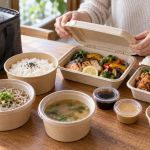 Japanese Restaurant Takeout: Choose Dishes That Travel Well
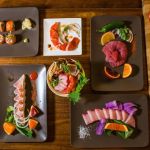 Top Dishes You Should Order at Hiro Japanese Restaurant
 Why Locals Recommend Japanese Restaurant in Las Vegas – Top Japanese Food Spot
 Dining at Azuma Japanese Restaurant – A Complete Guide
 An Insider’s Review of Yoshi Japanese Restaurant: A Taste of Authentic Japanese Cuisine
 Signature Sushi and Ramen at Yuki Japanese Restaurant - A Culinary Delight