
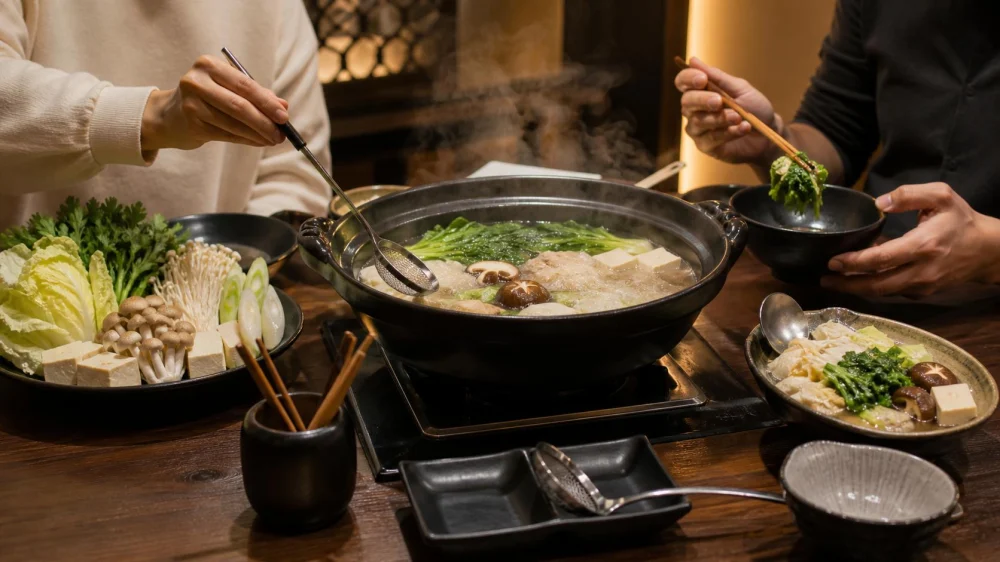
Nabe Hot Pot Dining: A Safe and Satisfying Table Plan
On this page
Quick answer
For Japanese nabe, first learn whether staff or diners manage the pot. Keep raw ingredients and used utensils separate, let foods cook fully, add items in sensible batches, and avoid crowding the broth. Share portions with clean serving tools, watch the tabletop burner, and ask before adding a final noodle or rice course.
Why it matters
Nabe means a Japanese hot-pot style in which ingredients cook in a shared vessel of broth at the table or arrive prepared in a pot. Variations differ by broth, region, restaurant, and main ingredient, so nabe describes a format rather than one single recipe.
This article is for U.S. restaurant diners new to tableside Japanese hot pot. It does not replace restaurant instructions or food-safety advice for a specific ingredient. Some venues control all cooking; others provide raw items for guests to cook.
Practical checklist
- Ask who controls the heat, ingredient order, doneness, and serving.
- Identify raw meat, seafood, eggs, tofu, vegetables, and ready-to-eat garnishes before cooking begins.
- Use separate utensils for raw ingredients and cooked food; do not return contaminated tools to the table.
- Add manageable batches so the broth returns to a steady safe cook.
- Keep sleeves, bags, children, and loose objects away from the burner and hot pot.
- Tell staff about allergies and ask about broth, sauces, cross-contact, and finishing ingredients.
- Stop eating food that seems undercooked and ask staff for help rather than guessing.
Step-by-step plan
- Learn the house method. Ask whether ingredients arrive in a planned sequence and whether staff will cook, serve, or adjust the burner.
- Set up safe zones. Keep the raw platter and its tongs apart from bowls, cooked-food utensils, sauces, phones, and shared garnishes.
- Start with ingredients that flavor or take longer to cook when the restaurant directs. Avoid inventing timing rules, because thickness and ingredient type matter.
- Cook in small rounds. Overloading can cool the broth and make it harder to track which item entered first. Wait for staff guidance and a proper simmer or boil as required.
- Serve deliberately. Move cooked portions to clean bowls with clean tools, allow very hot food to cool, and avoid reaching across the burner.
- Maintain the pot. Ask staff to adjust heat or broth level; do not handle unfamiliar fuel canisters, controls, or hot equipment yourself.
- Finish only when appropriate. Some meals end with noodles or rice cooked in the remaining broth, but confirm the intended method and allergy considerations first.
If you enjoyed the meal, remember the broth style, major ingredients, dipping sauces, and whether the restaurant was staff-cooked or self-cooked. These details are more useful than assuming all nabe follows the same sequence.
Limits and warning signs
Visible bubbling does not prove every thick or dense item is done, and color alone is not a reliable doneness test. Diners with food allergies, weakened immune systems, pregnancy-related food precautions, or other medical restrictions may need more specific guidance.
Alert staff immediately for an unstable pot, spilled hot broth, burner problem, suspected gas odor, burn, or serious allergy concern. Cool a minor burn under clean cool running water and seek appropriate medical help for severe, blistering, extensive, facial, hand, joint, or otherwise concerning burns.
Frequently asked questions
Is shabu-shabu the same as all nabe?
No. Shabu-shabu is one hot-pot style. Nabe is a broader category with many broths, ingredients, and service methods.
Can I use my chopsticks to move raw meat?
Use the separate raw-food utensils provided. If none are visible, ask staff; personal chopsticks can spread raw juices to cooked food and shared items.
Why should the pot not be overcrowded?
Large batches can lower the broth temperature and make cooking order difficult to track. Smaller rounds improve control and serving pace.
Must the meal end with noodles or rice?
No. A finishing starch is common in some formats, but it depends on the restaurant, broth, appetite, and dietary needs.
Sources and evidence
The article reflects common Japanese hot-pot service patterns and broad food-safety principles: prevent cross-contamination, cook animal foods appropriately, follow equipment instructions, and communicate allergies. Restaurant staff and current public-health guidance should resolve specific questions.
Conclusion and next steps
Before the first ingredient enters the broth, confirm who cooks and which utensils belong to raw and cooked food. From there, small batches, clear serving habits, and respect for the hot equipment create a safer and more satisfying nabe meal.

 Sushi Tong4.0 (297 reviews)
 Ocean Sushi4.0 (179 reviews)
 Obscura Competitive Gaming Cafe4.0 (134 reviews)
 Kaizen Sushi Bar | Asian Kitchen4.0 (366 reviews)
 Kikko Ramen and Pole4.0 (69 reviews)
 Soya Sushi Bar & Bistro4.0 (763 reviews)
 Is Seaweed in Japanese Restaurants Wild or Farmed? What You Need to Know
 Signature Sushi and Ramen at Japanese Curry Restaurant: A Delicious Experience
 What Makes Asaka Japanese Restaurant Stand Out Among Japanese Restaurants
 Insider's Review of Yuki Japanese Restaurant: Top Dishes and Dining Experience
 What to Say in a Japanese Restaurant: A Guide for First-Time Diners
 An Insider’s Review of Goshi Japanese Restaurant