
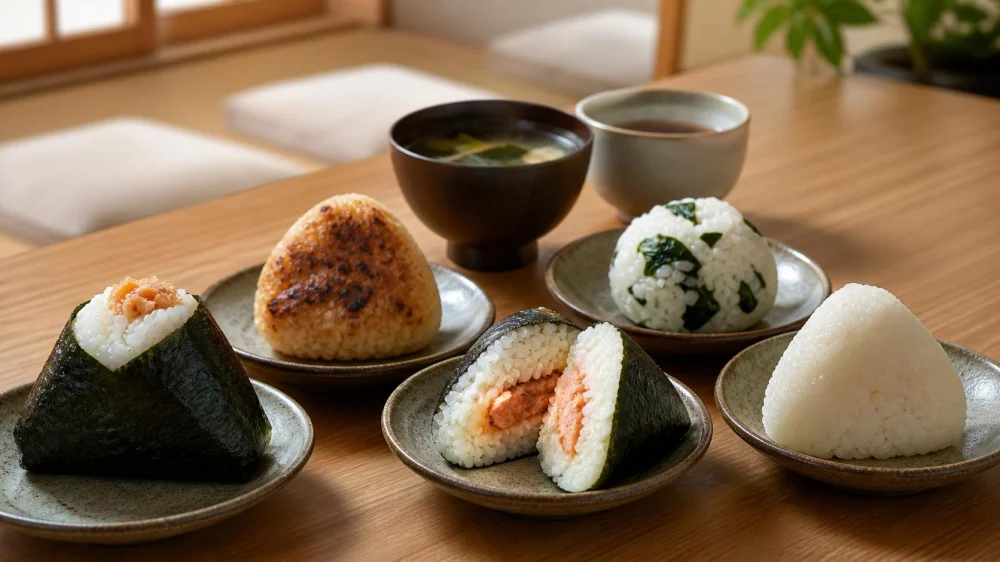
Onigiri Guide: Fillings, Texture, and How to Order
On this page
Quick answer
Onigiri is a hand-shaped portion of seasoned or plain rice, often wrapped partly in nori and filled or topped with a savory ingredient. Choose by filling intensity, rice and seaweed texture, portion, and when it was assembled. Ask about allergens and preparation, then pair one or two pieces with a contrasting side or soup.
Understand what onigiri is
Onigiri is a compact Japanese rice dish shaped by hand or mold, commonly as a triangle or round. It differs from sushi because the rice is usually not seasoned with sushi vinegar. Menus may offer a filling in the center, a topping, rice mixed with ingredients, a grilled surface, or a plain salted version.
This guide is for U.S. diners ordering onigiri at a Japanese restaurant, café, market counter, or takeaway shop. Recipes, portion sizes, holding methods, ingredient names, and service styles vary. The dish name alone cannot confirm authenticity, nutrition, allergens, freshness, or whether a preparation meets a medical dietary need.
Practical checklist
- Identify whether the onigiri is filled, mixed, topped, grilled, or simply salted before comparing flavors.
- Ask whether the nori is wrapped at service for crispness or has rested against the rice for a softer texture.
- Compare mild fillings such as simple vegetables with richer, salty, spicy, pickled, or seafood-based choices.
- Confirm portion size and whether the listed price is for one piece, a set, or a plate with sides.
- Disclose allergies and ask about fish, shellfish, soy, sesame, egg, dairy, wheat, shared utensils, and sauces as relevant.
- Ask whether a takeaway piece should be eaten promptly or refrigerated according to the shop’s guidance.
- Choose a contrasting soup, vegetable, protein, or tea rather than ordering several pieces with the same flavor profile.
Step-by-step plan
- Decide whether onigiri will be a snack, one part of a shared meal, or the main starch in your order.
- Read the preparation description and ask one focused question about an unfamiliar filling or seasoning.
- Choose one approachable filling and, if sharing or comparing, one with a different texture or intensity.
- Confirm allergy and dietary details from the current recipe rather than translating the filling name alone.
- Eat crisp-nori versions soon after assembly and taste the rice and filling together before adding condiments.
- For takeaway, follow the restaurant’s time and storage directions and discard food that was held outside safe guidance.
If you want to remember a preference, note the filling, whether it was mixed or centered, the rice firmness, nori texture, salt level, serving temperature, and portion. These details transfer better to another menu than a broad label such as good or traditional.
Limits and important notes
A familiar filling name does not establish the full recipe. Tuna mixtures may contain mayonnaise; seasoned vegetables may contain soy or sesame; grilled versions may use sauces containing wheat; seafood items can vary in species and preparation. Cross-contact procedures differ by kitchen, and visible ingredients are not a reliable allergen check.
People with severe food allergies, celiac disease, immune compromise, pregnancy-related restrictions, or another medical diet should ask the restaurant whether it can provide reliable current ingredient and cross-contact information. When staff cannot confirm what the dish contains or how it was held, choose an option whose risk can be assessed more clearly.
Frequently asked questions
Is onigiri the same as sushi?
No. Both use rice, but onigiri is generally shaped rice without the vinegar seasoning that defines sushi rice. Ingredients and service style also differ.
Why is some onigiri nori crisp and some soft?
Nori stays crisper when kept separate until serving. When wrapped around warm or moist rice in advance, it softens; both textures can be intentional.
Which filling is easiest for a first order?
Choose a clearly described filling with a familiar flavor and moderate intensity. Ask staff what is mild, salty, spicy, or rich on that day’s menu.
Can onigiri be vegetarian?
Some versions can be, but stocks, sauces, seasonings, and shared preparation may contain animal ingredients. Confirm the current recipe directly.
How many pieces make a meal?
It depends on size, filling, appetite, and sides. Ask the portion and consider pairing one or two with soup, vegetables, or protein rather than relying on a fixed number.
Sources and evidence
Use the restaurant’s current menu, ingredient list, and staff explanation as the primary evidence for the specific dish. General Japanese culinary references can explain common forms, but they cannot verify a kitchen’s recipe or handling. For food safety and allergy decisions, follow current public-health guidance and qualified medical advice applicable in the United States.
Conclusion and next steps
Order onigiri by deciding its role in the meal, comparing preparation and filling, confirming allergens, and choosing contrasting sides. Pay attention to rice, nori, seasoning, and portion so the next choice is easier. For takeaway, follow the shop’s holding instructions rather than assuming a rice dish is safe indefinitely at room temperature.


 Ginger Teriyaki II4.0 (245 reviews)
 Dashi4.0 (1934 reviews)
 Samurai Sushi4.0 (574 reviews)
 Rock N Roll Sushi4.0 (3265 reviews)
 Nori Sushi4.0 (404 reviews)
 Eastern Kitchen & Sushi4.0 (297 reviews)
 Why Kru Japanese Restaurant is a Must-Try Spot for Japanese Food Lovers
 What Makes Japanese Restaurant Wasabi Stand Out Among Japanese Restaurants
 Exploring the Menu at Good Japanese Restaurants in NYC: Top Dishes to Try
 The History and Flavor Behind Asaka Japanese Restaurant | Japanese Restaurant
 A Foodie’s Experience at Hayashi Japanese Restaurant
 How to Make Japanese Restaurant Soup at Home: Step-by-Step Guide