Ordering Okonomiyaki: Regional Styles and Table Etiquette
On this page
Quick answer
Okonomiyaki is a savory Japanese griddle dish built around batter and cabbage, with ingredients and cooking methods that vary by region and restaurant. Osaka-associated versions commonly mix ingredients into the batter, while Hiroshima-associated versions commonly layer batter, cabbage, pork, noodles, and egg. Ask which style is served, who cooks it, what toppings are included, and whether one portion is meant for sharing.
What okonomiyaki is
Okonomiyaki is a savory griddle-cooked dish whose name is often explained as cooking what you like. Flour-based batter and cabbage form a common foundation, but the ingredients, assembly, thickness, noodles, sauces, and service style can change substantially.
It is sometimes described in English as a Japanese savory pancake, which helps communicate the round shape but does not capture every regional method. Some versions mix the components before cooking; others build distinct layers. The finished dish is typically cut into portions and may be eaten from a hot griddle with a small spatula or transferred to a plate.
Use the menu’s own description as the authority for that restaurant. “House style” may borrow from several traditions, and U.S. restaurants may adapt size, ingredients, cooking location, or serving utensils.
Compare Osaka and Hiroshima styles
Osaka-associated okonomiyaki commonly mixes shredded cabbage and other ingredients into a dashi-seasoned flour batter before the round is cooked on both sides. Pork, squid, or other additions may be included, followed by sauce, dried bonito flakes, powdered seaweed, or mayonnaise according to the restaurant and diner.
Hiroshima-associated okonomiyaki commonly begins with a thin crepe-like batter, then layers cabbage, pork, and other ingredients rather than mixing everything together. Yakisoba or udon noodles and a thin egg layer are common features. The height settles as the cabbage cooks, creating a layered texture instead of a uniform batter interior.
These descriptions are useful reference points, not rigid authenticity tests. Regional and local variations exist within Japan, and chefs make deliberate choices. Ask whether noodles are included, whether the ingredients are mixed or layered, and what the standard toppings are.
Build an order without overloading it
Start with the restaurant’s standard version to understand its balance. Then choose one main variation based on the texture or flavor you want. Adding every available meat, seafood, cheese, mochi, noodle, and sauce can make the dish heavy and obscure the cabbage and griddle texture.
- For a lighter first order: choose a simpler cabbage-forward version and keep rich toppings limited.
- For more texture: ask about noodles, crisped edges, or a layered Hiroshima-associated preparation.
- For seafood: confirm whether the addition is mixed through, placed on top, or part of a combination.
- For a richer finish: mayonnaise, cheese, egg, or extra sauce can add weight as well as flavor.
- For sharing: ask about diameter, thickness, noodles, and recommended number of diners rather than guessing from price.
If the menu offers modan-yaki or another named variation, ask the server to explain the restaurant’s version. Names and components are not perfectly uniform across menus.
Understand griddle service and sharing
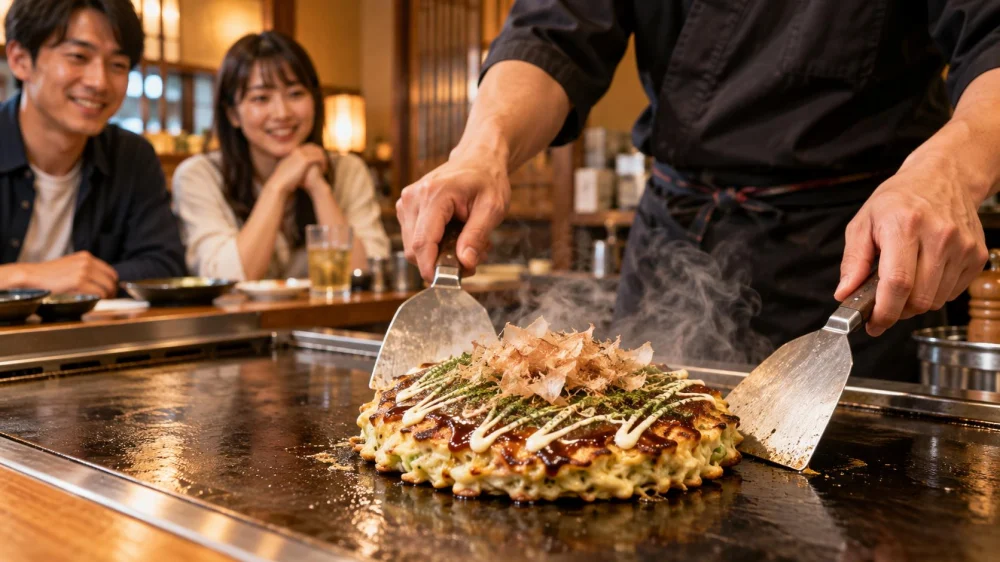
Some restaurants cook the dish in the kitchen and bring it to a hot table griddle. Others cook in front of diners, and a few expect customers to mix or cook some versions themselves. Ask before touching bowls or tools. If staff cook the dish, let them manage the timing and flipping unless invited to participate.
A small metal spatula may be used to divide the okonomiyaki and lift bite-sized portions. At a shared table, cut a section without breaking apart the whole dish, transfer it carefully, and keep hands away from the hot cooking surface. Steam, sauce, and metal tools can remain hot after the dish arrives.
For a group meal, order in stages if the restaurant allows it. One okonomiyaki plus a lighter side can be easier to judge than several dense dishes arriving together. Match the pace to the griddle and kitchen rather than expecting every item at the same moment.
Balance flavor and check ingredients
The usual flavor layers can include savory batter or stock, sweet-tangy sauce, mayonnaise, bonito flakes, powdered seaweed, pickled ginger, and the browned surface from the griddle. Taste before adding more table sauce. Extra sauce can hide differences in cabbage, noodles, seafood, or pork.
Ask about allergens rather than inferring from appearance. Wheat, egg, soy, fish, shellfish, sesame, and other allergens may appear in batter, noodles, dashi, sauces, mayonnaise, toppings, or shared griddle equipment. Recipes differ, and removing a visible topping does not remove an ingredient already mixed in or transferred during cooking.
Evidence note: Japan’s Ministry of Agriculture, Forestry and Fisheries documents both Osaka-style mixed preparation and Hiroshima-style layered preparation, including regional variations. These official cultural references describe common traditions; an individual restaurant’s menu and staff should confirm its actual recipe and service.
People with food allergies need a restaurant-specific cross-contact conversation and their clinician’s emergency plan. General cuisine descriptions cannot establish that a dish is safe for a particular diner.
Frequently asked questions
Is okonomiyaki always cooked by the customer?
No. Service varies. It may arrive fully cooked, be cooked by staff at the table, or involve customer cooking. Ask what the restaurant expects before handling ingredients or tools.
Does okonomiyaki always contain noodles?
No. Noodles are strongly associated with Hiroshima-style preparations and some named variations, while many Osaka-associated mixed versions do not include them by default.
Is one okonomiyaki a single-person portion?
Not necessarily. Size, thickness, noodle content, and side dishes affect the answer. Ask the server how the restaurant portions it and order gradually when sharing.
What are the moving flakes on top?
They are often very thin dried bonito flakes that move in rising heat. Toppings vary, so ask if you avoid fish or have an allergy.
Next steps
Choose whether you want a mixed Osaka-associated style, a layered Hiroshima-associated style, or the restaurant’s own variation. Confirm noodles, primary additions, standard toppings, cooking location, portion size, and allergen needs before ordering.
For a first meal, keep the build focused, watch how the griddle service works, divide the dish carefully, and taste before adding extra sauce. The goal is to notice the cabbage, batter, filling, browning, and regional structure rather than treating the dish as a vehicle for every topping.
 Sushi Gato4.0 (100 reviews)
 Soho Hibachi4.0 (907 reviews)
 Kyoto Japanese Restaurant4.0 (732 reviews)
 Fuji Sushi4.0 (568 reviews)
 Yummi Yummi sushi restaurant4.0 (165 reviews)
 Nara Express3.0 (780 reviews)
 Signature Sushi and Ramen at Shima Japanese Restaurant
 Why Locals Recommend Japanese Restaurants in Miami: Best Spots for Authentic Dining
 Signature Sushi and Ramen at Top Japanese Restaurants in NYC
 What Makes Orchid Japanese Restaurant Stand Out Among Japanese Restaurants
 How to Order at a Japanese Restaurant: Essential Tips for a Great Dining Experience
 What Makes Miyabi Japanese Restaurant Stand Out Among Japanese Restaurants