
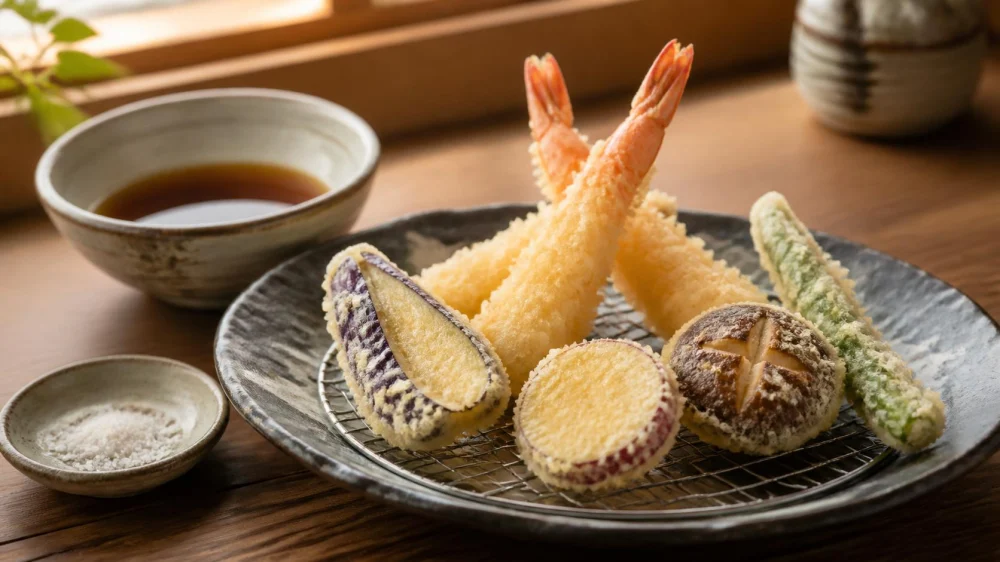
Tempura Guide: Choose, Dip, and Eat It While Crisp
On this page
Quick answer
Tempura is seafood or vegetables coated in a light batter and fried. Choose a mixed assortment when you want variety, or order individual pieces when available. Eat pieces soon after they arrive, taste the first bite before adding seasoning, and dip only the edge if you want to preserve crispness. Ask about ingredients and shared oil before ordering for an allergy or dietary restriction.
This guide is for diners at Japanese restaurants in the United States. Menus, batters, frying oils, sauces, and service styles vary, so use the current restaurant description as the final reference.
What is tempura?
Tempura is a frying style designed to create a delicate coating around a distinct ingredient. The coating may look irregular and airy rather than thick and uniform. Good texture depends on the ingredient, batter, oil, timing, and how quickly the piece is served and eaten.
Tempura is not one fixed dish. It may appear as an appetizer, a multi-piece assortment, a course served one piece at a time, a topping for noodles, or part of a rice bowl. The format changes the texture: pieces served separately usually stay crisper than pieces resting in broth or under sauce.
Common menu formats
- Assorted tempura: A selection of seafood and vegetables, useful for first-time diners who want contrast.
- Vegetable tempura: A seasonal or standard mix, but batter, sauce, and shared oil are not automatically vegetarian or vegan.
- Shrimp tempura: A common single-ingredient order or centerpiece of an assortment.
- Tempura over rice: Pieces may be served with sauce, making the coating softer as the meal sits.
- Tempura with noodles: Pieces may arrive beside or in hot or cold noodles. Separate service offers more control over crispness.
- Chef-served course: At specialized restaurants, pieces may arrive individually in an intended sequence.
Choose a plate or piece-by-piece format when crisp texture is the priority. Choose a rice or noodle format when you want the fried ingredient integrated with sauce or broth.
Choose seafood and vegetables
Common seafood can include shrimp, fish, squid, or other seasonal items. Vegetable selections may include sweet potato, squash, eggplant, mushroom, green bean, onion, lotus root, or leafy vegetables. Availability is not universal.
Choose by texture:
- Tender and mild: Shrimp or a mild fish may provide a gentle contrast with the coating.
- Firm or chewy: Squid and some shellfish can have more resistance; preparation matters.
- Creamy or soft: Eggplant and squash can become soft inside.
- Dense and sweet: Root vegetables and sweet potato may feel more substantial.
- Light and crisp: Thin green vegetables or leaves can emphasize the batter’s delicate texture.
A mixed order is best for exploration. It may not be ideal if you dislike several ingredients or need tight allergen control.
A practical ordering checklist
- Choose the serving format. Decide between a separate plate, rice bowl, noodle topping, or individual pieces.
- Confirm the assortment. Ask which seafood and vegetables are included today.
- Ask how sauce is served. Sauce on the side gives you more control over texture.
- Check portion context. Find out whether the order is an appetizer, entrée, or part of a set.
- Name any allergen. Ask about batter, sauce, garnish, frying oil, and shared equipment.
- Order in stages when appropriate. At a casual restaurant, a second small order may stay crisper than one oversized plate, if the menu and service allow it.
How to dip and eat tempura
The restaurant may provide a seasoned dipping sauce, salt, citrus, grated radish, ginger, or other condiments. There is no need to use every option on every piece.
Begin with a plain bite or a light touch of the suggested seasoning. If using dipping sauce, dip a small edge rather than soaking the entire piece. This lets you taste the ingredient and keeps more coating crisp. Grated condiments may be mixed into sauce or used separately according to the restaurant’s presentation and your preference.
Use chopsticks if comfortable, and take care because the interior may be hotter than the surface suggests. For a large piece, bite it carefully or divide it when practical; do not wave or shake it to cool it over shared dishes.
How to preserve the texture
- Eat tempura soon after service rather than waiting for the entire table to finish other courses.
- Keep pieces on the rack, paper, or plate as presented instead of stacking them.
- Add sauce one bite at a time.
- Start with lighter pieces and move toward richer or strongly flavored pieces when the restaurant does not provide another sequence.
- For noodles, request separate tempura when that is an available menu option.
Steam is the main enemy of crispness after frying. Takeout tempura will usually soften in a closed container. Reheating guidance depends on the ingredient and restaurant; follow safe food-handling practices and avoid assuming the original texture can be fully restored.
Allergies and dietary needs
Tempura may involve wheat, egg, shellfish, fish, soy, sesame, or other allergens. Recipes differ, so neither a pale coating nor the word “vegetable” confirms the batter ingredients.
Shared fryers create an important cross-contact question. Vegetable pieces may cook in the same oil as shrimp or other seafood. Dipping sauce or broth may contain fish-based stock, soy, or wheat. Ask staff to confirm both ingredients and preparation, and choose another dish if the restaurant cannot meet your needs.
Fried food can also be unsuitable for some medical diets or digestive conditions. Ask an appropriate healthcare professional for personal guidance rather than relying on the cooking style alone.
Limitations and important notes
- Menu names do not reveal every batter, oil, sauce, or garnish ingredient.
- Seafood can contain shell fragments or small bones despite careful preparation.
- Frying temperature and timing affect texture; a photo cannot guarantee the served result.
- Takeout and delivery naturally trap steam and may soften the coating.
- Cross-contact cannot be ruled out without restaurant-specific information.
Sources and evidence notes
This article reflects broad Japanese restaurant conventions and general food-allergy practice. It does not claim one original batter formula, mandatory eating sequence, or universal assortment.
Use the restaurant’s current menu and staff explanations for a specific order. No nutrition number, price, food-safety guarantee, ranking, or authenticity claim is asserted here.
Frequently asked questions
Is tempura batter always made with egg?
No. Some recipes use egg and others do not. Ask the restaurant, especially for an allergy or vegan diet.
Is vegetable tempura vegetarian?
Not automatically. Batter, sauce, stock, and shared frying oil may involve animal ingredients or seafood. Confirm each part.
Should I pour sauce over tempura?
You can when the dish is designed that way, but dipping a small edge preserves more crispness. Rice-bowl tempura may already be sauced.
Why does tempura become soft?
Moisture from steam, sauce, and the ingredient moves into the coating after frying. Eating promptly and limiting sauce contact helps preserve texture.
What is a good first order?
A clearly described mixed assortment offers several textures. If you have strong preferences or allergies, individual pieces may provide a more predictable choice.
Conclusion and next steps
Choose tempura by serving format, ingredient, and desired texture. Confirm the assortment, ask how sauce is served, and discuss batter and shared oil when dietary needs matter. Once the plate arrives, taste first, dip lightly, and eat the pieces while they are fresh and crisp.

 Hibachiman4.0 (214 reviews)
 Kazu Sushi and Sushi Burito4.0 (274 reviews)
 Midorie Miami4.0 (122 reviews)
 Blue Ocean Sushi & Grill4.0 (106 reviews)
 Isshin ramen & more4.0 (146 reviews)
 Sushi Kanpai Santa Monica4.0 (191 reviews)
 A Foodie’s Experience at Hatsuhana Japanese Restaurant
 Essential Japanese Pantry Staples Every Home Cook Needs: Soy Sauce, Mirin, Miso and More
 Signature Sushi and Ramen at Akira Japanese Restaurant: A Culinary Experience
 Why Miyako's Japanese Restaurant Is a Must-Try Spot for Japanese Food Lovers
 How to Market a Japanese Restaurant Effectively in a Digital Age
 The Complete Guide to Dining at Kazu Japanese Restaurant | Sushi, Tempura & More