
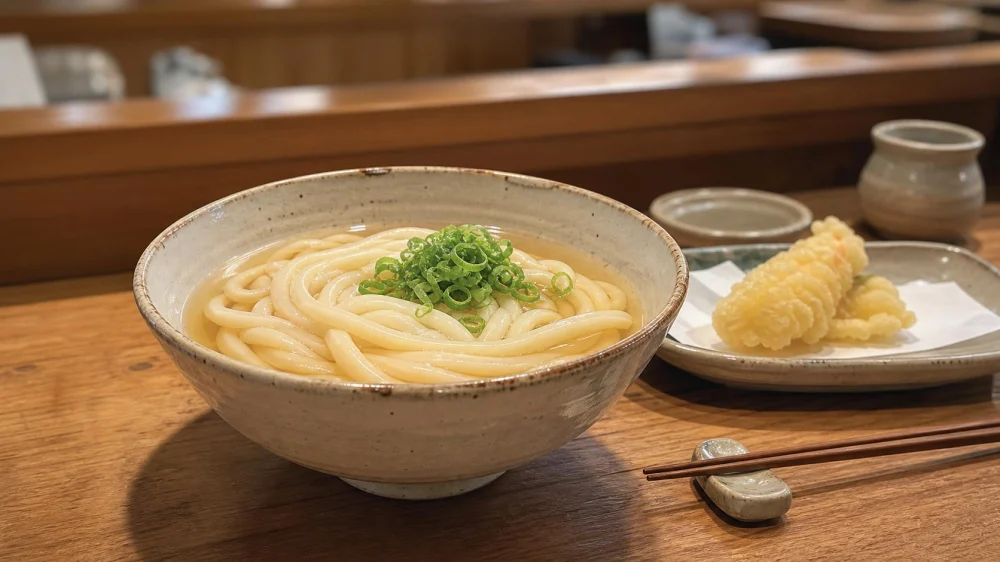
Udon Menu Guide: Broths, Noodles, and Toppings
On this page
Quick answer
Choose udon by deciding first between hot and cold noodles, then light broth, concentrated dipping sauce, curry, or a topping-led bowl. Cold preparations usually emphasize the noodle's chew; hot broth offers comfort and a softer texture. Ask what the broth contains, choose one or two toppings, and keep crisp tempura separate if you want it to stay crunchy.
This guide is for diners exploring udon at Japanese restaurants in the United States. Menus and regional traditions vary, so use the restaurant's description and ask staff when a term, ingredient, or serving method is unclear.
What is udon?
Udon is a Japanese wheat noodle known for its thick shape and springy-to-tender bite. Its character comes from both the dough and the way the restaurant cooks, chills, and serves it. Some noodles are smooth and soft; others have a firmer center and more pronounced chew.
Udon is not simply thick ramen. Ramen commonly uses alkaline wheat noodles and is often organized around richly developed soup styles. Udon has its own noodle, broths, sauces, toppings, and regional variations. A simple bowl can be the best way to notice its texture.
Choose hot or cold udon
Hot udon places noodles in warm broth or sauce. It is best for diners who want a comforting bowl, tender noodles, and flavors that blend as they eat. The noodles may continue to soften in the broth, so begin eating while the bowl is hot.
Cold udon is cooked and then chilled, often creating a firmer, more elastic bite. It may arrive on a tray with dipping sauce or with sauce poured over the noodles. It is best for diners who want to focus on texture or prefer a refreshing meal.
Temperature does not reliably predict flavor strength. A chilled dipping sauce can be concentrated, while a hot broth may be delicate. Ask whether a sauce is intended for dipping or drinking before treating it like soup.
Understand broth and sauce styles
Names can differ by region and restaurant, but several formats appear regularly:
- Kake udon: Noodles in a warm, seasoned dashi-based broth, often with a simple garnish. Choose it when you want a clear introduction to the noodles and broth.
- Zaru udon: Chilled noodles served separately from a concentrated dipping sauce. Dip a manageable portion rather than soaking the whole serving.
- Kamaage udon: Warm noodles served in their cooking water with dipping sauce on the side. It tends to feel soft, warm, and noodle-focused.
- Bukkake udon: Noodles with a relatively small amount of concentrated sauce poured over them. It may be served hot or cold and often comes with garnishes.
- Curry udon: Noodles in a thick, savory Japanese-style curry broth or sauce. Choose it for a fuller, more strongly seasoned meal.
Dashi often provides the foundation for udon broth or dipping sauce. It may contain fish-based ingredients such as bonito, seaweed such as kombu, mushrooms, or a blend. “Clear” does not mean vegetarian, and the exact recipe cannot be identified by appearance.
Match toppings to your appetite
Start with the bowl's base, then choose toppings for contrast or substance rather than adding everything available.
- Kitsune: Sweet-savory seasoned fried tofu adds softness and a mild richness. The broth can become slightly sweeter as it absorbs the seasoning.
- Tempura: Fried seafood or vegetables add crispness and richness. Order it on the side when you prefer to control how much broth it absorbs.
- Meat: Thinly sliced beef, pork, or chicken can make the bowl more filling and may sweeten or deepen the broth.
- Egg: Raw, softly cooked, poached, or fried egg may add creaminess. Preparation varies, so ask if that matters to you.
- Vegetables and aromatics: Green onion, grated daikon, ginger, mushrooms, seaweed, and citrus can bring freshness, aroma, or savory depth.
- Crunchy garnishes: Tempura crumbs or fried bits add texture but also absorb liquid and increase richness.
For a lighter meal, choose simple broth udon with green onion or grated daikon. For more contrast, pair chilled noodles with a crisp side. For a hearty bowl, choose curry or a protein topping, but consider whether an additional fried side will make the meal heavier than you want.
A practical ordering checklist
- Decide whether you want hot comfort or cold, chewy noodles.
- Choose clear broth, dipping sauce, poured sauce, or curry.
- Pick a simple bowl if you want to judge the noodles; add protein or fried toppings for a fuller meal.
- Ask which components arrive together and which come on the side.
- Confirm portion size before adding rice, tempura, or another main dish.
- Tell staff about allergies and dietary restrictions before ordering.
If the menu offers small, regular, and large portions, remember that toppings and sides may make a regular bowl more substantial than expected. At a self-service udon restaurant, the order may move quickly from noodles to toppings to payment, so decide on temperature and base style before reaching the counter.
Allergies and dietary needs
Traditional udon noodles generally contain wheat and are not gluten-free. Broth, dipping sauce, curry, seasoned tofu, meat toppings, and tempura may contain soy, wheat, fish, shellfish, egg, sesame, dairy, or other ingredients. Tempura and noodles may share preparation or cooking areas with other foods.
Ask about the complete dish, not only the visible topping. Useful questions include: “Does the broth contain fish or shellfish?” “Are the noodles made with wheat only, or also egg?” “Is this fried in shared oil?” and “Can the kitchen safely accommodate this allergy?”
For a severe allergy, explain the allergen and the reaction clearly. If the restaurant cannot confirm ingredients or cross-contact controls, choose a safer option rather than relying on removal of a garnish.
How to eat udon comfortably
Use chopsticks to lift a manageable amount of noodles. A spoon may help with broth and toppings. Slurping noodles is common in Japan and can cool them, but diners in the United States can eat quietly if that feels more comfortable.
For dipping udon, dip only the portion you are about to eat so the sauce does not overwhelm the noodles. Add provided green onion, ginger, wasabi, sesame, or other condiments gradually. They are options, not a requirement.
Hot bowls and curry can retain heat. Take care with the first bite, especially when serving children or anyone sensitive to hot food. Place chopsticks on their rest or across an appropriate holder; do not leave them standing upright in the bowl.
Frequently asked questions
Is udon always served in soup?
No. It can be served in hot broth, chilled with dipping sauce, warm with dipping sauce, or with a smaller amount of sauce poured over the noodles.
What is the best udon for a first-time diner?
A simple kake udon is a clear introduction to hot noodles and broth, while zaru udon highlights a firmer cold texture. Choose based on temperature and texture rather than looking for one universal best bowl.
Is udon vegetarian?
The noodles may be simple wheat noodles, but the broth and sauce often contain fish-based dashi, and toppings can contain animal ingredients. Ask the restaurant to confirm the whole preparation.
Why is tempura served separately?
Separate service lets diners choose between crisp tempura and pieces softened in broth. Add one piece at a time if you want both textures.
Can I drink the dipping sauce?
Dipping sauce is usually concentrated. Use it for dipping unless staff provides a hot liquid to dilute it or explains another customary finish.
Next steps
At your next Japanese restaurant, choose temperature first, then a broth or sauce style, then one topping that adds the contrast you want. Ask about ingredients when needed and taste the base before adding condiments.
Sources and evidence note: This article describes common udon formats and dining practices, not a fixed national standard. Recipes, names, portion sizes, and service styles vary across Japanese regions and U.S. restaurants.


 Unagi Hibachi Grill5.0 (2 reviews)
 KOJIMA5.0 (9 reviews)
 Gorilla Sushi Bar On Clark4.0 (398 reviews)
 Mizu 21 Restaurant4.0 (201 reviews)
 Sushi Sake Sunset4.0 (904 reviews)
 Sushi Yama (Yama Japanese Restaurant)4.0 (455 reviews)
 A Foodie’s Experience at Yama Japanese Restaurant: A Culinary Journey
 How to Reheat Tempura Without Making It Soggy Using Oven, Air Fryer, Toaster Oven
 A Foodie’s Experience at Aki Japanese Restaurant – A Culinary Delight
 The Complete Guide to Dining at Wako Japanese Restaurant
 Why Oishi Japanese Restaurant Is a Must-Try Spot for Japanese Food Lovers
 Top Dishes You Should Order at Miyako Japanese Restaurant | Japanese Restaurant