
Wagashi Guide: Choosing Japanese Sweets With Tea
On this page
Quick answer
Wagashi are Japanese sweets often made from beans, rice, agar, sugar, flour, nuts, or seasonal plants and commonly enjoyed with tea. Choose soft namagashi for delicate artistry, mochi-based sweets for a chewy texture, yokan for a firm bean-jelly slice, or dry higashi for a light tea accompaniment. Ask about allergens, freshness, and storage because recipes vary.
What is wagashi?
Wagashi is a broad category of traditional Japanese confections shaped by ingredients, tea culture, season, region, and occasion. It does not mean one specific dessert, and not every sweet sold in Japan is wagashi.
Many pieces balance pronounced sweetness with unsweetened or bitter tea. Appearance can evoke blossoms, leaves, snow, water, or festival motifs. Seasonal design is meaningful, but a customer does not need formal tea training to enjoy the flavors and craftsmanship.
Main types to recognize
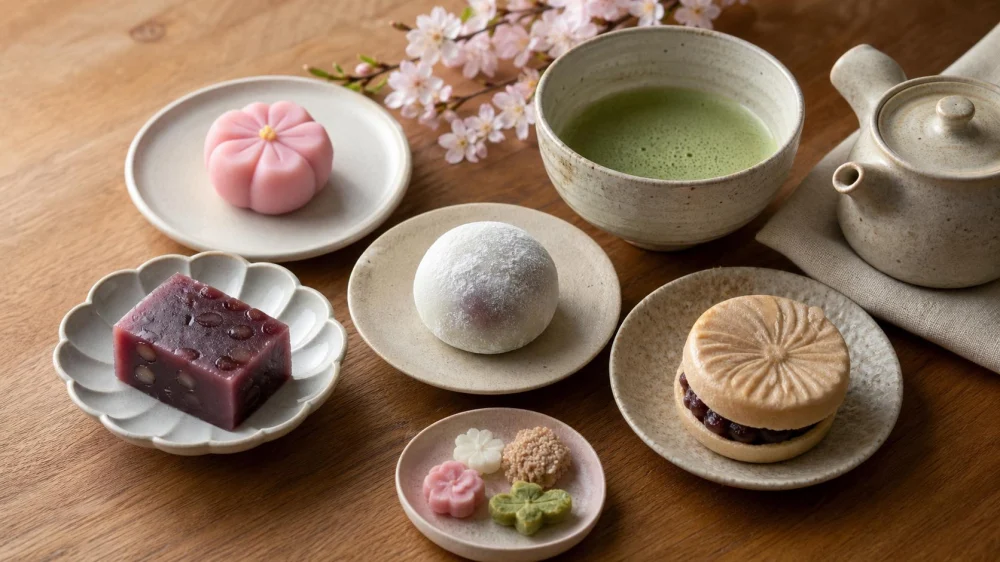
- Namagashi: fresh, moisture-rich sweets, often made with bean paste and shaped for the season. They usually have a short shelf life.
- Daifuku: soft mochi wrapped around sweet filling, commonly bean paste and sometimes fruit or cream in modern versions.
- Yokan: a firm sliced confection usually based on sweet bean paste and agar; flavors and textures range from smooth to chunky.
- Monaka: crisp wafer shells filled with bean paste. It is best eaten before moisture softens the shell.
- Manju: steamed or baked dough surrounding a sweet filling, with many regional variations.
- Dango: chewy rice-flour dumplings served on a skewer or in other arrangements with sweet or savory-sweet toppings.
- Higashi: dry sweets with little moisture, often molded into small shapes and served with tea.
Bean paste may be smooth koshi-an, textured tsubu-an, pale white-bean paste, or another preparation. “Red bean” does not tell you the full sweetness, texture, or additional ingredients.
How to pair wagashi with tea
Start by tasting a small bite of the sweet, then sip tea. The sweetness can soften the perception of astringency or bitterness, while tea refreshes the palate.
- Matcha: pairs naturally with rich bean paste, fresh namagashi, or a small dry sweet.
- Sencha: works with many moderate, clean-flavored sweets.
- Hojicha: its roasted character can complement mochi, chestnut, sesame, or baked manju.
- Genmaicha: the toasted rice aroma can suit rustic bean or rice-based confections.
These are starting points, not strict rules. Choose unsweetened tea when you want contrast, and ask whether a cafe’s set is designed around a particular pairing.
How to choose
Best for a soft, chewy texture: daifuku or dango. Best for neat slicing and sharing: yokan. Best for crisp contrast: freshly filled monaka. Best for visual seasonality: ask about the day’s namagashi.
Not ideal for long travel: highly perishable fresh sweets or cream-filled versions without suitable cooling. When to avoid guessing: if wheat, egg, milk, soy, sesame, nuts, or cross-contact matters, because visual appearance and a traditional name do not confirm the recipe.
In a United States restaurant, bakery, or market, availability may reflect local demand and ingredient supply. Ask whether the item is made in-house, delivered frozen, intended for same-day eating, or packaged for gifting.
Ordering checklist
- Choose a preferred texture: soft, chewy, crisp, firm, or cake-like.
- Ask whether the filling is smooth bean paste, chunky bean paste, fruit, sesame, chestnut, or cream.
- Confirm allergens and shared preparation when relevant.
- Ask which item is freshest or seasonal today.
- Pair one small sweet with unsweetened tea before ordering a large assortment.
- For takeout, confirm refrigeration, room-temperature limits, and best-by guidance.
Limitations and important notes
Names, shapes, fillings, sweetness, and storage requirements vary by maker and region. A sweet described as mochi may have a choking risk because of its sticky, dense texture. Take small bites, chew thoroughly, supervise young children, and use extra caution for anyone with swallowing difficulty.
Wagashi are still sweets. Bean, rice, or plant ingredients do not make a product suitable for every medical diet. Use package nutrition information or individualized professional guidance rather than assuming a health benefit.
Sources and evidence notes
This guide reflects established Japanese confection categories and common tea-pairing practice. Regional and modern interpretations are part of the tradition’s diversity. No universal ingredient list, nutrition profile, or restaurant availability is claimed.
Frequently asked questions
Are all wagashi vegan?
No. Many traditional recipes use plant ingredients, but some contain egg, dairy, gelatin, honey, fish-derived colorants, or other ingredients. Ask the maker.
Is mochi the same as daifuku?
Mochi refers broadly to a rice-based preparation. Daifuku is a particular filled mochi sweet, so the terms are related but not interchangeable.
Why are wagashi so sweet?
Many are intended to be eaten in small portions with unsweetened tea, which changes the balance. Sweetness also differs by maker and type.
How quickly should fresh wagashi be eaten?
Follow the shop or package instructions. Namagashi often have a short eating window, while sealed yokan or dry sweets may keep longer.
Can I eat wagashi without tea?
Yes. Tea is a traditional and useful pairing, not a requirement. Water or another unsweetened drink can also help balance a rich sweet.
Next steps
Order one texture you already enjoy and one unfamiliar seasonal piece, then compare them with a simple unsweetened tea. Note the filling, texture, sweetness, and aroma so your next wagashi choice becomes easier.

 Xaga Sushi & Asian Fusion4.0 (334 reviews)
 Coast Sushi & Sashimi4.0 (143 reviews)
 New Suki Ichiro Sushi4.0 (367 reviews)
 Oni Ramen4.0 (1952 reviews)
 Kuro-Obi Ramen CK by Ippudo3.0 (64 reviews)
 Sushi Q4.0 (317 reviews)
 Why Locals Recommend Kazu Japanese Restaurant
 What to Eat at a Japanese Restaurant on Whole30 – Best Compliant Choices
 Signature Sushi and Ramen at Top Japanese Restaurants in NYC
 A Foodie’s Experience at Domo Japanese Country Food Restaurant
 Why Kiku Japanese Restaurant Is a Must-Try Spot for Japanese Food Lovers
 A Foodie’s Experience at Mt. Fuji Japanese Restaurant | Authentic Japanese Cuisine