
How to Order Tempura: A Guide to Texture and Dipping
On this page
Quick answer
Tempura is seafood, vegetables, or other ingredients coated in a light batter and fried until crisp. First-time diners can choose a mixed assortment to compare textures. Eat pieces soon after they arrive, use dipping sauce lightly, and try salt when offered. Ask the restaurant about ingredients and shared fryers if you have dietary restrictions.
What tempura is
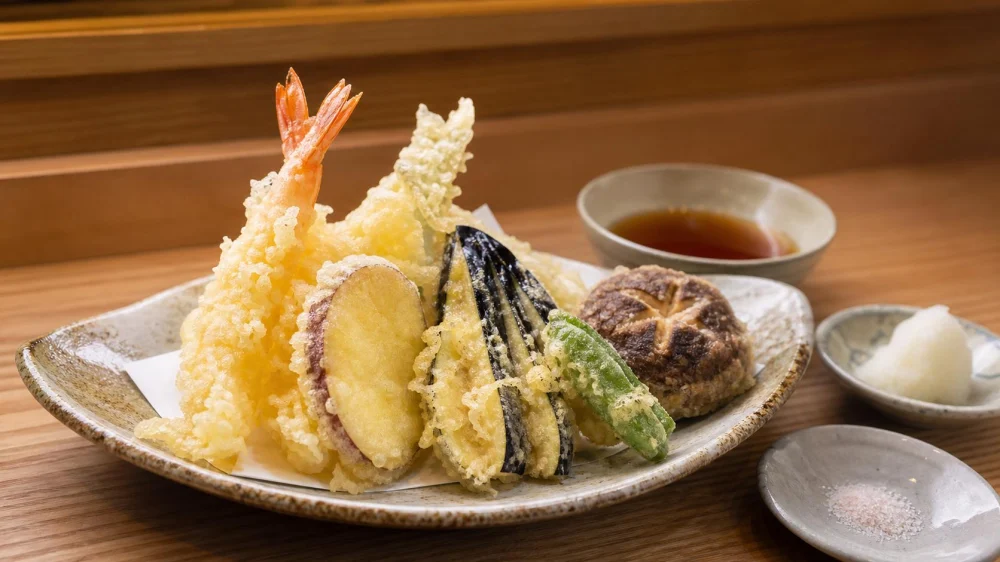
Good tempura highlights the ingredient rather than hiding it under a thick crust. The coating is typically delicate, uneven, and crisp, while the center remains moist and recognizable. Restaurants may serve tempura as a stand-alone course, a set meal, over rice, or alongside noodles.
A dedicated tempura restaurant may fry and serve one item at a time. A casual Japanese restaurant is more likely to bring an assortment together. Neither format is automatically better; choose based on pace, budget, and whether tempura is the focus of the meal.
Choose the right order
- Mixed tempura: Best for a first visit or anyone who wants seafood and vegetables.
- Vegetable tempura: Best for comparing sweetness, moisture, and texture across produce; verify the batter and fryer if avoiding animal products.
- Ebi tempura: Shrimp tempura, a familiar choice with a firm center.
- Tendon: Tempura served over rice, usually with sauce. Choose it for a complete, saucier bowl.
- Tempura soba or udon: Noodles with tempura on the side or in the broth. Ask how it is served if crispness matters.
- À la carte: Useful when you know which pieces you prefer or want to add a seasonal item.
Common ingredients
Menus vary with the restaurant and season. Seafood may include shrimp, white fish, squid, or other local choices. Vegetables often include sweet potato, squash, eggplant, mushrooms, green beans, lotus root, onion, or shishito pepper.
Texture can guide your selection. Root vegetables tend to be dense and sweet; mushrooms are savory and moist; thin green vegetables can be especially crisp. A mixed plate is not a fixed universal combination, so ask what is included before ordering.
Dipping and seasoning
Tempura commonly arrives with tentsuyu, a light dipping sauce often accompanied by grated daikon. Mix in a small amount of daikon if you like, then dip only enough to season the bite. Soaking the whole piece can soften the coating quickly.
Some restaurants provide plain or flavored salts. Salt keeps the crust dry and lets you compare individual ingredients. Start with a small taste before adding more. Lemon or grated condiments may also appear, depending on the restaurant.
There is no need to use every condiment or follow one rigid order. The practical rule is to taste the ingredient while it is hot, season gradually, and avoid covering the plate in sauce before you know how it tastes.
Eat tempura at its best
- Begin soon after the plate or individual piece arrives.
- Try a bite with the suggested salt or sauce rather than combining everything at once.
- Alternate richer seafood with vegetables or rice when available.
- Use chopsticks, but ask for a fork if that makes hot, slippery pieces safer.
- Let an extremely hot center cool briefly; vegetables can hold steam.
If tempura accompanies noodle soup, keeping it separate preserves crispness. Placing it in broth makes it softer and lets the coating flavor the soup. Both are valid; choose the texture you prefer.
A practical ordering checklist
- Decide whether tempura is the main dish, a shared starter, or a noodle topping.
- Ask what comes in the assortment and how many pieces are included.
- Confirm whether rice, soup, pickles, or noodles are part of a set.
- Choose mixed, vegetable, seafood, or à la carte based on your preferences.
- Ask about seasonal items if you want something beyond the standard mix.
- Tell staff about allergies before ordering, including concerns about batter, sauces, and shared oil.
- Eat promptly and season one piece at a time.
Important notes
Recipes differ. Batter may contain wheat and egg, dipping sauce may contain fish-based dashi or soy, and fryers may be shared with shellfish, meat, or other allergens. “Vegetable tempura” describes the visible pieces, not necessarily every ingredient or preparation surface.
People with celiac disease, food allergies, or strict dietary requirements should ask the restaurant directly and decide based on its specific procedures. This guide describes common dining patterns, not a guarantee about any menu.
Evidence notes
Japan’s Ministry of Agriculture, Forestry and Fisheries includes tempura among the characteristic forms of washoku and emphasizes preserving the ingredient’s essential flavor. The MAFF Washoku Way collection provides broader official context on Japanese cuisine, seasonality, and tempura.
Restaurant menus outside Japan adapt to local ingredients and dining styles, so the menu and staff remain the best sources for the exact assortment and service method.
Frequently asked questions
Is tempura always shrimp?
No. Shrimp is common, but tempura can feature fish, squid, mushrooms, root vegetables, green vegetables, and many seasonal ingredients.
What is the difference between tempura and tendon?
Tempura names the fried items. Tendon is a rice bowl topped with tempura and usually a savory-sweet sauce.
Should I pour dipping sauce over tempura?
For a crisp stand-alone assortment, dip each piece lightly. A rice bowl such as tendon is intentionally served with sauce, so a softer coating is part of that style.
Is vegetable tempura vegan?
Not automatically. Batter, sauce, dashi, and shared fryer practices vary. Ask the restaurant to confirm all components.
Next steps
For a first order, choose a mixed assortment or set, confirm what it includes, and taste the pieces while hot. Use salt or dipping sauce lightly and compare the textures. On a return visit, order the ingredients and serving style you liked most.


 Ice Point Cafe4.0 (300 reviews)
 Fremont Bowl4.0 (1189 reviews)
 Sam's Express4.0 (346 reviews)
 SUKI DESU4.0 (84 reviews)
 Hikari @ Jones Creek2.0 (21 reviews)
 Kimono Japanese Restaurant (Summit Location)4.0 (988 reviews)
 Exploring the Best of Don Japanese Restaurant Menu: A Taste of Tradition
 Exploring the Menu at Fugakyu Japanese Restaurant
 How to Make Japanese Restaurant Seaweed Salad at Home
 Why Kiku Japanese Restaurant Is a Must-Try Spot for Japanese Food Lovers
 Exploring the Menu at Miyabi Japanese Restaurant
 Do Japanese Restaurants Have Paper Menus?