
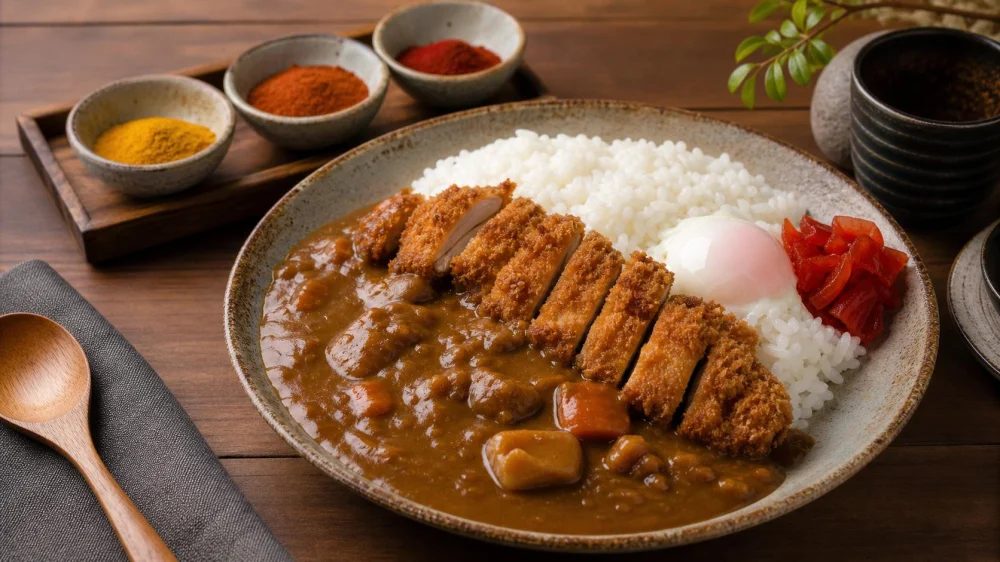
Japanese Curry Guide: Roux, Toppings, and Heat Levels
Table of contents
- Quick answer
- What Japanese curry is
- Choose a menu format
- Choose a heat level
- Pick a protein or vegetable focus
- Balance toppings and portions
- Use condiments thoughtfully
- Ask about allergens and dietary needs
- Ordering checklist
- Variations and limitations
- Frequently asked questions
- Sources and further reading
- Next steps
Quick answer
Japanese curry is usually a thick, savory-sweet roux served with rice, noodles, or a fried cutlet. Start with the restaurant's standard heat level, choose one main protein or vegetable focus, and add texture with pickles or a small topping rather than stacking every extra. Spice scales are restaurant-specific, so ask what “medium” means and check the roux for allergens before ordering.
What Japanese curry is
Japanese curry developed into a familiar everyday meal with its own texture and flavor profile. Compared with many South or Southeast Asian curries, a common Japanese restaurant version is thicker, less aromatic, and built around a smooth brown sauce with savory, sweet, and gently spiced notes. Onion, carrot, potato, meat, stock, fruit, and other ingredients may contribute, but recipes vary widely.
The sauce is often called curry roux because flour and fat help create its body. Some restaurants make it from scratch; others use a prepared base and customize it. The presence of vegetables in the sauce does not mean it is vegetarian, gluten-free, or dairy-free.
Choose a menu format
Curry rice: The classic format places sauce beside or over steamed short-grain rice. It gives the clearest sense of the house roux and makes portion adjustments easy.
Katsu curry: A breaded fried pork or chicken cutlet adds crunch and richness. The coating softens where it meets the sauce, so begin eating at the edge if you want maximum contrast.
Curry udon: A looser curry broth coats thick noodles. It can splash, and the bowl may stay very hot. A bib or napkin is practical.
Baked or specialty curry: Cheese, egg, hamburger steak, seafood, croquettes, or regional ingredients may turn the dish into a heavier combination. Ask what is already included before adding extras.
Choose a heat level
Japanese curry can taste mild and sweet at first, but restaurants may offer a broad numerical or verbal spice scale. There is no universal standard. One shop's medium can be another shop's hot, and heat can build through the meal. Ask staff where a first-time diner should start.
If you want more heat, choose one step above the standard rather than jumping to a challenge level. Rice, egg, or cheese may soften the perception of spice but will not remove capsaicin. Water offers limited relief; a dairy drink may help some diners if it fits their diet. Extreme-spice promotions are not a test of authenticity.
Pick a protein or vegetable focus
A single focal topping keeps the plate coherent. Pork katsu is rich and crisp; chicken katsu is often lighter in flavor; stewed beef can deepen the sauce; hamburger steak adds juiciness; shrimp or seafood provides sweetness; and roasted or fried vegetables create contrast without another meat.
Check whether the protein is cooked in the roux or served on top. A braised ingredient shares flavor with the sauce, while a fried topping preserves more texture. If ordering a vegetable version for dietary reasons, confirm the stock and roux rather than relying on the topping name.
Balance toppings and portions
First choose rice size, then heat, then the main topping. This order prevents a plate from becoming larger and richer than intended. A soft-cooked egg adds creaminess, cheese adds salt and body, fried garlic adds aroma, and extra vegetables can add freshness or sweetness. Two rich toppings may compete rather than improve the meal.
Extra sauce is useful with a large cutlet or rice portion, but it also increases salt and richness. Ask whether rice, sauce, and spice adjustments cost more. If sharing, do not assume heat preferences match; separate plates are often easier.
Use condiments thoughtfully
Japanese curry commonly arrives with small pickles. Bright red fukujinzuke is sweet, tangy, and crisp; rakkyo pickled shallots are sharper. Their acidity resets the palate between rich bites. Take a little at a time rather than mixing the whole condiment into the sauce immediately.
Some counters provide a savory sauce, spice powder, or chili oil. Taste the curry first. Add condiments to one corner so you can compare the original flavor and avoid making the entire plate too salty or hot.
Ask about allergens and dietary needs
Roux can contain wheat, milk, soy, or other ingredients. Katsu coating usually contains wheat and may include egg; seafood toppings introduce fish or shellfish; sauces and pickles have their own recipes. Shared fryers, utensils, pots, and work surfaces can create cross-contact.
Tell staff the exact ingredient you avoid and whether it is an allergy. Ask about the roux, stock, topping, garnish, condiment, and shared equipment. A “vegetable” or “mild” label does not answer those questions. People with serious allergies should follow their medical plan and decline the dish if the restaurant cannot verify ingredients or controls.
Ordering checklist
- Choose rice, katsu, noodle, or specialty curry.
- Ask what the house heat scale means.
- Select a rice portion before adding toppings.
- Pick one main protein or vegetable focus.
- Add at most one rich extra for a first order.
- Confirm roux, breading, stock, and fryer details for dietary needs.
- Taste before using table condiments.
- Let hot sauce and fried toppings cool before the first bite.
Variations and limitations
This is a general dining guide, not a definition every restaurant follows or medical nutrition advice. Recipes, heat scales, portions, and names vary. Ingredient and cross-contact information must come from the current restaurant. People managing allergies or medical dietary restrictions should rely on their care plan and the restaurant's verified information.
Frequently asked questions
Is Japanese curry always mild?
No. Many standard versions are gentle and slightly sweet, but specialty shops can offer intense heat. The scale is unique to the restaurant.
What is the best first order?
Standard curry rice or a house-recommended katsu curry at the usual heat level reveals the core sauce without too many variables.
Is curry rice gluten-free?
Often not, because many roux recipes use wheat flour. Breaded toppings and shared fryers add more concerns. Ask the restaurant directly.
What are the pickles for?
Their sweetness, acidity, and crunch contrast with the thick, rich sauce. Eat small amounts between bites or alongside the curry.
Can I order less rice and more sauce?
Many curry shops offer portion and sauce adjustments, sometimes for an added charge. Ask before ordering because ratios and rules vary.
Sources and further reading
- Japan Ministry of Agriculture, Forestry and Fisheries: Curry and Japanese Food — discusses curry as a widely familiar Japanese food and the ingredients behind it.
- U.S. Food and Drug Administration: Food Allergies — provides official information about major food allergens and risk management.
Next steps
For a first visit, order the house curry at its standard heat with one main topping and a moderate rice portion. Ask one clear allergen question if needed, then taste the sauce before adding pickles or spice. On a later visit, change only one variable—heat, protein, or format—to learn what you actually prefer.


 Akafuji4.0 (120 reviews)
 Buko Restaurant4.0 (191 reviews)
 Mizu Sushi4.0 (416 reviews)
 Masa Hibachi Sushi & Bar4.0 (984 reviews)
 Blue Sushi Sake Grill4.0 (131 reviews)
 Sakura Hibachi Sushi4.0 (855 reviews)
 An Insider’s Review of Sasa Japanese Restaurant for Food Lovers
 Exploring the Menu at Japanese Restaurant Atlanta for Authentic and Modern Flavors
 Japanese Breakfast Guide: What to Order and Expect
 Best Japanese Restaurants Near Bashettihalli Bangalore
 Exploring the Menu at Ami Japanese Restaurant Westwood
 A Comprehensive Guide to a Japanese Restaurant Menu