
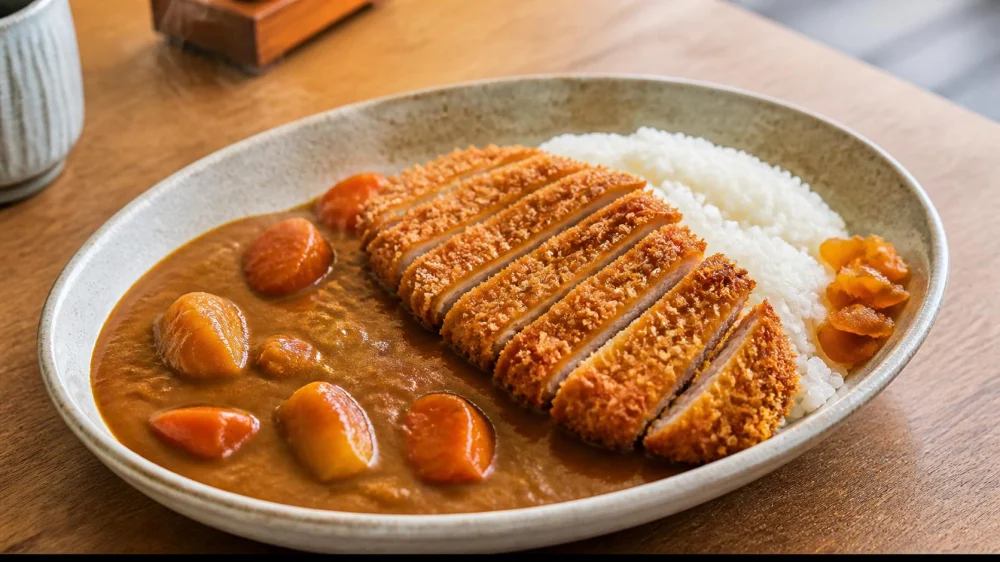
Japanese Curry Rice: Choose Heat, Toppings, and Texture
On this page
Quick answer
Japanese curry rice, or kare raisu, pairs steamed rice with a thick, savory curry sauce that may include vegetables and meat. Choose by asking about the house sauce, actual heat level, portion size, and available toppings. Pick a cutlet only if you want a crisp, richer contrast; choose vegetables or a plain version when you want the sauce and rice to lead.
Recognize the curry style on the menu
Japanese curry rice is a rice-centered dish with a smooth or chunky sauce commonly built around onions, carrots, potatoes, spices, and a restaurant-specific stock or seasoning base. It developed in Japan as a yōshoku, or Japanese adaptation of Western-influenced cooking, and it now appears in home-style cafes, specialist curry shops, family restaurants, and some noodle houses. Menus may describe the same broad dish as curry rice, kare raisu, katsu curry, or a house curry.
This guide is for diners in the United States exploring a Japanese restaurant menu, especially anyone who wants to choose heat, richness, texture, and portion deliberately. It is not an authenticity ranking: recipes vary by region, restaurant, and cook, and a local menu description should take priority over a generic expectation.
Practical checklist
- Read whether the base curry already contains beef, pork, chicken, seafood, dairy, fruit, or another ingredient that is not obvious from the topping name.
- Ask how the restaurant describes its heat scale; mild at one shop may feel different from mild elsewhere.
- Choose a sauce texture: smooth and cohesive for easy mixing, or chunky when you want distinct vegetables and meat pieces.
- Decide whether rice and sauce are enough or whether a fried cutlet, croquette, egg, cheese, or vegetables match your appetite.
- Check whether the topping is served over the sauce, beside it, or separately, because placement changes crispness.
- Confirm rice-size choices and whether extra sauce is available before ordering a large portion.
- Treat pickles and condiments as accents; taste the curry first before adding them.
- Tell staff about allergies or dietary restrictions and ask them to verify the sauce base, roux, fryer, and garnishes.
Step-by-step plan
- Start with the menu's house curry description. Note the named protein or vegetables, sauce style, default heat, rice amount, and included garnish.
- Choose heat separately from flavor. If the menu uses a numbered scale, ask what the kitchen considers comfortable for a first-time guest and whether the heat can be adjusted after cooking.
- Select one main contrast. A crisp pork or chicken cutlet adds crunch and richness; simmered meat blends into the sauce; roasted or fried vegetables add distinct shapes and sweetness.
- Match the portion to the topping. A heavy fried item and large rice portion can overwhelm a diner who mainly wants to taste the sauce, while a plain curry may suit a fuller rice serving.
- When the bowl arrives, taste sauce and rice together before mixing everything. Then try the topping with a little sauce and keep crisp sections away from the wettest area if texture matters.
- Use pickles, chili seasoning, or other table condiments in small additions. These can sharpen, sweeten, or intensify the bowl but cannot be removed once mixed in.
- If the meal is shared, use serving utensils and keep personal spoons away from communal food. Ask whether separate plates are available.
For a useful personal restaurant note, record the curry's sauce texture, sweetness, savoriness, heat as you experienced it, topping crispness, rice-to-sauce balance, and portion. Avoid reducing the experience to a single score: naming the traits makes it easier to choose a different style next time.
Limits and important notes
Menu terms do not guarantee a fixed recipe. Curry roux can contain wheat; sauces can include dairy, soy, fruit, meat stock, seafood, or other allergens; and fried toppings may share oil. Visual inspection cannot confirm ingredients or cross-contact. Very hot sauce or a fresh fried cutlet can also retain heat, so take a small first bite. Ask the restaurant when health, religious, or dietary needs affect the choice.
For a severe food allergy, do not rely on a menu icon or a general article. Explain the allergen and required cross-contact precautions to trained staff, and choose another dish or restaurant when the kitchen cannot verify the ingredients and process. Follow your emergency plan if a reaction occurs.
Frequently asked questions
Is Japanese curry always spicy?
No. Many versions emphasize savory depth, sweetness, and a thick texture rather than strong chile heat. Restaurants may offer several levels, so ask how their scale works instead of assuming the dish will be mild or hot.
What is the difference between curry rice and katsu curry?
Curry rice names the basic sauce-and-rice format. Katsu curry adds a breaded fried cutlet, commonly pork or chicken, creating a crisp and richer element. The exact cut and sauce vary by restaurant.
Should I mix all the rice into the curry sauce?
There is no single required method. Mixing a little at a time preserves contrasts and lets you control sauce coverage; fuller mixing creates a uniform bite. Follow your texture preference and the bowl's shape.
Can Japanese curry be vegetarian?
Sometimes, but a vegetable topping does not prove the sauce is vegetarian. The roux or stock may contain meat, dairy, or other animal ingredients. Ask staff to check the base and preparation method.
Sources and evidence
This guide uses broad culinary information from Japan's Ministry of Agriculture, Forestry and Fisheries reviewed in September 2026. MAFF describes curry rice as a well-established Japanese yōshoku dish and documents versions using rice, curry seasoning, meat, onions, carrots, and potatoes. Restaurant-specific recipes, heat scales, portions, and allergen controls remain the authority for an individual order; no universal recipe or ranking is claimed.
Conclusion and next steps
For a first order, identify the house sauce, choose a moderate portion and a heat level staff can explain, then add one topping for the texture you want. Taste the plain combination before adjusting condiments. Save a short texture-and-heat note afterward so the next restaurant choice is based on what you enjoyed rather than an assumed standard.


 Mugi Ramen and Poke3.0 (140 reviews)
 (City View)Hokkaido ramen & sushi Fort Worth4.0 (700 reviews)
 Kabuto Japanese Steakhouse and Sushi Bar4.0 (682 reviews)
 Sake Sushi4.0 (261 reviews)
 Teriyaki Wok Express4.0 (400 reviews)
 Tamashi Ramen Sushi- Uptown Galleria4.0 (276 reviews)
 Is a Japanese Restaurant a Hibachi Grill? Understanding the Difference
 A Foodie’s Experience at Umami Japanese Restaurant
 Why Locals Recommend Orchid Japanese Restaurant for Authentic and High-Quality Dining
 Must Try Japanese Restaurant Singapore – Hidden Gems & Local Favorites
 What Makes a Japanese Restaurant Server Unique in Hospitality
 The Complete Guide to Dining at Wasabi Japanese Restaurant: Best Dishes and More