
- japanese-cooking-liquids-overview - Understanding the role of mirin, sake, and rice vinegar in Japanese cuisine
- mirin-explained - Flavor profile, uses, and cooking applications of mirin
- sake-in-cooking - How sake enhances umami and tenderizes ingredients
- rice-vinegar-role - Why rice vinegar is essential for balance and acidity in Japanese dishes
- flavor-differences-comparison - Clear comparison of taste, function, and substitution rules
- classic-recipes-usage - Real-world dishes using mirin, sake, and rice vinegar
- home-cooking-mistakes - Common errors when using Japanese cooking liquids
- professional-chef-insights - How chefs in Japanese restaurants balance these ingredients
- real-kitchen-story - A relatable cooking story showing practical usage
1. Understanding Essential Japanese Cooking Liquids in Everyday Cooking
When people first explore Japanese cuisine, they often notice three ingredients appearing again and again: mirin, sake, and rice vinegar. At first glance, they may look interchangeable—clear liquids in similar bottles—but in reality, each plays a very distinct role in shaping the delicate balance of Japanese flavors.
In traditional kitchens and modern restaurants alike, including many dishes served at a Japanese Restaurant, these three ingredients form the backbone of seasoning. They are responsible for sweetness, depth, acidity, and umami balance that define everything from teriyaki to sushi rice.
Understanding the difference in the context of mirin vs sake vs rice vinegar is not just culinary knowledge—it’s the key to cooking authentic Japanese dishes at home without frustration or guesswork.
2. Mirin: The Sweet Backbone of Japanese Glaze and Balance
Mirin is often misunderstood as simply a sweet rice wine, but its role is far more sophisticated. It is a seasoning liquid with a gentle sweetness, low alcohol content, and a natural ability to enhance umami while giving dishes a glossy finish.
2.1 Flavor Profile and Function
Mirin delivers a mild sweetness that is less sharp than sugar. Instead of overpowering dishes, it blends into sauces and marinades, softening salty or strong flavors.
2.2 Where Mirin Truly Shines
- Teriyaki sauce for chicken, salmon, or tofu
- Simmered dishes like Japanese stews (nimono)
- Glazes for grilled vegetables or meats
2.3 A Home Cooking Insight
Many home cooks make the mistake of substituting sugar for mirin. While it may seem similar, sugar lacks the depth and shine mirin provides. In professional kitchens, chefs rely on mirin to create that signature lacquered surface on dishes like teriyaki chicken.
3. Sake: The Hidden Enhancer of Umami and Tenderness
Sake in cooking is not about alcohol consumption—it is a functional ingredient used to elevate flavor complexity. When comparing mirin vs sake vs rice vinegar, sake is the most subtle but deeply impactful in savory dishes.
3.1 What Cooking Sake Does
Sake helps neutralize unwanted odors in meat and fish while also tenderizing proteins. It brings out natural umami flavors without adding sweetness or acidity.
3.2 Practical Uses in Japanese Cooking
- Marinating fish before grilling or frying
- Adding depth to ramen broth and soups
- Enhancing stir-fried vegetables and meat dishes
3.3 Chef-Level Insight
In many kitchens, including traditional Japanese Restaurant environments, chefs often use sake early in the cooking process. This allows alcohol to evaporate while leaving behind a clean, savory base that elevates every other ingredient.
4. Rice Vinegar: The Gentle Acid That Defines Balance
Rice vinegar is the quiet hero of Japanese cooking. Unlike Western vinegars that can be sharp or harsh, rice vinegar is soft, slightly sweet, and incredibly balanced.
4.1 Flavor Characteristics
It provides acidity without overwhelming the palate, making it perfect for delicate dishes where balance is essential.
4.2 Essential Uses in Japanese Cuisine
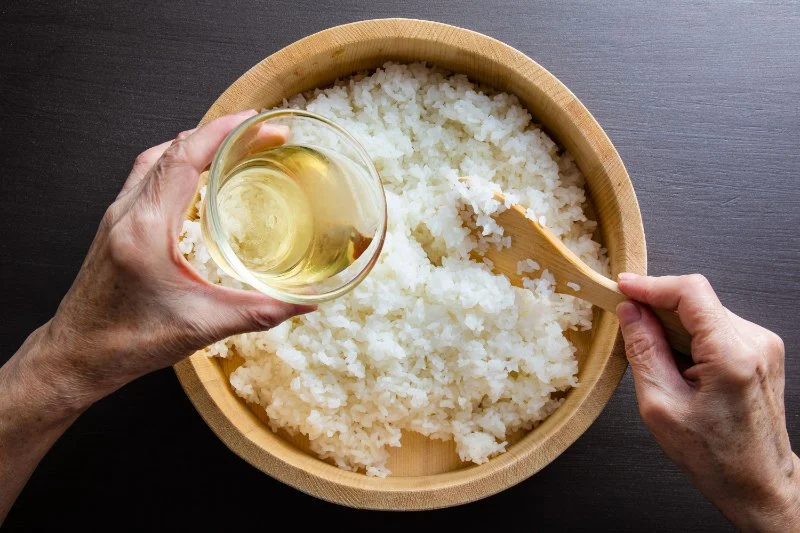
- Sushi rice seasoning (vinegared rice)
- Light salad dressings with sesame or soy
- Pickling vegetables for quick side dishes
4.3 Real Kitchen Observation
One of the most common beginner mistakes is replacing rice vinegar with white vinegar. The result is often too sharp and unpleasant. Rice vinegar, by contrast, brings harmony rather than intensity.
5. Understanding the Differences Between Mirin, Sake, and Rice Vinegar
To fully grasp mirin vs sake vs rice vinegar, it helps to compare their roles side by side in terms of flavor and function.
5.1 Flavor Role Comparison
- Mirin: Adds sweetness and glaze
- Sake: Adds umami depth and reduces odor
- Rice vinegar: Adds gentle acidity and balance
5.2 Cooking Function Differences
- Mirin: Finishing sauces and marinades
- Sake: Cooking base and flavor enhancer
- Rice vinegar: Seasoning and balancing agent
5.3 Can They Be Substituted?
Substitution is possible in emergencies, but it often changes the final taste significantly. Professional chefs rarely replace these ingredients because each plays a unique role in achieving authentic flavor profiles.
6. How These Ingredients Are Used in Classic Japanese Dishes
To truly understand these liquids, it helps to see them in action within real recipes that are commonly prepared in Japanese households and restaurants.
6.1 Teriyaki Chicken
This dish relies heavily on mirin for sweetness and shine, sake for depth, and soy sauce for saltiness. The combination creates a balanced glaze that defines the dish.
6.2 Sushi Rice Preparation
Rice vinegar is mixed with sugar and salt to season rice, giving sushi its signature tangy yet slightly sweet flavor profile.
6.3 Simmered Fish (Nimono)
Sake is often used first to remove fishy odors, followed by mirin to add sweetness and soy sauce for depth.
7. Common Mistakes When Using Japanese Cooking Liquids
Many home cooks struggle when first experimenting with Japanese cuisine because they misunderstand these ingredients.
7.1 Overusing Sugar Instead of Mirin
This creates overly sweet dishes without depth or balance.
7.2 Using Western Vinegar as a Substitute
This leads to overpowering acidity that disrupts delicate Japanese flavor structures.
7.3 Skipping Sake Entirely
Without sake, dishes often lack subtle umami layers and aroma refinement.
8. How Professional Chefs Balance These Ingredients
In professional kitchens, precision matters. Chefs working in traditional Japanese Restaurant settings carefully measure these liquids to maintain consistency.
They often build flavor in stages—first using sake to prepare ingredients, then adding mirin for sweetness, and finally adjusting with rice vinegar where needed. This layered approach ensures every dish has depth rather than one-dimensional taste.
9. A Real Kitchen Story: Learning the Balance
A home cook once shared their experience trying to recreate a restaurant-style teriyaki dish. At first, they used sugar instead of mirin and white vinegar instead of rice vinegar. The result was overly sweet and sharply acidic.
After learning the proper mirin vs sake vs rice vinegar balance, the same recipe transformed completely. The glaze became smooth, the chicken tender, and the flavor remarkably close to what they had enjoyed at a Japanese Restaurant during a trip abroad.
This transformation highlights how small ingredient changes can dramatically affect authenticity and taste.


 Kazoku Sushi4.0 (669 reviews)
 Kura Revolving Sushi Bar3.0 (219 reviews)
 Saki Endless Sushi & Hibachi3.0 (1484 reviews)
 Blackfish Rotary Sushi & Bar4.0 (10 reviews)
 Eighty-Eight Sushi & Ramen4.0 (556 reviews)
 NSB Yu-MI Sushi & Sake Cafe4.0 (259 reviews)
 Why Locals Recommend Yamato Japanese Restaurant in Los Angeles
 Why Locals Recommend Japanese Sushi Restaurants
 Okonomiyaki Recipe: How to Make Japanese Savory Pancake With Cabbage, Pork and Okonomiyaki Sauce
 Why Fujiya Japanese Restaurant Is a Must-Try Spot for Japanese Food Lovers
 Top Dishes to Try at Kiku Japanese Restaurant - A Guide to the Best Japanese Food
 Why Locals Recommend Japanese Restaurant Wasabi