
Okonomiyaki Guide: Styles, Toppings, and Griddle Tips
Table of contents
Quick answer
Okonomiyaki is a savory griddled dish built around batter and cabbage, with ingredients that vary by region and restaurant. Kansai-style versions usually mix the main ingredients before cooking, while Hiroshima-style versions are commonly layered and often include noodles. Ask whether staff cook it or you do, choose one or two featured additions, and keep hands clear of the hot griddle.
What okonomiyaki is
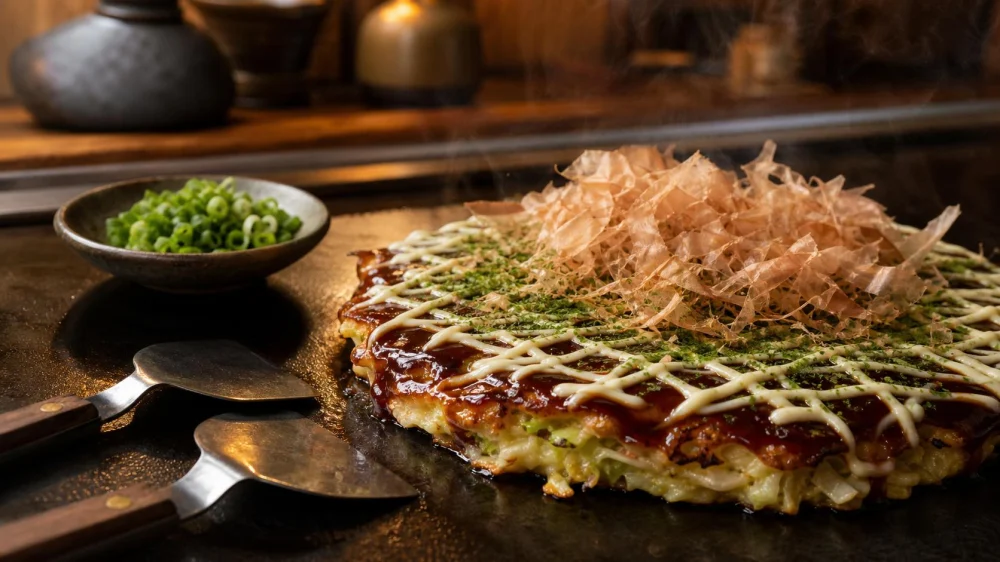
The name is often explained as “grilled as you like it,” which fits the dish's flexible character. A typical base can include flour batter, egg, finely cut cabbage, and dashi, with pork, seafood, cheese, mochi, green onion, or other additions. The cooked pancake is usually finished with a sweet-savory brown sauce and may receive mayonnaise, aonori seaweed, and dried bonito flakes.
That description is a starting point, not a fixed recipe. Restaurants may specialize in one regional tradition, create house combinations, or serve related griddle dishes. Look for a menu legend or ask a short question instead of assuming every plate uses the same batter and toppings.
Compare common styles
Kansai or Osaka style: Cabbage and other core ingredients are generally mixed into batter, cooked into a thick round, and topped after turning. The texture can feel crisp at the surface and tender inside.
Hiroshima style: Batter, cabbage, bean sprouts, meat or seafood, noodles, and egg are commonly cooked in layers. The noodle choice may be soba-style wheat noodles or udon, depending on the restaurant. It is typically taller and more structured than a mixed version.
Other variations: Regional and restaurant-specific versions can use different batters, vegetables, noodles, seafood, or serving methods. Monjayaki, for example, is a related Tokyo griddle dish with a much looser mixture and a different eating technique; it is not simply an undercooked okonomiyaki.
Read the menu
Start by finding the restaurant's signature combination. A named set often balances the ingredients better than building a long custom list. Identify whether the price includes noodles, egg, sauce, and finishing toppings. Note portion size, because one substantial pancake plus a small side may be enough for a diner.
Common menu words may describe the main protein or addition: buta for pork, ebi for shrimp, ika for squid, kaki for oyster, mochi for rice cake, and negi for green onion. Translations and recipes vary, so use the English description or ask staff to confirm.
Choose toppings and finishers
One rich ingredient and one fresh or textural element often make a clearer plate than many competing extras. Pork can add crisp edges, seafood brings sweetness or brine, noodles add body, mochi adds chew, and green onion lifts heavier flavors. Cheese and mayonnaise increase richness; use them intentionally rather than automatically.
Finishers are usually applied after cooking. Okonomiyaki sauce is concentrated, so taste before adding more. Mayonnaise may be drizzled in a light pattern. Aonori adds sea aroma, while bonito flakes can move from the heat and steam. Ask for any of these on the side if you want to control intensity.
Handle table-griddle service
Some restaurants cook the dish in the kitchen and slide it onto a hot tabletop griddle to keep warm. Others provide the mixture for guests to cook. Confirm the service style before touching the bowl or spatulas. If staff cook, let them manage timing and turning. If guests cook, follow the restaurant's sequence and timer rather than improvising.
Keep sleeves, phones, menus, children, and bags away from the heated surface. Use the provided spatulas only for the food, and place them where staff direct. The griddle stays hot after the dish is removed. If raw meat or seafood is part of self-cooking service, avoid transferring raw juices to plates or utensils used for eating and ask staff how doneness is checked.
Portion and eat it comfortably
Divide the round into wedges or a grid with the larger spatula, then move a small portion to your plate. At some counters, diners eat bites directly from a small spatula, but using chopsticks from a plate is equally practical when the restaurant provides them. Let each portion cool; the center and sauce can stay hotter than they look.
For sharing, agree on toppings before cooking and cut clean portions rather than repeatedly picking from the center. A light cabbage side, pickles, or soup can contrast the rich sauce. Drinks are optional; water or unsweetened tea works well when the toppings are salty.
Ask about dietary needs
Do not assume a vegetable-topped okonomiyaki is vegetarian. Batter or sauce may contain fish-based dashi, Worcestershire-style ingredients, egg, or shared-griddle contact with meat and seafood. Wheat, egg, soy, fish, shellfish, sesame, milk, and other allergens may appear in the batter, sauce, mayonnaise, toppings, or kitchen.
State the ingredient you must avoid and the severity, then ask about batter, stock, sauce, utensils, and griddle separation. A restaurant may be unable to prevent cross-contact. People with a serious allergy should follow their medical plan and choose another dish or restaurant if staff cannot answer confidently.
Ordering checklist
- Choose mixed Kansai style, layered Hiroshima style, or the house specialty.
- Check whether noodles are included.
- Select a main protein and at most one or two additions.
- Ask which finishers come automatically.
- Confirm whether staff or guests cook the dish.
- Explain allergies before ordering.
- Keep objects and hands away from the hot griddle.
- Cut small portions and allow them to cool.
Variations and limitations
This is a general dining guide, not a rulebook or medical advice. Names, recipes, portion sizes, prices, and etiquette vary by region and restaurant. The restaurant's instructions take priority for griddle use and food safety. Ingredient lists can change; guests with allergies or dietary restrictions should verify the current recipe directly.
Frequently asked questions
Is okonomiyaki always made with noodles?
No. Noodles are strongly associated with Hiroshima-style versions and some variations, but many Kansai-style pancakes do not include them unless ordered as an addition.
Do I need to flip it myself?
Only at restaurants that offer self-cooking. Ask first. Many kitchens cook it completely, and some tabletop griddles are only for keeping the finished dish hot.
Is bonito flake movement a sign that it is alive?
No. Very thin dried bonito flakes curl and move in the rising heat and steam.
Is vegetable okonomiyaki vegetarian?
Not necessarily. Dashi, sauce, mayonnaise, and shared cooking surfaces can introduce fish, egg, or other animal ingredients. Verify every component.
How much should I order?
Portions vary, but a full-size pancake can be a main meal. Ask about diameter or intended servings before adding noodles and several sides.
Sources and further reading
- Japan National Tourism Organization: Okonomiyaki Guide — introduces Kansai, Hiroshima, and related griddle styles.
- Japan Ministry of Agriculture, Forestry and Fisheries: Osaka Okonomiyaki — documents ingredients, preparation, and regional food culture.
Next steps
At the restaurant, first ask which okonomiyaki best represents the house and whether staff cook it. Pick a style, one featured protein, and a finishing preference. Confirm dietary needs before the order reaches the griddle, then share small portions while they are hot rather than overloading the first plate.
 Akafuji4.0 (120 reviews)
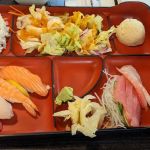 Buko Restaurant4.0 (191 reviews)
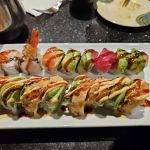 Mizu Sushi4.0 (416 reviews)
 Masa Hibachi Sushi & Bar4.0 (984 reviews)
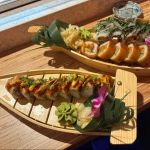 Blue Sushi Sake Grill4.0 (131 reviews)
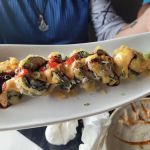 Sakura Hibachi Sushi4.0 (855 reviews)
 An Insider’s Review of Sasa Japanese Restaurant for Food Lovers
 Exploring the Menu at Japanese Restaurant Atlanta for Authentic and Modern Flavors
 Japanese Breakfast Guide: What to Order and Expect
 Best Japanese Restaurants Near Bashettihalli Bangalore
 Exploring the Menu at Ami Japanese Restaurant Westwood
 A Comprehensive Guide to a Japanese Restaurant Menu