
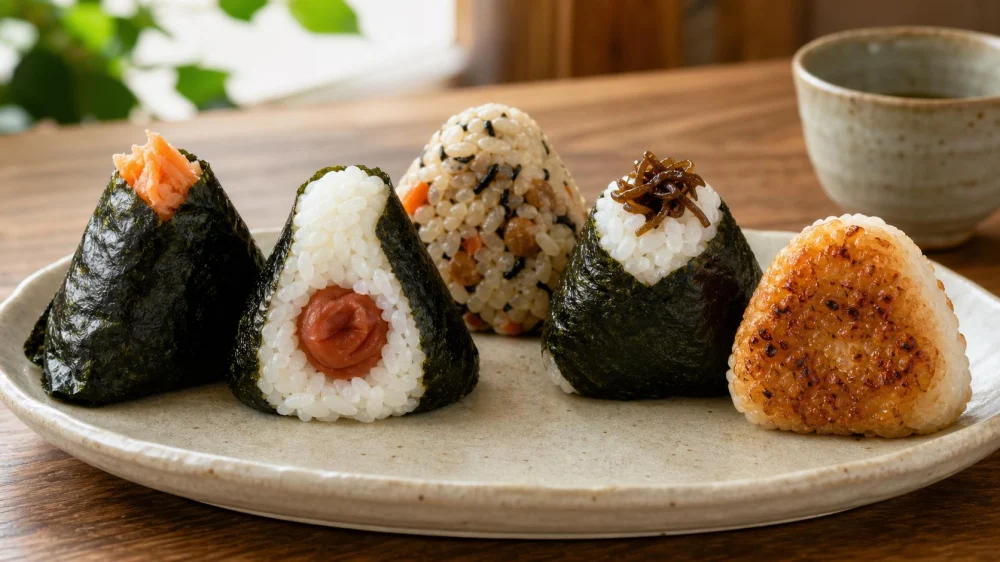
Onigiri Guide: Fillings, Nori, and How to Eat It
On this page
Quick answer
Onigiri is a portable Japanese rice portion, often shaped by hand and filled or seasoned with ingredients such as salmon, pickled plum, kelp, or bonito flakes. Choose a familiar filling first, keep crisp nori dry until eating when packaging allows, and eat it by hand or with chopsticks. Check labels or ask staff because fillings and seasonings vary.
What onigiri is
Onigiri is also called a Japanese rice ball, although it may be triangular, round, cylindrical, or another practical shape. It is usually made with cooked Japanese short-grain rice, salt, and a filling, topping, or mixed-in seasoning. Nori seaweed may wrap all or part of the rice.
Onigiri is not the same as sushi. Sushi rice is seasoned with vinegar; onigiri generally relies on plain salted rice and its filling. Some modern versions blur the categories, so the menu description is more useful than assumptions.
Choose a filling
- Salmon: A savory, approachable choice, commonly cooked and flaked.
- Umeboshi: Salted pickled plum with a strong tart-salty flavor.
- Kombu: Seasoned kelp with a deep savory character.
- Okaka: Bonito flakes seasoned with soy sauce, often slightly sweet and smoky.
- Tuna mayonnaise: A creamy modern favorite; recipe and seasoning vary.
- Tarako or mentaiko: Salted or seasoned pollock roe with a pronounced seafood flavor.
- Vegetable or mixed rice: Ingredients may be folded throughout rather than hidden in the center.
For a first order, choose one mild option and one contrasting filling. The small format makes comparison easier without committing to a large dish.
Understand the nori
Nori can be crisp or soft. Freshly wrapped onigiri absorbs moisture from the rice and becomes tender. Some packaged versions keep the seaweed separate until the wrapper is opened, preserving a crisp texture.
Neither style is wrong. Crisp nori provides a brittle contrast; softened nori holds closely to the rice and is easier to bite cleanly. Follow package diagrams carefully when present, because wrappers differ. At a restaurant or café, ask whether the nori is already wrapped or served separately.
How to eat onigiri
- Hold it with clean hands using the nori or wrapper as a grip.
- Keep the shape supported from the bottom rather than squeezing the center.
- Take moderate bites so the filling stays with the rice.
- Use chopsticks if the rice is very soft, the topping is loose, or you prefer not to hold it.
- Eat it reasonably soon after service for the intended rice and nori texture.
No special dipping sauce is normally required. Soy sauce may be part of a particular preparation, but pouring extra sauce over plain onigiri can make the rice fall apart and overwhelm the filling.
Where onigiri fits in a meal
One onigiri can be a snack or small side; several can form a simple meal with soup, pickles, vegetables, or protein. Japanese cafés, casual restaurants, markets, and specialty shops may offer different styles.
Grilled onigiri, or yaki onigiri, has a toasted exterior and often a savory glaze. Ochazuke-style service adds tea or broth, changing the dish from handheld food into a bowl eaten with utensils. Choose based on whether you want portability, crispness, or a warm sit-down dish.
Ordering checklist
- Ask whether the filling is in the center, mixed through, or placed on top.
- Confirm whether fish or roe is cooked, cured, or raw.
- Check whether nori is included and whether it arrives crisp or soft.
- Ask about set combinations if you want soup or sides.
- For restrictions, verify filling, seasoning, sauces, and preparation rather than relying on the short menu name.
- Choose grilled onigiri when you prefer a toasted, more savory surface.
Important notes
Recipes vary widely. Soy, fish, shellfish, egg, sesame, dairy, wheat, and other allergens may appear in fillings or seasoning. A vegetable-named filling does not guarantee vegan or gluten-free preparation.
Cooked rice is perishable. Follow the seller’s storage instructions, keep packaged products within labeled dates, and do not rely on smell alone to judge safety. Ask the restaurant directly about ingredients and handling when an allergy or medical restriction is involved.
Evidence notes
Japan’s Ministry of Agriculture, Forestry and Fisheries describes onigiri made with rice, salt, nori, and fillings including salmon, umeboshi, and okaka in its official Japanese cuisine resource. MAFF also documents many regional forms, showing that there is no single required shape or filling.
Frequently asked questions
Is onigiri served hot or cold?
It can be warm, room temperature, or chilled depending on the filling, seller, and style. Follow the restaurant’s service and packaged storage instructions.
Is all onigiri wrapped in seaweed?
No. Some have a full or partial nori wrap, some use another edible leaf, and some have no wrapper.
Is onigiri vegetarian?
Some versions may be, but fillings and seasonings can contain fish-based ingredients or other animal products. Confirm the exact recipe.
Why does packaged onigiri have a complicated wrapper?
Many wrappers separate the nori from moist rice until opening so the seaweed remains crisp. Pull tabs in the printed order for that package.
Next steps
Start with a familiar filling, add a contrasting option, and notice whether you prefer crisp or softened nori. Once you know your preferences, explore grilled versions, mixed rice, regional fillings, and onigiri sets with soup or sides.


 Ice Point Cafe4.0 (300 reviews)
 Fremont Bowl4.0 (1189 reviews)
 Sam's Express4.0 (346 reviews)
 SUKI DESU4.0 (84 reviews)
 Hikari @ Jones Creek2.0 (21 reviews)
 Kimono Japanese Restaurant (Summit Location)4.0 (988 reviews)
 Exploring the Best of Don Japanese Restaurant Menu: A Taste of Tradition
 Exploring the Menu at Fugakyu Japanese Restaurant
 How to Make Japanese Restaurant Seaweed Salad at Home
 Why Kiku Japanese Restaurant Is a Must-Try Spot for Japanese Food Lovers
 Exploring the Menu at Miyabi Japanese Restaurant
 Do Japanese Restaurants Have Paper Menus?