
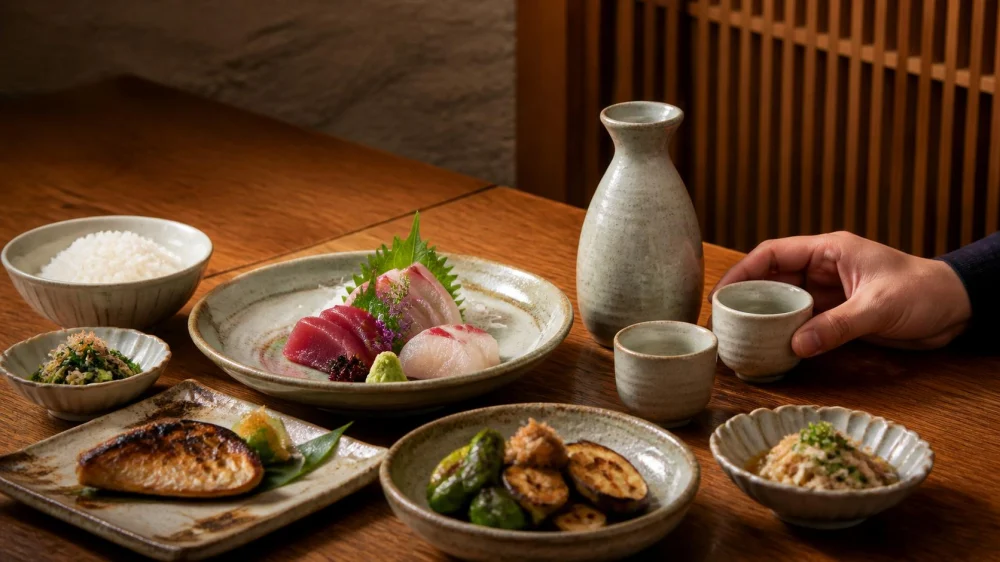
Sake Pairing Guide for Japanese Restaurant Meals
On this page
Quick answer
Pair sake by matching or contrasting a dish’s intensity, richness, salt, sweetness, and aroma. Delicate, fragrant sake often suits lighter food; crisp acidity can refresh rich or fried dishes; savory styles can echo grilled, mushroom, or fermented flavors. Ask for a small pour or staff recommendation, consider serving temperature, and choose a nonalcoholic drink whenever alcohol is unsafe or unwanted.
Sake pairing basics
Sake is a Japanese alcoholic beverage brewed from rice, water, yeast, and koji, a cultivated mold that helps convert rice starch into fermentable sugar. It is not distilled like vodka, and its flavor cannot be predicted from rice variety alone.
A useful pairing balances five sensory dimensions:
- Intensity: Keep a subtle drink from being overwhelmed by a strongly seasoned dish.
- Body: Light-bodied sake tends to feel cleaner; fuller styles can stand beside richer textures.
- Sweetness and dryness: A small amount of sweetness can soften salt or spice, while a dry finish may feel brisk with delicate food. Label scales do not always match perceived taste.
- Acidity: Brighter acidity can refresh the palate after oil or fat.
- Aroma and savory depth: Floral or fruit aromas can contrast with food, while rice, cereal, mushroom, or earthy notes can echo grilled and fermented dishes.
This guide is for adults of legal drinking age visiting Japanese restaurants in the United States. Pairing is a preference framework, not a rule or a health recommendation.
How to read a sake menu
Menus often organize sake by style, brewery, region, grade, or serving size. Common terms include:
- Junmai: A category made without added distilled alcohol under the applicable definition. Styles range widely from light to robust.
- Ginjo and daiginjo: Categories associated with more highly polished rice and controlled brewing methods. They may show fruit or floral aromas, but the category does not guarantee sweetness.
- Honjozo: Sake made with a limited addition of distilled alcohol, often designed for a clean or aromatic profile.
- Nigori: Cloudy sake containing fine rice particles. It may feel creamy and may taste sweet, but recipes vary.
- Nama: Unpasteurized sake, often fresh and lively, requiring careful refrigerated handling.
- Kimoto or yamahai: Traditional starter methods that can produce layered savory or acidic character, although producer style still matters.
Ask the server to describe a specific bottle as light or full, dry or gently sweet, delicate or savory, and best cool, room-temperature, or warm. Those descriptions are more actionable than choosing by grade alone.
Pair sake with common dishes
- Sashimi and delicate sushi: Try a clean, restrained, or gently aromatic sake that will not cover subtle seafood. Consider the seasoning and sauce, not only the fish.
- Rich sushi or fatty fish: Brighter acidity or a dry finish can provide contrast. A moderately savory sake can also match umami-rich toppings.
- Tempura and fried dishes: Choose crisp acidity and a clean finish to refresh the palate. Very delicate aroma may disappear beside heavy sauces.
- Yakitori and grilled foods: A fuller, savory style can complement char, soy-based glaze, mushrooms, or grilled meat. Salt-seasoned skewers may suit a cleaner sake.
- Miso, nabe, and simmered dishes: Look for enough body and savory depth to meet the broth or fermented seasoning.
- Spicy dishes: Gentle sweetness may soften perceived heat, while high alcohol sensation can make heat feel stronger for some diners. Start with a small taste.
- Wagashi or dessert: A softly sweet sake or nigori can complement dessert, but the drink should generally be at least as sweet as the food to avoid tasting thin or sharp.
When a meal includes several dishes, choose a versatile medium-bodied sake rather than seeking a separate pour for every plate. Water or tea between tastes keeps the meal comfortable.
Choose a serving temperature
Temperature changes aroma, texture, and perceived sweetness or acidity. Chilling can emphasize a clean finish and preserve delicate aromas. Room temperature may reveal body and savory character. Gentle warming can soften texture and bring forward rice, cereal, or earthy notes.
Not all premium sake must be cold, and not all warm sake is inexpensive. The producer or restaurant may recommend a range suited to the bottle. Ask before heating a highly aromatic style, because warmth can change the balance.
Try one sake at two temperatures only when the restaurant offers that experience responsibly. Compare small sips with the same dish rather than assuming one temperature is universally correct.
Ordering checklist
- Describe the main dishes and strongest flavors you plan to order.
- Say whether you prefer light, rich, crisp, aromatic, savory, dry, or gently sweet drinks.
- Ask which options are available by the glass or in a small carafe.
- Confirm the serving size, price, and temperature before ordering.
- Ask about ingredients or handling when an allergy or dietary restriction matters.
- Taste the sake before adding strongly flavored condiments to the food.
- Drink water, eat, pace the serving, and stop when you have had enough.
A useful request is: “We are ordering sashimi and grilled dishes, prefer something medium-bodied and not very sweet, and would like a small pour. What would you suggest?” This gives staff a clearer target than asking for the “best” bottle.
Dietary and safety notes
Sake contains alcohol. Do not drink if you are under the legal drinking age, pregnant, driving, operating equipment, unable to drink safely, or advised to avoid alcohol because of a health condition or medication. Ask a qualified healthcare professional about personal risks and interactions.
Serving cups can make quantity difficult to judge. Ask the restaurant for the pour size and alcohol percentage when available. Arrange safe transportation before drinking and follow applicable laws.
People with food allergies or celiac disease should ask about the specific product and restaurant handling. Ingredients, processing aids, flavor additions, shared equipment, and cross-contact can vary. A general statement about sake is not enough to establish safety for a particular bottle.
Nonalcoholic pairings can offer the same contrast-and-match approach. Try unsweetened tea, sparkling water, broth, or a restaurant’s alcohol-free beverage based on the dish’s richness and aroma.
Sources and evidence notes
This guide reflects broad sake-production vocabulary and sensory pairing practice. Category terms define production choices more reliably than a guaranteed flavor. Brewery notes, import labels, and trained restaurant staff are the appropriate sources for a specific product’s ingredients, alcohol content, storage, and recommended serving temperature.
Pairing descriptions are subjective. “Dry,” “fruity,” and “full-bodied” can vary by taster, temperature, glassware, and food. No pairing can guarantee enjoyment, and alcohol does not provide a health benefit required for the meal.
Frequently asked questions
Is sake a rice wine?
The phrase is common, but sake is brewed through a process distinct from grape wine. Calling it a brewed alcoholic beverage made from rice and koji is more precise.
Does junmai mean dry?
No. Junmai describes a production category, not a guaranteed sweetness level. Ask about the specific bottle’s sensory profile.
Should sake be served hot or cold?
Either may be appropriate. Delicate aromatic sake is often served chilled, while some savory styles work well at room temperature or warm. Follow the bottle or restaurant recommendation.
What sake goes with sushi?
A clean, balanced sake is a flexible starting point. Match intensity to the fish and consider rice seasoning, sauces, spice, and richer toppings.
Can I pair one sake with the whole meal?
Yes. A balanced, medium-bodied option can bridge delicate, grilled, and savory dishes. Ask for a versatile style and avoid extremes if the menu is varied.
What if I do not drink alcohol?
Choose tea, sparkling water, or another alcohol-free option. You can still match freshness, sweetness, aroma, and body to the food.
Conclusion and next steps
Sake pairing is easier when you compare intensity, body, sweetness, acidity, aroma, and savory depth. Match subtle food with restrained sake, use crispness to contrast richness, and let fuller savory styles meet grilled or fermented flavors.
At your next Japanese restaurant meal, choose the dishes first, describe two flavor preferences, and ask for a small, appropriately served option. Taste it with more than one bite, drink responsibly, and treat the pairing as exploration rather than a test with one correct answer.


 Sarku Japan3.0 (26 reviews)
 Kuro Sushi4.0 (101 reviews)
 Fushimi Bay Ridge4.0 (1094 reviews)
 Sushi Gallery4.0 (145 reviews)
 Gen Ramen4.0 (322 reviews)
 Lima Nikkei Westwood4.0 (18 reviews)
 Do Japanese Restaurants Have English Menus? What Travelers Need to Know
 A Foodie’s Experience at a Japanese Restaurant in SF
 Signature Sushi and Ramen at Miyako Japanese Restaurant
 Teishoku Guide: How Japanese Set Meals Are Organized
 How to Ask for Water in a Japanese Restaurant Like a Local
 A Foodie’s Experience at Domo Japanese Country Food Restaurant