
Tonkatsu Guide: Cuts, Sauces, and How to Order
On this page
Quick answer
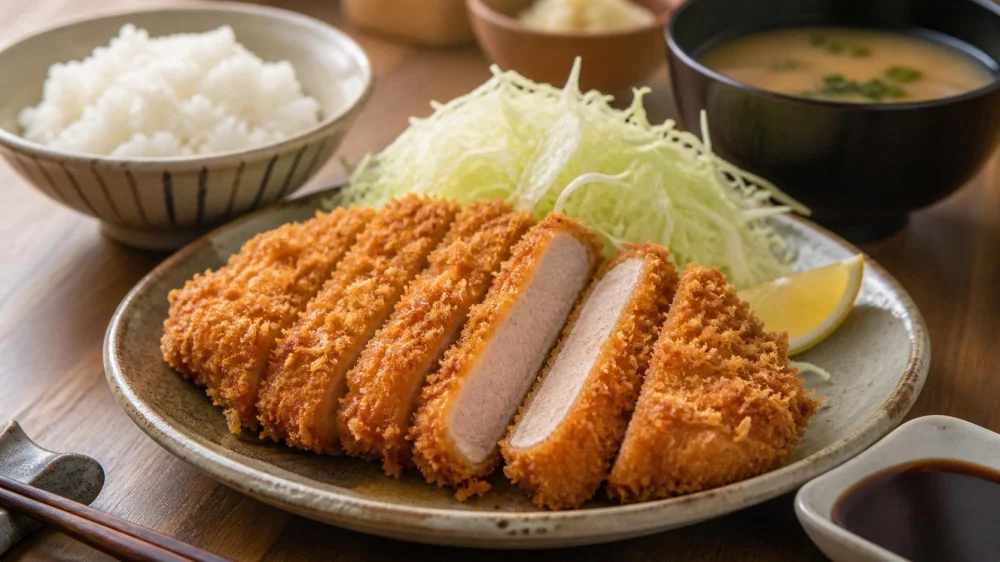
Tonkatsu is a Japanese breaded pork cutlet, usually coated in coarse panko and fried before being sliced. Choose hire for a leaner, tender fillet-style cut or rosu for a richer loin cut with more fat. It commonly arrives with shredded cabbage, rice, soup, pickles, and a sweet-savory sauce. Ask about portion, allergens, and set contents.
This guide helps diners in the United States read a tonkatsu menu and choose a plate. Restaurant terminology, cut specifications, sauces, sides, and frying practices vary, so use the actual menu and staff guidance for ingredient or dietary decisions.
What is tonkatsu?
Tonkatsu combines a pork cutlet, flour-and-egg breading process, coarse breadcrumbs called panko, and frying. The finished cutlet is sliced across the grain so diners can pick up individual pieces. Its appeal comes from contrast: a crisp, airy crust around moist pork, balanced by fresh cabbage and a concentrated sauce.
The name should not be confused with tonkotsu, the pork-bone broth associated with a style of ramen. “Katsu” refers to a cutlet, while the extra syllable in “tonkotsu” changes the word and the dish.
Restaurants may specialize in tonkatsu or offer it within a broader Japanese menu. A set meal often includes rice, miso soup, cabbage, and pickles, but inclusions and refill policies are business-specific.
Hire vs. rosu cuts
Hire katsu generally uses a tenderloin or fillet-style cut. It is lean, tender, and relatively mild. Choose it when you prefer less visible fat and a softer, compact bite. Because it is lean, careful cooking matters to keep it moist.
Rosu katsu generally uses pork loin and often includes a band or marbling of fat. It has a fuller pork flavor and juicier richness. Choose it when flavor and fat are part of the appeal. The exact trim and thickness can vary widely.
Some menus offer premium breeds, larger portions, extra-thick cuts, or different grades. These labels do not automatically tell you which plate you will enjoy most. For a first visit, cut, portion size, and frying quality are more useful decision points than an elaborate name.
Sauces, sides, and serving styles
Tonkatsu sauce is typically thick, dark, sweet, tangy, and savory. Use enough to season a bite without soaking the entire crust at once. Some restaurants provide sesame seeds to grind and mix with sauce; others serve mustard, salt, lemon, or house condiments.
Finely shredded raw cabbage adds freshness and crunch. It may be dressed separately, eaten between bites, or paired with the cutlet. Rice and soup make the plate a more substantial set, while pickles add acidity and salt.
Related menu formats include:
- Katsudon: cutlet served over rice, commonly with egg and simmered seasoning; the crust becomes softer.
- Katsu curry: cutlet paired with Japanese curry and rice; rich and filling.
- Katsu sando: cutlet sandwich, often with sauce and cabbage.
- Cheese or layered katsu: filled or stacked variations that change richness and allergens.
Tonkatsu ordering checklist
- Choose the cut. Pick hire for lean tenderness or rosu for richer loin flavor.
- Check the portion. Compare cutlet weight or size when listed and consider the number of included sides.
- Select the format. A plated set preserves crust contrast; donburi and curry intentionally add moisture and sauce.
- Review the set. Confirm whether rice, cabbage, soup, pickles, and refills are included.
- Ask about doneness policies. Follow the restaurant's safe preparation and available options rather than requesting a style it does not offer.
- Confirm allergens. Typical preparation may involve wheat, egg, soy, sesame, fish-derived soup components, dairy in variations, and shared fryers.
- Season gradually. Taste a piece before adding sauce to every slice; try the provided condiments one at a time.
How to evaluate the plate
A well-made cutlet commonly has an evenly golden panko crust that feels crisp rather than greasy or hard. The breading should generally remain attached when a slice is lifted, while the pork should be properly cooked and retain moisture appropriate to the cut.
Balance matters. Very thick sauce can overwhelm a delicate hire cut, while rich rosu may benefit from cabbage, mustard, or lemon between bites. Eat soon after serving because steam from the meat and plate gradually softens the crust.
“Best” is personal: a diner who values lean tenderness may prefer a plate that another diner finds less flavorful. Evaluate whether the restaurant delivers the cut, crust, seasoning, and set style you intended to order.
Important notes
- Tonkatsu is not the same as tonkotsu ramen broth.
- The dish commonly contains pork, wheat, and egg and may involve soy, sesame, fish, dairy, or shared fryer cross-contact.
- A vegetable side or cabbage does not make the overall meal vegetarian or allergen-free.
- Frying oil, breadcrumbs, sauces, soup stock, and dressing recipes vary by restaurant.
- People with allergies or medical dietary restrictions should ask the restaurant directly and decide based on its current procedures.
Frequently asked questions
What is the difference between hire katsu and rosu katsu?
Hire is generally a lean, tender fillet-style cut. Rosu is generally loin with more fat and fuller pork flavor. Exact cut and trim depend on the restaurant.
Should sauce go on the pork or cabbage?
Use the provided sauce and dressing as you prefer, but adding sauce to a few cutlet pieces at a time helps preserve crispness. Cabbage may have a separate dressing.
Why is cabbage served with tonkatsu?
Its light crunch and freshness contrast with the fried pork and concentrated sauce. It also helps reset the palate between rich bites.
Is chicken katsu the same dish?
It uses a similar breaded-cutlet idea but chicken instead of pork. Cut, flavor, cooking, and menu accompaniments may differ.
Is tonkatsu always served as a set meal?
No. It can appear alone, in a set, over rice with egg, beside curry, or in a sandwich. Confirm what the listed price includes.
Sources and evidence notes
This article reflects broadly established Japanese menu terminology and common restaurant presentation: tonkatsu is a panko-breaded pork cutlet; hire and rosu commonly distinguish lean fillet-style and richer loin cuts; cabbage, rice, soup, pickles, and sauce are frequent accompaniments.
Exact recipes, ingredients, cooking procedures, portions, and service customs are set by each restaurant. Current menu and staff information should guide allergy and dietary choices.
Conclusion and next steps
Start by deciding between lean hire and richer rosu, then choose whether you want a crisp plated set, saucier katsudon, hearty curry, or portable sandwich. Confirm the sides and allergens, taste the crust before adding sauce, and use cabbage or a sharp condiment to balance rich bites. That simple framework makes a long tonkatsu menu much easier to navigate.

 Ajisai4.0 (398 reviews)
 Sushi Kakogan Rocklin4.0 (391 reviews)
 Yori Japanese Cuisine4.0 (102 reviews)
 Slurp Ramen4.0 (282 reviews)
 Ocean Sushi4.0 (94 reviews)
 Hachi3.0 (16 reviews)
 Why Locals Recommend Midori Japanese Restaurant: A Must-Visit Dining Spot
 Why Fujiyama Japanese Restaurant Is a Must-Try Spot for Japanese Food Lovers
 What Makes Good Japanese Restaurants in NYC Stand Out Among Japanese Restaurants
 De Fune Japanese Restaurant in Marylebone London – A True Culinary Gem
 how to make japanese restaurant fried rice at home like a pro
 First Omakase Dinner: What to Know Before You Book