
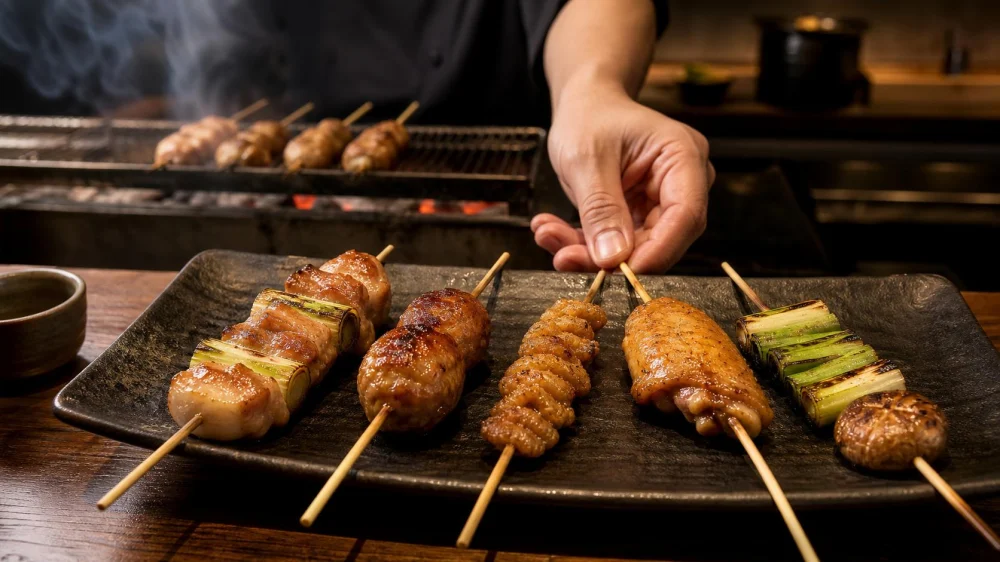
Yakitori Menu Basics: Choose Skewers by Flavor and Texture
On this page
Quick answer
For a first yakitori order, combine one juicy skewer such as chicken thigh, one lean choice such as breast or tender, one textured option such as skin or gizzard, and a vegetable skewer if offered. Choose shio for a clean salt-forward taste and tare for a sweeter, savory glaze. Order a few skewers at a time so they arrive hot.
This guide is for diners at Japanese restaurants in the United States. Menus, portion sizes, terminology, ingredients, and cooking styles vary. Ask the restaurant when a cut, seasoning, doneness, or allergen is important to you.
What yakitori is
Yakitori means grilled chicken. In a traditional yakitori meal, cooks use multiple parts of the bird, cut them into bite-size pieces, thread them on skewers, season them, and grill them over high heat. The appeal comes from contrast: lean and rich cuts, crisp edges and tender centers, light salt and glossy sauce.
Some U.S. menus use “yakitori” more broadly for skewered vegetables, pork, beef, seafood, or plant-based items. Those can belong naturally on a skewer menu, but they are not chicken yakitori in the narrow sense. The menu description usually makes the distinction clear.
Yakitori is best understood as a sequence rather than one large entrée. Small skewers let diners compare parts and seasonings while each piece is still hot from the grill.
Choose a skewer by texture
Juicy and familiar
- Momo: chicken thigh. It is juicy, moderately rich, and a forgiving place to start.
- Negima: chicken—often thigh—alternated with Japanese long onion or scallion. The onion adds sweetness and a softer vegetable texture.
- Tebasaki: chicken wing. Expect skin, bone, concentrated flavor, and a more hands-on bite depending on presentation.
Lean and delicate
- Sasami: chicken tender. It is mild and lean, sometimes paired with a condiment such as wasabi, ume, shiso, or yuzu kosho.
- Muné: breast meat. It has a firmer, leaner texture than thigh and benefits from careful grilling.
Rich or crisp
- Kawa: chicken skin folded onto a skewer. It can be crisp at the edges and chewy or rich between them.
- Bonjiri: tail. This small cut is notably rich and juicy, making it better for diners who enjoy fatty textures.
Springy, firm, or finely ground
- Tsukune: seasoned chicken meatball. Recipes vary; the texture can be tender, springy, or coarse. It may be glazed and served with an egg-based dip.
- Sunagimo: gizzard. It is lean, firm, and pleasantly crunchy rather than fatty.
- Nankotsu: cartilage. It is chosen for crisp, pronounced crunch and is not ideal for diners seeking tenderness.
Organ cuts
- Hatsu: heart. It is usually firm, springy, and relatively clean in flavor compared with liver.
- Reba: liver. It is rich, mineral, and soft; it is best for diners who already enjoy liver.
Names and romanization differ. A menu may use Japanese, English, or both. When the description is unclear, ask which part of the chicken it is and whether the texture is lean, fatty, crunchy, chewy, or soft.
Shio or tare: choose the seasoning
Shio means salt. A shio-seasoned skewer usually tastes cleaner and keeps the character of the chicken and charcoal at the front. It is often a good match for delicate cuts, crisp skin, gizzard, and vegetables.
Tare is a savory-sweet glaze brushed onto skewers during grilling. Recipes vary by restaurant and may include soy sauce and other ingredients. Tare brings caramelized edges, deeper seasoning, and more sauce-driven flavor. It often works well with thigh, meatballs, liver, and other rich cuts.
There is no universal rule that one cut must use one seasoning. Many cooks choose the pairing, while other restaurants let the diner decide. If a menu offers a house recommendation, it is a useful first choice because the cook designed the seasoning for that skewer.
Fast decision rule
- Choose shio when you want lighter seasoning, clearer grilled flavor, or a contrast to other sauced dishes.
- Choose tare when you want a glossy, savory-sweet glaze or a fuller flavor with rich and ground cuts.
- Order the same cut both ways when comparison is the main experience and the restaurant allows it.
Build a balanced order
A useful first round for one diner might include three or four skewers:
- Start familiar: momo or negima.
- Add contrast: sasami for lean texture or kawa for richness.
- Try one distinctive cut: tsukune, sunagimo, hatsu, or another house specialty.
- Add a vegetable: scallion, shiitake, shishito, eggplant, asparagus, or another seasonal option if available.
After tasting the first round, decide whether to continue toward lean, rich, crunchy, or sauced options. This is often better than ordering every skewer at once, which can let later skewers cool and makes it harder to adjust.
Best for different preferences
- New to varied chicken cuts: momo, negima, tsukune, and a vegetable.
- Prefer lean foods: sasami or breast, gizzard, and vegetables; ask how much oil or sauce is used.
- Enjoy rich textures: thigh, skin, wing, and tail in smaller variety portions.
- Like pronounced texture: gizzard, cartilage, skin, and heart.
- Avoid organ meat: skip items described as liver, heart, gizzard, or offal and confirm unfamiliar Japanese names.
A practical dining checklist
- Check whether prices are per skewer, per pair, or per set.
- Ask whether the chef chooses shio or tare for each cut.
- Tell staff about food allergies before ordering, not after the skewers arrive.
- Order an initial round that mixes lean, juicy, rich, and vegetable choices.
- Eat skewers soon after service while the surface is hot and aromatic.
- Use the provided plate for the skewer after eating; follow the restaurant’s setup rather than placing it directly on the table.
- Ask before applying extra condiments; the skewer may already be fully seasoned.
- Order more only after you know the restaurant’s skewer size and pacing.
Safety, allergens, and important notes
Chicken should be thoroughly cooked. USDA guidance for consumers identifies 165°F (73.9°C), measured with a food thermometer, as the safe minimum internal temperature for poultry. Color alone is not a reliable safety test. Restaurant diners normally cannot measure a skewer, so send back chicken that appears raw or cool in the center and speak with staff.
Tare and marinades commonly contain soy and may contain wheat; garnishes and condiments may involve sesame, egg, fish, or other allergens. Tsukune can include egg or other binders. Recipes and cross-contact controls differ by kitchen. If you have a food allergy, name the allergen clearly, ask about every seasoning and garnish, and ask whether the restaurant can manage cross-contact. Do not rely only on the dish name.
Pregnant people, young children, older adults, and people with weakened immune systems can face greater consequences from foodborne illness. They should be especially careful to avoid raw or undercooked poultry and follow advice from their healthcare professional.
This article describes common menu patterns, not mandatory rules of Japanese dining or a guarantee about a particular restaurant. Respect the cook’s house style and ask concise questions when choices are not printed.
Frequently asked questions
Is every grilled skewer yakitori?
Strictly, yakitori is grilled chicken. Restaurants may place vegetables and other proteins in the same menu section or use the term broadly for accessibility. Read the ingredient description rather than assuming every skewer contains chicken.
How many yakitori skewers make a meal?
There is no fixed number because skewer size, side dishes, and appetite vary. Start with a small mixed round, see the portion size, and add more. Sets can be useful when the restaurant explains what they include.
Should I remove the meat from the skewer?
Many diners eat directly from the skewer, but removing pieces can be practical for sharing or for a large skewer. Follow the restaurant’s setup and handle pointed skewers carefully.
What is the easiest organ skewer to try?
Heart is often firmer and milder than liver, but preference is personal. Gizzard is technically part of the digestive tract and offers crunch rather than the soft, mineral character many people associate with liver. Ask staff for the mildest house option.
Is tare always sweet?
It usually has some sweetness, but the balance can range from light and savory to thick and sweet. Reduction, soy sauce, and the restaurant’s recipe shape the result. Ask for shio when you prefer less sauce-driven flavor.
Can yakitori work for a gluten-free diet?
Potentially, but do not assume it. Tare and soy-based seasonings may contain wheat, and cross-contact can occur on grills, brushes, trays, and prep surfaces. Explain your needs and ask the restaurant whether it can provide a suitable option safely.
Sources and evidence notes
- USDA Food Safety and Inspection Service: Chicken from farm to table explains safe poultry handling and the 165°F minimum internal temperature.
- U.S. Food and Drug Administration: Major food allergens lists the nine major allergens recognized in U.S. federal food law.
- FDA Food Code allergen guidance emphasizes allergen awareness in retail food establishments.
The culinary descriptions reflect common yakitori terminology and restaurant practice. Individual menus and recipes remain the controlling source for a particular meal.
Next steps
At your next yakitori meal, order one familiar skewer, one contrasting texture, and one vegetable, then compare shio with tare. Note which combination of cut, texture, and seasoning you prefer. That vocabulary will make the next menu easier to navigate without turning the meal into a test of expertise.
 Osaka Japanese Cuisine4.0 (107 reviews)
 Abashiri Japanese Restaurant4.0 (615 reviews)
 Sei Bar Medford4.0 (323 reviews)
 Pepper Lunch4.0 (254 reviews)
 Sushi Q4.0 (317 reviews)
 Ramen Q Hawaiian BBQ4.0 (129 reviews)
 The History and Flavor Behind Japanese BBQ Restaurants
 What Is the Okinawan Diet and Its Role in Longevity in Japan
 A Foodie’s Experience at Ebisu Japanese Restaurant: A Comprehensive Guide
 Why Japanese Restaurant Las Vegas Is a Must-Try Spot for Japanese Food Lovers
 The Complete Guide to Dining at Oishi Japanese Restaurant
 The History and Flavor Behind Mt. Fuji Japanese Restaurant