
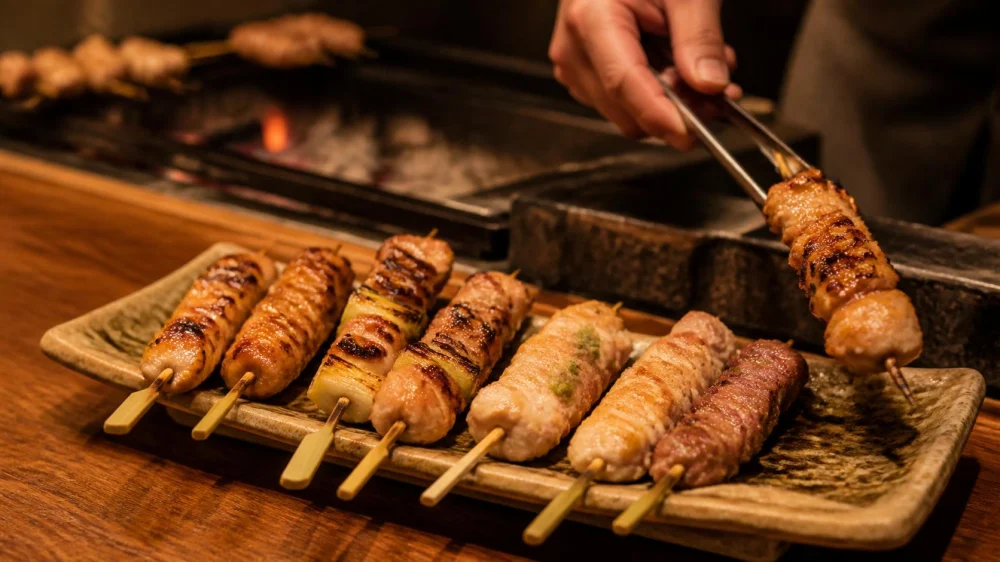
Yakitori Menu Guide: Skewers, Seasonings, and Etiquette
On this page
Quick answer
Yakitori is Japanese grilled chicken served on skewers, often seasoned with salt (shio) or a savory-sweet glaze (tare). For a first order, combine a mild lean cut, a juicy thigh skewer, a vegetable skewer if offered, and one unfamiliar cut. Order a few at a time so they arrive hot, and ask the restaurant about allergens, doneness, and cross-contact when needed.
This guide is for U.S. diners exploring a yakitori menu. Names, cuts, recipes, portion sizes, and availability vary by restaurant. Japanese terms are useful clues, not guarantees; the restaurant is the best source for its ingredients and preparation.
What yakitori is
Yakitori literally refers to grilled chicken, usually small pieces threaded on skewers and cooked over direct heat. A specialist restaurant may use many parts of the bird, while a broader Japanese restaurant may offer only thigh, breast, meatball, and vegetable skewers.
The appeal comes from contrast: browned edges, rendered fat, juicy centers, smoke, seasoning, and the texture of a particular cut. Skewers are usually small, so a meal can move from light and delicate to rich and deeply flavored without committing to one large plate.
Not every Japanese skewer is yakitori. Restaurants may group pork, beef, seafood, vegetables, or cheese under kushiyaki, a wider term for grilled skewered foods. Menus sometimes use “yakitori” loosely, so read the ingredient description.
Common skewers and how they differ
Romanization varies, but these names commonly appear:
- Momo: chicken thigh, usually juicy and forgiving, with a balanced meat-to-fat ratio. A good starting point.
- Negima: chicken—often thigh—alternated with pieces of long onion or scallion. The vegetable adds sweetness and char.
- Sasami: tenderloin or very lean breast meat. Mild and delicate; best when handled carefully so it does not dry out.
- Tsukune: seasoned minced chicken formed into a meatball or elongated patty. Texture and seasoning vary widely; some versions include egg or other binders.
- Tebasaki: chicken wing, valued for crisp skin, fat, and meat around the bones. Expect a hands-on eating experience.
- Kawa: chicken skin, grilled until rendered and chewy-crisp. Richer than lean meat.
- Bonjiri: tail meat, small and notably fatty. Best for diners who enjoy richness.
- Sunagimo: gizzard, firm with a clean, springy bite. Leaner than its texture may suggest.
- Hatsu: heart, compact and resilient with a more pronounced savory flavor.
- Reba: liver, soft and mineral-rich. Choose it only if you enjoy organ meats and ask how the restaurant cooks it.
Some restaurants list neck meat, cartilage, small-intestine cuts, or house-specific combinations. Ask the server to describe texture—lean, juicy, fatty, chewy, crisp, or soft—rather than relying only on a translation.
Shio or tare: choosing a seasoning
Shio means salt. A salt-seasoned skewer usually highlights the flavor, fat, and smoke of the cut. It is often a good fit for delicate meat, crisp skin, or diners who prefer less sweetness.
Tare is a glaze or dipping sauce whose recipe is particular to the restaurant. It commonly balances salty, sweet, and savory flavors and may be brushed on during grilling. Soy and wheat are common allergy concerns, but recipes can include additional ingredients.
There is no universal rule that one cut must use one seasoning. Some chefs select the pairing; other menus let the diner choose. When uncertain, accept the house recommendation or order the same familiar cut both ways to notice the difference.
Condiments might include citrus, grated radish, mustard, chile spice, sansho pepper, or a raw or softly cooked egg accompaniment. Treat every condiment as recipe-specific and ask before using it if you have an allergy.
A practical ordering plan
- Check how pricing works. A listing may mean one skewer, two skewers, or a set. Confirm the quantity before multiplying an order.
- Choose a route. An assortment or chef’s selection is convenient for adventurous diners. À la carte ordering gives more control over cuts, allergens, and budget.
- Start lighter. Begin with lean or simply seasoned skewers, then move to thigh, skin, tail, meatballs, or organ meats. This preserves contrast.
- Order in waves. Two to four skewers per person at a time is often easier to enjoy hot than one large order arriving together. Adjust to portion size and kitchen pacing.
- Add balance. If available, alternate chicken with grilled mushrooms, peppers, eggplant, onion, or other vegetables, plus a rice or pickle dish.
- Reorder favorites. A second round is a better use of appetite than forcing unfamiliar cuts you did not enjoy.
For a cautious first tasting, try momo with salt, negima with the house seasoning, tsukune, and one vegetable. For texture exploration, add gizzard or skin. For richer flavors, consider tail, heart, or liver after asking about preparation.
How to eat and share yakitori
Yakitori is commonly eaten directly from the skewer. Let it cool briefly, hold the stick near its base, and bite pieces without waving the pointed end toward another person. Use the provided receptacle for finished sticks.
For shared plates, local house practice matters. Some diners slide pieces from a skewer onto a plate, but doing so can release juices and change the intended bite. If everyone wants to taste, ordering duplicate skewers is often neater and preserves seasoning.
Do not return a used skewer to a shared platter. Use serving utensils when provided. Avoid pouring condiments over the whole plate before others agree, and taste the first bite before adding seasoning.
Skewers may arrive as soon as each is ready rather than all at once. Eat them while warm instead of waiting for a complete table arrangement. The rhythm is closer to a sequence of small dishes than one plated entrée.
Safety, allergies, and important limits
Chicken should be cooked safely. Do not assume color alone proves doneness, and do not request undercooked poultry. If a skewer seems raw or cool in the center, stop eating and ask staff to check it. The restaurant is responsible for its cooking process; diners should not attempt to judge safety from menu terminology.
Potential allergens include soy, wheat, egg, sesame, fish-derived seasonings, alcohol-based ingredients, and ingredients in marinades or meatballs. Cross-contact can occur on grills, brushes, trays, sauces, and utensils. Tell staff about a food allergy before ordering, ask them to check the recipe and preparation area, and choose another dish or restaurant if they cannot provide a confident answer.
People who are pregnant, immunocompromised, older, or otherwise at higher risk from foodborne illness should follow their clinician’s advice and avoid raw or undercooked poultry and eggs. Alcohol in a recipe may not cook away completely; ask if avoidance is important.
For bones and cartilage, chew carefully and know the intended texture. Wings and some specialty cuts may contain small bones. Children should be supervised because skewers are pointed and hot.
Frequently asked questions
Is yakitori always chicken?
Strictly, yakitori refers to grilled chicken. Many menus group other grilled skewers nearby or use the term broadly. Check the ingredient description.
How many skewers make a meal?
There is no standard because skewer size and side dishes vary. Start with a modest round, see how large it is, and order more gradually.
Is tare the same at every restaurant?
No. Tare is a house recipe and can vary in sweetness, saltiness, thickness, and allergens.
Which skewer is best for beginners?
Thigh or negima is approachable for many diners because it is juicy and familiar. A lean chicken skewer and tsukune are other common entry points.
Are vegetable skewers vegetarian?
Not automatically. They may share a grill or brush with meat and may use animal-based sauce. Ask about ingredients and cross-contact.
Can I remove food from the skewer?
You can, particularly for accessibility or sharing, but direct eating usually keeps the intended sequence and juices. Use clean utensils and follow house practice.
Sources and evidence notes
This guide summarizes established Japanese dining vocabulary and common restaurant practice. Terminology and preparation are not standardized across U.S. restaurants, so ingredient and allergen statements should always come from the specific kitchen.
Food-safety advice follows broad public-health principles: poultry should be safely cooked, higher-risk diners should avoid undercooked animal foods, and people with allergies need recipe-specific and cross-contact information. The article does not claim a particular restaurant follows any process.
Conclusion and next steps
Read the cut, texture, seasoning, and quantity before ordering. Start with thigh or negima, compare salt and tare, add one new texture, and order in small waves. Taste first, share cleanly, and ask the restaurant directly about allergens and cooking. A focused first order makes yakitori easier to understand—and leaves room to repeat the skewer you like most.


 Yasai4.0 (257 reviews)
 OBON Sushi Bar Ramen4.0 (379 reviews)
 Miso Asian Grill & Sushi Bar4.0 (1000 reviews)
 Sushi Miroku4.0 (526 reviews)
 Hachioji Craft & Vegan Ramen4.0 (515 reviews)
 Takara Sushi & Asian Bistro4.0 (950 reviews)
 How to Make White Sauce from Japanese Restaurants at Home
 What Soup Do Japanese Restaurants Serve? A Deep Look at Miso and More
 The Complete Guide to Dining at Best Japanese Restaurants Near Me
 Why Locals Recommend Miyabi Japanese Restaurant – A True Dining Experience
 The Complete Guide to Dining at Domo Japanese Restaurant
 The History and Flavor Behind Domo Japanese Restaurant: A Local Favorite