
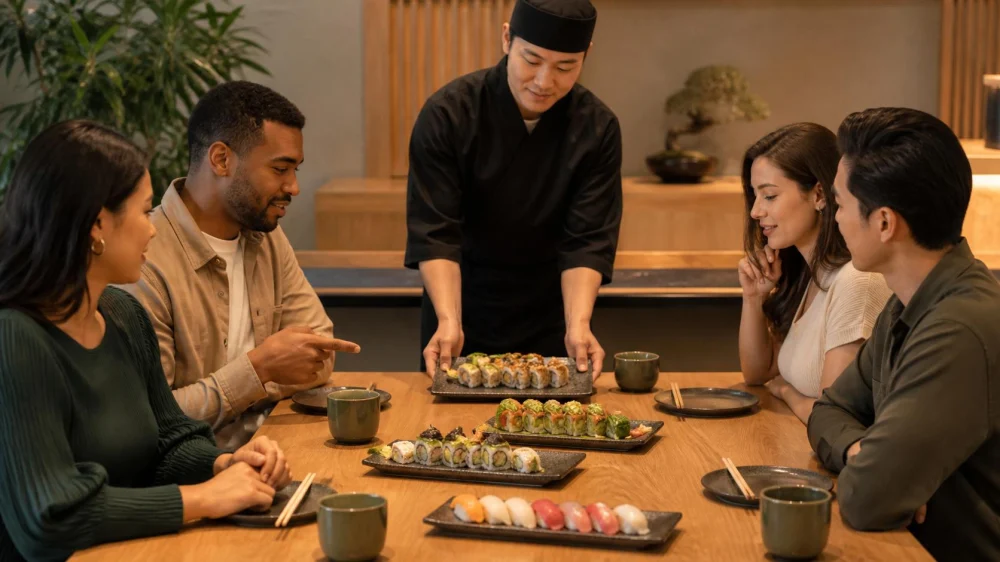
Sushi for a Group: Build a Balanced Shared Order
On this page
Quick answer
For a shared sushi order, first separate raw, cooked, vegetarian, allergy-sensitive, and adventurous preferences. Choose a small foundation everyone can eat, add a few contrasting rolls or nigiri, and order a second round only after seeing portion sizes. Keep restricted foods on separate plates and ask the restaurant about ingredients and preparation instead of guessing from menu names.
This guide is for groups dining at Japanese restaurants in the United States. Menus, piece counts, recipes, prices, and kitchen practices vary. It offers an ordering method rather than a fixed quantity or a claim that a dish is suitable for a medical diet.
Ask the group before ordering
A balanced shared order gives each diner enough suitable choices while avoiding unnecessary duplication. Before the server arrives, ask four short questions:
- Who eats raw seafood, cooked seafood, meat, or vegetarian food?
- Are there diagnosed allergies, celiac disease, or other restrictions requiring kitchen confirmation?
- Does anyone dislike spicy sauces, mayonnaise, strong fish flavors, seaweed, or very large pieces?
- Is sushi the entire meal or part of a larger order with soup, vegetables, noodles, or grilled dishes?
Do not pressure a diner to try raw fish. Preference, pregnancy, immune status, age, and medical advice can all influence the choice. If one person has a serious allergy, contact the restaurant early to discuss ingredients and cross-contact controls.
Build the order in layers
- Start with common ground. Select one or two items that suit the widest group, such as a verified vegetarian roll or fully cooked option.
- Add contrast. Combine mild and richer flavors, crisp and soft textures, and simple pieces with one more elaborate roll. Avoid ordering several sauce-heavy rolls that taste similar.
- Give enthusiasts a lane. Put raw nigiri, sashimi, spicy items, or unfamiliar specials on their own plate for diners who want them.
- Protect restricted orders. Ask for separate plates and utensils where the restaurant can accommodate them. Separate presentation does not by itself prevent kitchen cross-contact.
- Clarify the menu. Ask piece count, key ingredients, raw versus cooked status, sauces, garnishes, and whether a hand roll is intended for one person.
Nigiri is typically a topping over a small portion of rice; sashimi is sliced fish without rice; maki is a rolled preparation cut into pieces; and temaki is a hand-shaped cone. Restaurant usage and portioning can differ, so use these terms as orientation and confirm the specific menu.
Manage portions and pacing
There is no reliable universal number of pieces per person. Roll size, rice amount, side dishes, appetite, and meal length matter. A practical approach is to order a modest first round, divide pieces fairly, and assess before adding more.
- Count pieces and eligible diners for each plate before ordering multiples.
- Ask the server which items are especially large, rich, or best eaten immediately.
- Serve delicate or crisp items first when the restaurant recommends it.
- Use shared serving utensils rather than personal chopsticks when provided.
- Order another round based on what the group actually enjoyed.
This staged method is best for flexible meals. It may be less suitable when the kitchen is closing, waits are long, the group has a strict schedule, or a set menu is required; in those cases, ask the restaurant to help size the order in advance.
Dietary and safety notes
Raw or undercooked seafood can carry foodborne-illness risk. People who are pregnant, immunocompromised, older, very young, or managing certain medical conditions should follow current guidance from their clinician and public health authorities. “Sushi-grade” language does not eliminate all risk.
Common concerns may include fish, shellfish, soy, wheat, sesame, egg, milk, peanuts, and tree nuts, but ingredients vary. Sauces, imitation seafood, batter, shared fryers, knives, boards, and gloves can introduce allergens. Ask staff to verify the current recipe and process.
Sources and evidence notes
This article draws on common Japanese menu terminology, shared-dining practice, and general food-safety principles. It does not authenticate a restaurant or dish. The current menu, kitchen staff, ingredient labels, restaurant procedures, and individual medical guidance should inform the final choice.
Frequently asked questions
Should every person order a separate roll?
Not necessarily. Sharing creates variety, but separate orders may be clearer for allergies, strong preferences, budgets, or diners who do not want cross-contact at the table.
How can a group avoid ordering too much?
Ask piece counts and sizes, account for side dishes, begin with fewer items, and add a second round if timing allows.
Are vegetarian rolls always free of fish?
No. Sauces, broths, garnishes, and shared tools may contain or contact fish and other allergens. Ask the restaurant to verify.
Is it rude to ask for separate plates?
No. Explain the practical reason politely. The restaurant may suggest the safest and easiest way to organize the order.
Next steps
List each diner's raw, cooked, vegetarian, and restricted choices; mark two shared items everyone can eat; then add one contrasting option for each preference group. Confirm piece counts and ingredients with the server, start modestly, and reorder only after the first plates arrive.

 Fuwa Teriyaki Grill3.0 (32 reviews)
 Masa Hibachi Sushi & Bar4.0 (984 reviews)
 Jimoto4.0 (82 reviews)
 Teriyaki One4.0 (432 reviews)
 Sarku Japan3.0 (315 reviews)
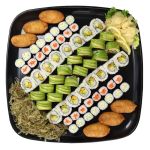 Yoshi sushi0.0 (0 reviews)
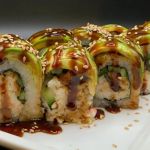 A Foodie’s Experience at Best Japanese Restaurants Near Me
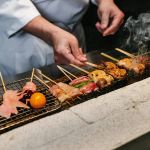 The Complete Guide to Dining at Good Japanese Restaurants in NYC
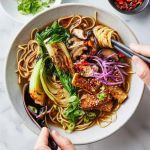 Vegetarian Japanese Restaurant Guide: Sushi, Ramen & Plant-Based Plates
 Why Locals Recommend Hanaoka Japanese Restaurant: Top Reasons to Visit
 What Salad Dressing Is Used in Japanese Restaurants?
 What to Look for in a Quality Japanese Restaurant Near Me: Red & Green Flags