
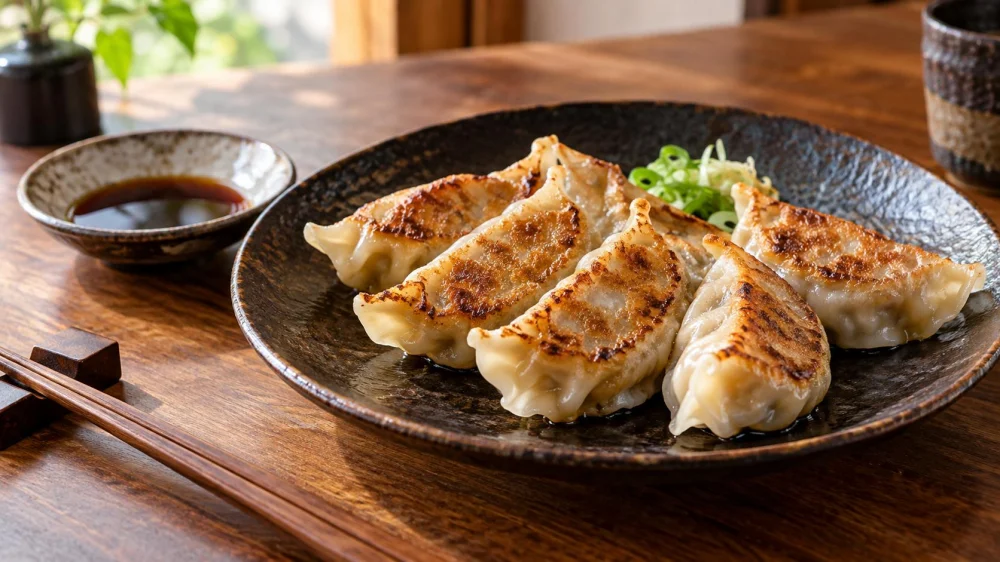
Gyoza Textures: Pan-Fried, Steamed, Boiled, or Crisp?
On this page
Quick answer
Choose pan-fried gyoza for a crisp base and tender upper wrapper, steamed gyoza for a soft wrapper, boiled gyoza for a supple bite, and deep-fried gyoza for crunch around the outside. At a Japanese restaurant in the United States, confirm the cooking method, filling, and serving size before ordering. Menu names alone do not settle those details.
What gyoza means on a menu
Gyoza are filled dumplings made by enclosing vegetables, meat, or other ingredients in a dough wrapper. Their Chinese roots and Japanese adaptations help explain why related dumplings appear under several names. This guide is for diners comparing textures; it is not a recipe or a test of a restaurant’s authenticity.
A menu may translate gyoza as dumplings or potstickers. Potstickers usually suggests a pan-fried preparation, but ask staff rather than assuming every kitchen uses the same translation.
Compare four cooking methods
| Method | Typical wrapper texture | When to choose it |
|---|---|---|
| Pan-fried, often yaki gyoza | Browned base with a softer upper wrapper | Best for diners who want contrasting textures |
| Steamed, often mushi gyoza | Soft wrapper without a fried crust | Choose when you prefer tenderness over crunch |
| Boiled, often sui gyoza | Supple wrapper; may arrive with liquid | Choose for a softer bite; ask how it is served |
| Deep-fried, often age gyoza | Crisp exterior around the dumpling | Choose when all-around crunch is the priority |
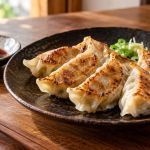
These are expectations, not guarantees. Wrapper thickness, filling moisture, and time between cooking and serving affect the result. “Fried” is ambiguous: it may describe pan-frying or deep-frying. A photograph can suggest a style, but the kitchen can confirm it.
Keep filling and sauce separate from texture
The cooking method does not tell you what is inside. Pork and vegetables are a familiar combination, but restaurants may use chicken, seafood, mushrooms, or other fillings. A vegetable name does not establish that the entire dish is vegetarian or vegan.
Ask what the wrapper, filling, dipping sauce, and garnish contain. Wheat, soy, sesame, egg, or seafood may appear in different components. If you have a food allergy, speak directly with staff about ingredients and shared equipment before placing the order; a menu label cannot establish safety.
Try a small bite before adding sauce if you want to compare the wrapper and filling. Use a little dipping sauce at first and adjust to taste. You do not need a fixed soy-to-vinegar ratio, and chili oil is optional. Sauce recipes and condiment availability differ by restaurant.
A short ordering checklist
- Name your texture preference. Say you want a crisp bottom, a soft wrapper, or crunch all around.
- Confirm the method. Ask whether “fried” means pan-fried or deep-fried.
- Check the filling. Request the main ingredients and explain dietary restrictions.
- Confirm the portion. Ask how many dumplings come in an order and whether a listed price is for a plate or a set.
- Clarify accompaniments. Check whether sauce, broth, rice, or other sides are included.
For a shared comparison, order two available preparations with the same filling if possible. That makes it easier to notice wrapper differences. If the fillings differ, treat the tasting as a comparison of whole dishes rather than evidence about cooking method alone.
Important notes before the first bite
Freshly cooked dumplings can contain very hot filling. Let them cool enough to eat comfortably. Crispness is a quality feature and does not prove that a meat filling is cooked safely; raise concerns with staff rather than judging doneness from browning.
This is a country-level dining guide. Japanese Restaurant by RestaurantJun helps readers explore restaurants and food culture; this article does not establish that any particular restaurant offers all four styles. Check the current restaurant menu and contact the restaurant about accommodations.
Frequently asked questions
Are gyoza and potstickers exactly the same?
The terms overlap on English menus, especially for pan-fried dumplings, but translations vary. Confirm the filling and preparation instead of treating the terms as interchangeable in every setting.
Does steamed gyoza mean the filling is vegetarian?
No. Steamed describes the cooking method. A steamed dumpling can contain meat or seafood, and a vegetable filling can still come with animal-derived ingredients elsewhere in the dish.
Can boiled gyoza be served without soup?
Yes, the serving format depends on the kitchen. Ask whether your order arrives drained, in broth, or with a separate sauce.
Which style should I choose first?
Choose by texture. Pan-fried is a useful starting point for crisp-and-soft contrast. Steamed or boiled is better for a soft-wrapper preference; deep-fried suits an all-around-crunch preference.
Sources and evidence notes
The Japan National Tourism Organization describes the thin wrappers and crisp texture of pan-fried dumplings in its Utsunomiya dumpling overview, which also documents boiled and deep-fried varieties. Its Japanese food introduction describes steamed and pan-fried gyoza and familiar filling ingredients.
Those sources provide culinary background from Japan, not confirmation of United States restaurant menus. The comparison and questions above are practical dining guidance; restaurant staff remain the source for the dish you order.
Next steps: choose texture, then confirm details
Start with the wrapper texture you enjoy, then check the method, filling, portion, and accompaniments. A brief question such as “Is this pan-fried with a crisp base, and what is the filling?” usually resolves more than the word gyoza alone.

 PA'S PAPA JAPANESE RESTAURANT4.0 (24 reviews)
 Kakui Sushi4.0 (157 reviews)
 Kotobuki Japanese Restaurant4.0 (159 reviews)
 TGI Oni Sushi4.0 (158 reviews)
 Tomsa Sushi4.0 (72 reviews)
 Sushi Park4.0 (254 reviews)
 Yakitori Menu Terms: Chicken Cuts, Shio, and Tare
 Gyoza Textures: Pan-Fried, Steamed, Boiled, or Crisp?
 Tsukemono Explained: Japanese Pickles at the Table
 Kaiseki Dining: How a Seasonal Japanese Meal Unfolds
 Chawanmushi Guide: Texture, Fillings, and Serving Style
 Shabu-Shabu Guide: Broth, Cooking Order, and Dipping