
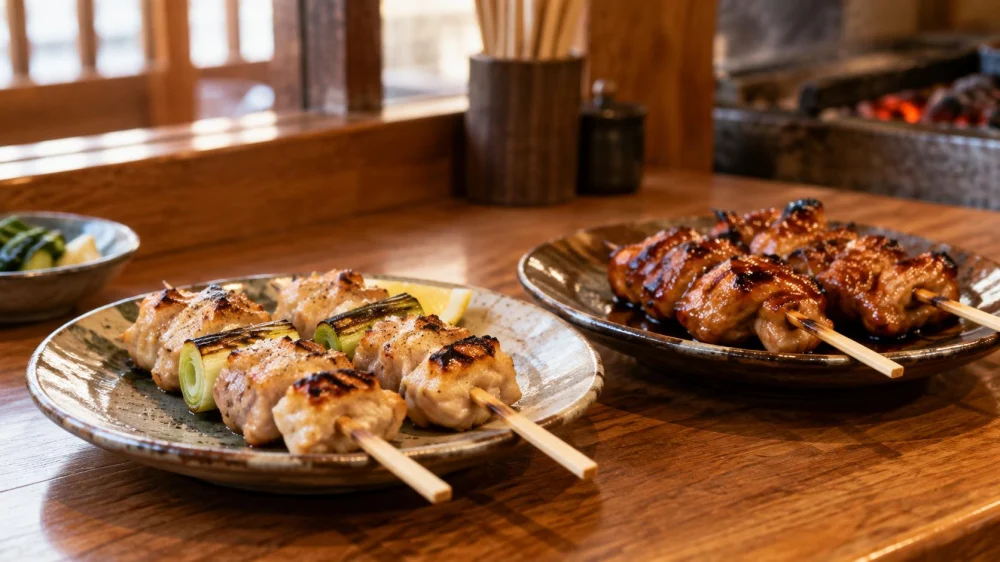
Yakitori Menu Terms: Chicken Cuts, Shio, and Tare
On this page
Quick answer
Yakitori means grilled chicken skewers, while a broader skewer menu may also include other meats and vegetables. Start by identifying the chicken cut, then check the seasoning: shio means salt seasoning, and tare means a sauce whose recipe varies by restaurant. At United States restaurants, confirm translated menu terms and the number of skewers in each order rather than relying on photographs alone.
Yakitori and the wider skewer vocabulary
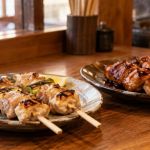
Yakitori is Japanese grilled chicken served in small pieces on skewers. Kushiyaki is a broader term for grilled skewered foods, so a menu section may bring chicken together with vegetables, pork, beef, or seafood. Restaurant headings and English translations are not always used consistently.
This glossary is for diners who want to understand a menu before choosing a few skewers. It does not rank restaurants or establish a single correct recipe. Japanese Restaurant by RestaurantJun is a restaurant-discovery and food-culture guide; confirm actual dishes with the restaurant you plan to visit.
Read the chicken-cut names
- Negima
- Chicken pieces alternating with scallion or Japanese long onion. Ask which chicken cut the kitchen uses.
- Momo
- Chicken thigh. Useful when you want a familiar meat cut rather than an organ or skin skewer.
- Sasami
- Chicken tenderloin, a lean cut. Toppings and seasoning may differ from other skewers.
- Tsukune
- Seasoned minced-chicken mixtures formed into balls or another shape. Texture and added ingredients depend on the recipe.
- Kawa
- Chicken skin. The cooking style can make it crisp, chewy, or a combination.
- Sunagimo
- Chicken gizzard. Expect a firmer bite than a familiar thigh skewer.
- Hatsu
- Chicken heart. This is an organ cut, not another name for breast or thigh.
Names can appear with different romanized spellings. If a term is unfamiliar, ask for the ingredient in plain English. A mixed plate can contain several cuts, so check its contents before choosing it for someone who avoids skin or organs.
Separate the cut from shio and tare
Shio describes salt seasoning. It often leaves the flavor of the chicken and grill more exposed, but it does not mean the dish is free from other seasonings or allergens.
Tare describes a sauce used with the skewer. Yakitori tare is often sweet and savory; the restaurant determines its ingredients and intensity. It should not be treated as a universal formula or assumed to be the same as every bottled teriyaki sauce.
For a useful tasting comparison, ask whether the same cut can be prepared both ways. Comparing a salted skin skewer with a sauced thigh skewer changes both the cut and seasoning, so any preference cannot be attributed to sauce alone. Some dishes arrive with a fixed topping or preparation, and the kitchen may not offer a choice.
Decode an order before you place it
- Find the main ingredient. Determine whether a skewer contains chicken, another meat, or vegetables.
- Translate the cut. Choose familiar muscle meat or deliberately try skin or an organ cut.
- Check preparation. Ask whether shio, tare, or a fixed topping is used.
- Confirm the unit. Find out whether an order contains one skewer, a pair, or an assortment, and what the listed price covers.
- Check extras. Establish whether rice, vegetables, or other sides are included or ordered separately.
A clear request is: “What cut is the negima, can it come with salt seasoning, and how many skewers are in an order?” If you want a full meal, ask about available sides rather than assuming a small skewer order is a complete plate.
Dietary and safety boundaries
Minced-chicken mixtures, sauces, and garnishes may contain ingredients that are not obvious from the cut name. Tell staff about food allergies and ask about ingredients and shared cooking equipment. A vegetable skewer prepared on a shared grill is not automatically suitable for every dietary restriction.
Request fully cooked chicken. United States food-safety guidance gives poultry a safe minimum internal temperature of 165°F (74°C), measured with a food thermometer. Grill marks, a browned surface, or a cut name do not establish that temperature. If chicken appears undercooked or you have concerns, stop eating it and ask staff to address the issue. This menu glossary is not a home-cooking or temperature-measurement guide.
Availability, portions, and seasoning recipes vary. No city-level availability or restaurant-specific accommodation is implied by this United States guide.
Frequently asked questions
Does every yakitori skewer contain chicken?
Yakitori refers to chicken, but restaurants may group other skewered foods under a shared menu heading. Confirm the ingredient of each listed item.
Is negima a chicken cut?
It names a combination of chicken and scallion or long onion rather than one universal chicken cut. Ask the kitchen which cut it uses.
Is tsukune simply a piece of chicken breast?
No. Tsukune is a formed minced mixture. The recipe may include binders and seasonings, so ask about added ingredients when they matter to you.
Should I always choose tare?
Choose according to preference and the dish. Shio is useful for tasting a less sauced preparation; tare suits diners who want a sweet-savory coating. Ask for the kitchen’s recommendation if the menu does not offer both.
Sources and evidence notes
The Japan National Tourism Organization’s yakitori introduction provides background on chicken skewers, negima, sasami, gizzards, hearts, salt seasoning, and sauce seasoning. It describes dining in Japan and does not confirm United States restaurant menus.
The poultry-temperature boundary follows FoodSafety.gov’s safe minimum internal temperatures chart. The other glossary entries and menu-decoding suggestions describe general culinary usage. Staff at the restaurant remain the source for its recipes, portions, and accommodations.
Next steps: translate one skewer at a time
Choose a cut you understand, establish its seasoning, and confirm the serving unit. Once those three details are clear, you can compare another cut or preparation without treating an unfamiliar menu word as a guess.
 PA'S PAPA JAPANESE RESTAURANT4.0 (24 reviews)
 Kakui Sushi4.0 (157 reviews)
 Kotobuki Japanese Restaurant4.0 (159 reviews)
 TGI Oni Sushi4.0 (158 reviews)
 Tomsa Sushi4.0 (72 reviews)
 Sushi Park4.0 (254 reviews)
 Yakitori Menu Terms: Chicken Cuts, Shio, and Tare
 Gyoza Textures: Pan-Fried, Steamed, Boiled, or Crisp?
 Tsukemono Explained: Japanese Pickles at the Table
 Kaiseki Dining: How a Seasonal Japanese Meal Unfolds
 Chawanmushi Guide: Texture, Fillings, and Serving Style
 Shabu-Shabu Guide: Broth, Cooking Order, and Dipping