
Onigiri Guide: Fillings, Wrappers, and How to Eat It
On this page
Quick answer
Onigiri is a compact Japanese rice portion shaped around or mixed with a filling, often wrapped partly or fully in nori. Choose by filling, seasoning, serving temperature, and whether the seaweed is crisp or soft. Eat it by hand when practical, keep packaged nori wrappers in their intended opening order, and ask about ingredients when labels or menu names are unfamiliar.
What onigiri is
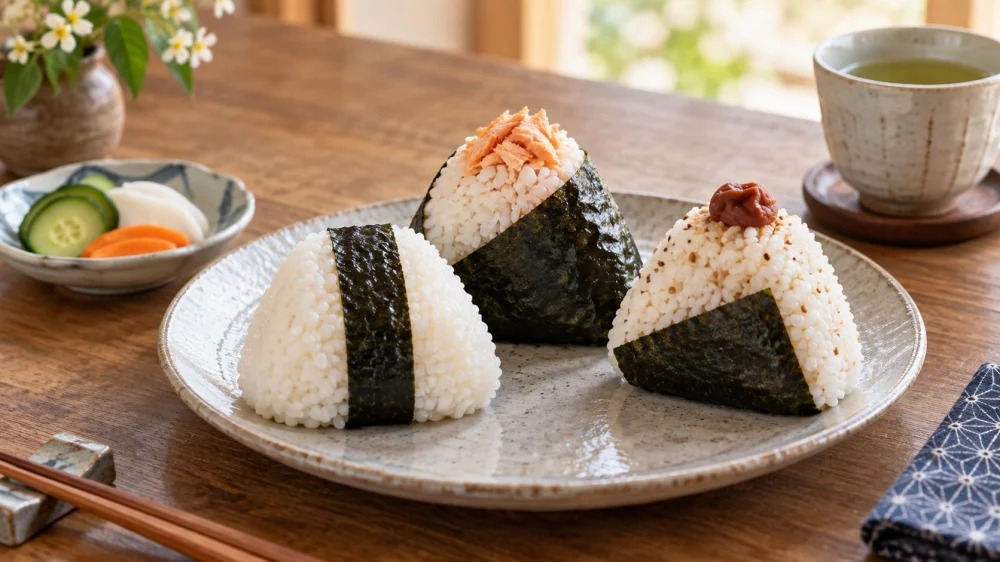
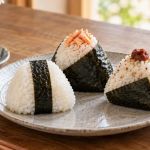
Onigiri is a portable rice food commonly shaped as a triangle, round, or cylinder. The rice may surround a small filling, include mixed seasonings, or carry a topping. Nori can cover one side, wrap the whole piece, or be omitted.
This guide is for diners and shoppers in the United States. Names, sizes, fillings, storage practices, and wrapper designs vary by restaurant, market, and producer.
Choose a filling by flavor and texture
- Salmon: savory and flaky; it may be salted, grilled, or mixed.
- Tuna mayonnaise: creamy and mild, with egg and fish ingredients.
- Ume: tart and salty preserved plum with a pronounced flavor.
- Kombu: seasoned kelp that is often sweet-savory and tender.
- Okaka: seasoned bonito flakes, usually deeply savory.
- Vegetable or mixed rice: ingredients may be folded through the rice rather than centered.
The same English label can cover different recipes. Ask when a sauce, mayonnaise, fish product, or seasoning matters to you.
Understand nori and wrapper styles
Freshly wrapped nori tends to be softer where it touches warm or moist rice. Some packaged onigiri use a layered wrapper that keeps the seaweed separate until opening, preserving a crisp texture.
Follow the printed opening sequence on a commercial package when it is clear, because pulling sections out of order can tear the nori. At a restaurant or counter, a partly wrapped onigiri is usually ready to pick up from the nori side.
How to eat onigiri neatly
- Keep the wrapper, plate, or napkin under the onigiri to catch loose rice.
- Hold the nori-covered area or the broad sides without squeezing.
- Take smaller bites from one corner so the filling stays supported.
- Rotate the piece only as needed instead of breaking it apart immediately.
- Use chopsticks if the onigiri is sauced, grilled, very hot, or served as part of a plated dish.
There is no need to add soy sauce unless the restaurant serves it for that item; many fillings and seasonings are already salty.
Use simple freshness and quality checks
- Look for rice that holds together without appearing dry or crushed.
- Check packaged use-by guidance and required refrigeration.
- Keep chilled products cold and follow the seller's storage directions.
- Do not assume a room-temperature display means a packaged item can stay unrefrigerated indefinitely.
- If the rice smells unusual, the package is damaged, or storage conditions are uncertain, choose another item.
Limits and important notes
Appearance alone cannot confirm every ingredient or allergen. Fish, shellfish, egg, soy, wheat, sesame, dairy, and other ingredients may be present in fillings, sauces, seasonings, or shared preparation areas. Vegetarian-looking rice balls may contain fish-based seasoning.
People with food allergies or strict dietary needs should verify the current ingredient list and cross-contact practices with the seller. Follow local food-safety guidance and product labeling for storage and timing.
Frequently asked questions
Is onigiri the same as sushi?
No. Onigiri is generally made from plain or seasoned rice shaped around a filling, while sushi is defined by vinegared rice and includes many different forms.
Can onigiri be eaten cold?
Many packaged varieties are sold chilled and some are served at room temperature or warm. Follow the seller's handling guidance and choose the temperature appropriate to that product.
Why does packaged nori have several wrapper tabs?
The layered packaging keeps the seaweed away from moist rice until opening. The numbered or illustrated sequence is designed to bring them together without touching the filling.
Sources and evidence notes
This article uses widely recognized Japanese food terms and general consumer food-safety principles. Exact recipes, labels, refrigeration needs, and wrapper instructions are product-specific. Use the current package, menu, and seller guidance as the source for ingredients, allergens, storage, and opening steps.
Conclusion and next steps
Start with a familiar filling and decide whether you prefer soft or crisp nori. Read the package before opening, support the rice as you eat, and keep chilled products at the required temperature. Once you know the basic texture, explore a more distinctive filling such as ume, kombu, or okaka while checking ingredients that matter to you.


 PA'S PAPA JAPANESE RESTAURANT4.0 (24 reviews)
 Kakui Sushi4.0 (157 reviews)
 Kotobuki Japanese Restaurant4.0 (159 reviews)
 TGI Oni Sushi4.0 (158 reviews)
 Tomsa Sushi4.0 (72 reviews)
 Sushi Park4.0 (254 reviews)
 Onigiri Guide: Fillings, Wrappers, and How to Eat It
 Japanese Curry Guide: Rice, Spice, and Toppings
 Miso Soup at Restaurants: Dashi, Miso, and Variations
 Tonkatsu Set Meal Guide: Pork Cuts, Sauce, and Sides
 Yakitori Menu Terms: Chicken Cuts, Shio, and Tare
 Gyoza Textures: Pan-Fried, Steamed, Boiled, or Crisp?