
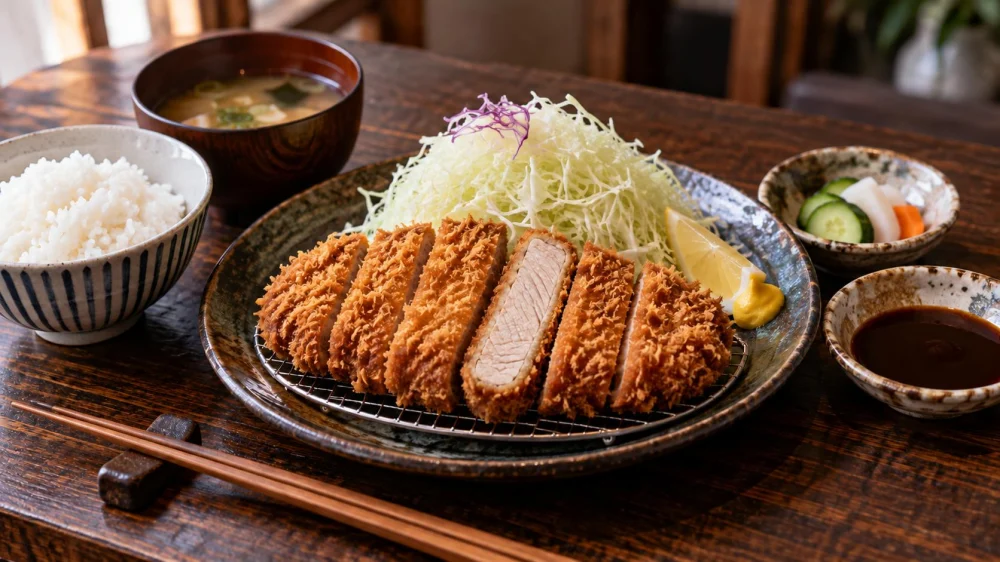
Tonkatsu Set Meal Guide: Pork Cuts, Sauce, and Sides
On this page
Quick answer
Tonkatsu is a breaded, deep-fried pork cutlet commonly served sliced with shredded cabbage. A teishoku set usually adds rice, miso soup, pickles, and sauce, though restaurant combinations vary. Choose hire or fillet for a leaner, softer piece and rosu or loin for more fat and richness. Ask about portion, sauce, refills, and allergens before ordering.
What tonkatsu is
Tonkatsu combines “ton,” meaning pork, with “katsu,” a shortened form of cutlet. The usual preparation coats a pork cut in flour, egg, and coarse breadcrumbs before frying it until the coating is crisp and the pork is cooked. It is then sliced so diners can pick up individual pieces with chopsticks.
A restaurant may offer tonkatsu as a stand-alone plate, a teishoku set, a rice bowl, a sandwich, or a curry topping. This guide focuses on the set meal because the cutlet, rice, soup, cabbage, pickles, condiments, and small sides are intended to be considered together.
Menus in the United States may translate the same cut differently or adapt the set. Use the description as a starting point and ask the restaurant about its actual ingredients and portion.
Choose a pork cut
The two menu words most likely to guide the choice are hire and rosu:
- Hire-katsu: made from pork fillet or tenderloin. It is generally lean, fine-grained, and mild. Choose it when you want less visible fat and a tender bite.
- Rosu-katsu: made from pork loin, often with a strip or marbling of fat. It is generally juicier and richer. Choose it when the flavor of the pork and fat is part of the appeal.
Thickness matters as much as the cut. A thick cut can emphasize juicy meat and a substantial bite, while a thinner cut can give more crisp coating in each mouthful. Some menus offer a weight or small, regular, and large portions. A larger number does not indicate better quality; match it to appetite and the rest of the set.
Other variations may include minced pork, layered thin slices, cheese filling, or another meat. Read the specific item rather than assuming every dish labeled “katsu” is a whole pork cutlet.
Read the full set meal
Teishoku means a set meal served with several components together. Japan's official tourism site describes a typical tonkatsu teishoku as a pork cutlet accompanied by rice, miso soup, pickles, vegetables, mustard, and a savory-sweet sauce. A particular restaurant may omit, replace, or charge separately for any item.
- Shredded cabbage: a fresh, crisp contrast to the fried coating. Dressing may be served separately.
- Rice: a neutral base; ask whether size choices or refills are included.
- Miso soup: may contain fish-based dashi, seaweed, tofu, shellfish, or other ingredients.
- Tsukemono: small portions of pickled vegetables that add acidity or saltiness.
- Condiments: tonkatsu sauce, mustard, sesame, salt, or dressing may be provided at the table.
If you are ordering several dishes to share, check whether the set is priced and portioned for one diner. Individual rice and soup servings may not be designed for the table.
Texture, sauce, and serving choices
A good ordering decision begins with the texture you want. Hire is best for a leaner, tender center. Rosu is better when you prefer a richer pork flavor. A thick cut suits diners who prioritize the meat; a thinner or smaller cut can feel more balanced with rice and sides.
Tonkatsu sauce is commonly thick, tangy, fruity, savory, and mildly sweet, but recipes vary. Try a small amount first so the coating stays crisp. Mustard adds sharpness, while salt can make the pork more noticeable without adding sweetness. If sesame seeds and a grinding bowl are provided, grind them to the texture you like and combine them with sauce only if that is the restaurant's setup.
The cutlet is usually easiest to eat one slice at a time. Alternate bites with cabbage, rice, soup, or pickles instead of covering every piece at once. There is no need to follow a rigid order; the practical goal is to preserve the textures you enjoy.
Dietary and practical notes
Standard tonkatsu commonly contains pork, wheat in the coating, and egg. Shared fryers can introduce contact with seafood or other allergens. Sauce, dressing, soup, pickles, and side dishes have separate ingredient lists and may contain soy, wheat, sesame, fish, shellfish, or other allergens.
If an allergy or religious restriction matters, tell the restaurant the specific ingredient and severity before ordering. Ask about marinade, breading, fryer, sauce, soup stock, garnishes, and cross-contact. “No sauce” does not make the entire set free of a listed ingredient.
The Japan National Tourism Organization dining guide explains teishoku and tonkatsu set components. Japan's Ministry of Agriculture, Forestry and Fisheries also describes tonkatsu as a breaded fried pork cutlet. These sources describe common patterns, not a promise about a specific U.S. restaurant.
Frequently asked questions
Is tonkatsu the same as katsudon?
No. Tonkatsu is the cutlet itself or a plated cutlet meal. Katsudon is a rice-bowl dish built around katsu; many versions simmer the cutlet with egg and onion, while some regional styles use different toppings or sauce.
What is the leanest common choice?
Hire-katsu is usually leaner than rosu-katsu, but preparation, portion, and trimming vary. Ask the restaurant if fat content or a specific dietary target is important.
Is tonkatsu sauce spicy?
It is usually more tangy, savory, and sweet than hot. Mustard may supply the sharper heat. Restaurant and bottled recipes differ, so taste a small amount first.
Can a tonkatsu set be gluten-free?
Do not assume so. Conventional breading contains wheat, and sauces, soup, dressings, and shared fryers may also matter. Ask the restaurant about every component and cross-contact.
Next steps
Read the menu in three passes: choose hire or rosu, select thickness or portion, then inspect the full set. Ask one concise question about any unclear side or dietary issue. When the meal arrives, sample the cutlet before adding much sauce and use the cabbage, rice, soup, and pickles to adjust richness and texture as you eat.
 PA'S PAPA JAPANESE RESTAURANT4.0 (24 reviews)
 Kakui Sushi4.0 (157 reviews)
 Kotobuki Japanese Restaurant4.0 (159 reviews)
 TGI Oni Sushi4.0 (158 reviews)
 Tomsa Sushi4.0 (72 reviews)
 Sushi Park4.0 (254 reviews)
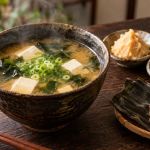 Miso Soup at Restaurants: Dashi, Miso, and Variations
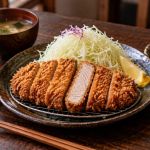 Tonkatsu Set Meal Guide: Pork Cuts, Sauce, and Sides
 Yakitori Menu Terms: Chicken Cuts, Shio, and Tare
 Gyoza Textures: Pan-Fried, Steamed, Boiled, or Crisp?
 Tsukemono Explained: Japanese Pickles at the Table
 Kaiseki Dining: How a Seasonal Japanese Meal Unfolds