
Soba vs. Udon: Texture, Broth, and How to Order
On this page
Quick answer
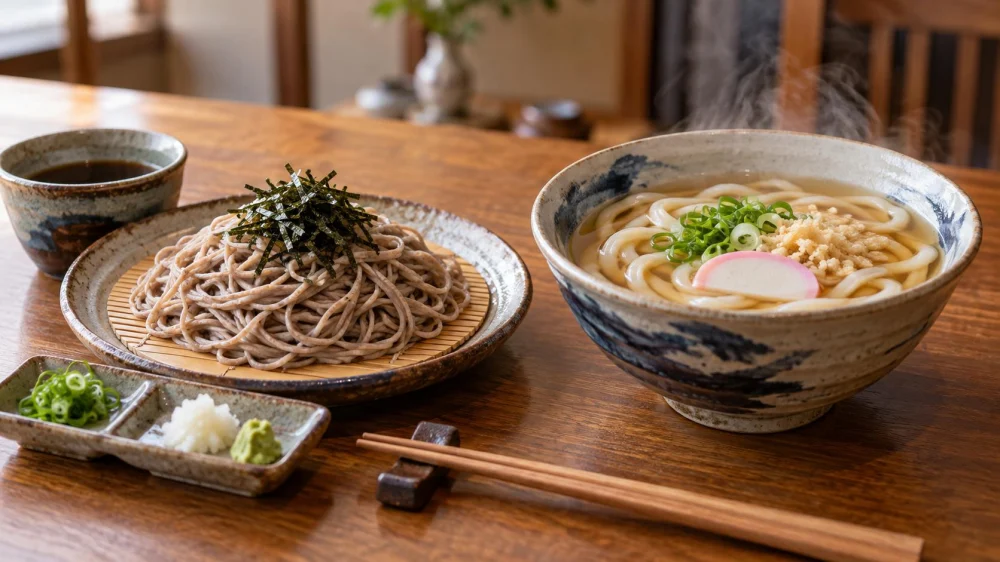
Soba is usually a thinner noodle made with buckwheat, often blended with wheat flour, while udon is a thicker wheat noodle with a softer or chewier bite. Either may be served hot in broth or cold with dipping sauce. Choose soba for a more delicate, earthy noodle character and udon for a thicker, springier texture.
The basic difference
Soba and udon are separate Japanese noodle traditions, not two sizes of the same noodle. Soba uses buckwheat flour, although the percentage varies and many versions also contain wheat. Udon is made primarily from wheat flour, water, and salt. Preparation and regional style affect thickness, firmness, color, and flavor.
This guide is for diners at Japanese restaurants in the United States. A menu may adapt names or recipes, so the restaurant's description is the best source for its actual dish.
Hot, cold, and dipping styles
Kake generally means noodles served in a bowl of hot broth. Mori or zaru commonly means chilled noodles served separately from a concentrated dipping sauce. Dip a manageable portion rather than soaking the entire serving at once.
Cold service makes noodle texture easier to notice and is a good choice when you want a simple comparison. Hot broth is best for warmth and a unified bowl, but toppings and broth can become the dominant flavors. Regional broths may vary in color, saltiness, sweetness, and dashi ingredients.
Menu terms to recognize
- Tempura soba or udon: noodles paired with battered fried seafood or vegetables; tempura may arrive on top or separately.
- Kitsune: often topped with seasoned fried tofu.
- Tanuki: often includes crisp tempura bits, though usage varies by region.
- Niku: served with meat.
- Curry udon: thick udon in a Japanese curry-style broth.
- Kama-age udon: warm udon served with cooking water and dipping sauce.
Ask the restaurant when a label is unfamiliar. Names do not reliably identify every ingredient.
How to choose
- Choose soba if you want a thinner noodle or want to taste buckwheat character.
- Choose udon if you prefer a thick, substantial, chewy noodle.
- Choose cold dipping noodles to focus on texture and sauce control.
- Choose hot broth for a warming bowl or when you want broth and toppings together.
- Ask whether tempura is served separately if keeping it crisp matters.
Neither noodle is automatically lighter or healthier; serving size, flour blend, broth, toppings, and sodium all affect the meal.
Allergy and dietary notes
Buckwheat can cause serious allergic reactions, and soba may contain wheat. Udon contains wheat unless the restaurant clearly states otherwise. Broths and sauces may contain fish, shellfish, soy, wheat, or other allergens. Cross-contact can occur in shared kitchens, strainers, fryers, and preparation areas.
If an allergy is medically important, do not rely on the dish name. Tell staff the specific allergen, ask about ingredients and cross-contact, and choose another dish if the restaurant cannot answer safely.
Frequently asked questions
Is all soba gluten-free?
No. Many soba noodles combine buckwheat with wheat flour, and sauces may also contain wheat.
Can both noodles be served cold?
Yes. Cold soba is common, and cold udon also appears on many menus. Styles and availability vary.
Should I drink the broth?
You may taste or drink it according to preference; broth can be salty, so finishing every drop is not required.
Is slurping required?
No. It is accepted in many Japanese noodle settings, but diners can eat comfortably without forcing a particular sound or technique.
Sources and evidence notes
The Japan National Tourism Organization's udon and soba guide describes their basic flours, hot and cold forms, toppings, and dipping styles. Japan's Ministry of Agriculture, Forestry and Fisheries documents regional noodle traditions. Restaurant recipes may differ.
Next steps
Decide first between thin and earthy soba or thick and chewy udon, then choose hot broth or cold dipping service. Confirm unfamiliar toppings and allergens with the restaurant, and order a simple version when you want the clearest noodle comparison.
 PA'S PAPA JAPANESE RESTAURANT4.0 (24 reviews)
 Kakui Sushi4.0 (157 reviews)
 Kotobuki Japanese Restaurant4.0 (159 reviews)
 TGI Oni Sushi4.0 (158 reviews)
 Tomsa Sushi4.0 (72 reviews)
 Sushi Park4.0 (254 reviews)
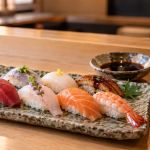 Sushi Condiments: Soy Sauce, Ginger, and Wasabi
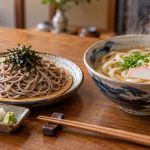 Soba vs. Udon: Texture, Broth, and How to Order
 Onigiri Guide: Fillings, Wrappers, and How to Eat It
 Japanese Curry Guide: Rice, Spice, and Toppings
 Miso Soup at Restaurants: Dashi, Miso, and Variations
 Tonkatsu Set Meal Guide: Pork Cuts, Sauce, and Sides